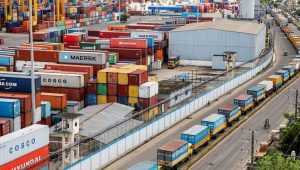
The global customs community observes International Customs Day, on January 26 every year, commemorating the establishment of the World Customs Organisation (WCO). The theme for International Customs Day 2026 is ‘Customs Protecting Society through Vigilance and Commitment’. It is particularly relevant for economies like Bangladesh, where effective border management is closely linked to trade competitiveness, investment confidence, and economic stability.
In today’s interconnected world, customs administrations are no longer confined to revenue collection. They are strategic institutions operating at the intersection of trade facilitation, national security, public health, environmental protection, and economic governance. How efficiently and credibly customs perform these functions has direct implications for businesses and consumers alike.
For the private sector, customs efficiency translates into lower transaction costs, predictable clearance times, and resilient supply chains. Conversely, weak enforcement or procedural inefficiencies increase costs and uncertainty, undermining competitiveness. At the same time, inadequate controls allow counterfeit and substandard goods to enter the market, distorting fair competition and eroding consumer trust. In this sense, customs is not a barrier to trade; it is a stabilising force for markets.
While revenue mobilisation remains important for fiscal sustainability, modern customs vigilance extends well beyond taxation. Customs authorities serve as the frontline defence against drug trafficking, arms smuggling, counterfeit products, unsafe food, and substandard medicines – all of which impose significant social and economic costs.
For compliant businesses, effective enforcement is essential to protecting intellectual property rights and ensuring a level playing field. Weak border controls ultimately penalise legitimate enterprises while rewarding illicit actors.

The COVID-19 pandemic highlighted the critical role customs plays in safeguarding public health. From monitoring medical supplies to intercepting fake pharmaceuticals, customs administrations are central to consumer protection.
The implementation of Sanitary and Phytosanitary (SPS) measures, in coordination with regulatory agencies, is now an integral part of border management. For exporters, particularly in food and agro-processing sectors, credible SPS enforcement is also a prerequisite for maintaining access to international markets.




Cross-border financial crimes, including trade-based money laundering (TBML), pose serious threats to macroeconomic stability. Practices such as under-invoicing, over-invoicing, and misdeclaration distort trade data, reduce revenue, and facilitate illicit capital flows.
Through intelligence-led risk management and inter-agency cooperation, customs administrations contribute to safeguarding the financial system – an issue of growing concern for policymakers and investors.
Environmental crime has emerged as one of the fastest-growing forms of transnational crime. Customs authorities play a crucial role in enforcing international obligations under conventions such as CITES and the Basel Convention, preventing illegal trade in wildlife, hazardous waste, and environmentally harmful goods. As sustainability becomes a defining feature of global commerce, effective environmental enforcement enhances a country’s reputation as a responsible and reliable trading partner.
Under the WTO Trade Facilitation Agreement (TFA), customs administrations are expected to deliver faster, more transparent, and predictable clearance processes. For Bangladesh, this agenda is especially critical in the context of LDC graduation.
As preferential market access gradually diminishes, reducing trade costs through efficient customs procedures will be vital for sustaining export growth and attracting investment. Automation, risk management, and post-clearance audit will be key tools in this transition.
Bangladesh Customs has undertaken significant reforms, including the implementation of ASYCUDA World, the Bangladesh Single Window, non-intrusive inspection, and enhanced risk management systems. These initiatives reflect a commitment to aligning with international best practices while supporting trade facilitation.
Nonetheless, evolving smuggling techniques, digital trade risks, and skills gaps present ongoing challenges. Sustained investment in technology, human capital, and integrity frameworks will be essential to maintain reform momentum.
The theme of International Customs Day 2026 underscores a simple but powerful message: vigilance and commitment at the border are economic imperatives. A modern customs administration protects society while enabling business, strengthens compliance while facilitating trade, and safeguards national interests while supporting growth.
For Bangladesh’s business community, an effective and credible customs system is not merely a regulator, it is a strategic partner in competitiveness and sustainable development.
The author is an international trade law expert