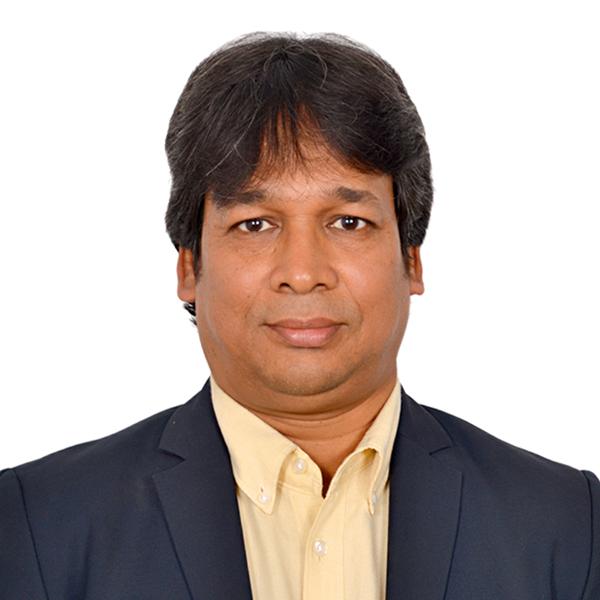


A controversial Bangladeshi fact-checking organisation has attempted to tarnish my reputation as a journalist by taking offensive, unacceptable, untrue, and unprofessional actions regarding one of my reports. I believe it is necessary to respond to the politically motivated allegations they have raised in the name of fact-checking.
First of all, what is the report? On September 11, a detailed report with my byline was published in the English daily – Daily TIMES of Bangladesh. The report concerns Miraj Sheikh, a fisherman and professional motorcyclist who went missing on the evening of April 10 from the Joymonir Ghol neighbourhood of Mongla Bagerhat. Those interested can read it here: Miraj Shaikh: Enforced or wilful disappearance?
Various media outlets at home and abroad reported that Miraj was a victim of enforced disappearance by the Coast Guard members. This is the first report of an enforced disappearance in the post August 5 political change in Bangladesh who forced disappearance had a regular event. That is why, I decided to investigate the incident.
To prepare the report, I adopted a customised method: figuring out how the news of Miraj’s disappearance reached his family. I tracked down the two individuals who revealed that no one had actually witnessed Miraj’s disappearance with their own eyes. Everyone had only heard about it. To date, there is no video or photographic evidence.
During my investigation, I obtained an official statement given by Miraj’s mother on August 11. She gave it to the Coast Guard in the presence of the police. In that statement, she mentioned that she had heard the Coast Guard members had taken her son away. She provided a crucial piece of information in that statement: she stated that Miraj had a dispute over financial disputes with a local individual named Faruk.
When I asked the victim’s sister about this statement, she confirmed that they had given it, but objected to how I obtained it, noting that it was supposed to be confidential. Questioning how I obtained a confidential statement constitutes an interference with the practice of journalism.
Additionally, twenty minutes after his disappearance, Miraj spoke for six minutes with the leader of a robber gang. I spoke with him. He stated that Miraj was accused of holding six lakh taka that was extorted from the families of six abducted fishermen by his gang. In this context, I raised the question of whether robbers, another group, or some force might have abducted Miraj. I did not jump to any conclusions.
It was also claimed that I quoted human rights activist Nur Khan Liton without speaking to him. This is untrue. I spoke with him on WhatsApp for 12 minutes on August 27. The fact-checker did not verify his statement; had they checked, they would have seen whether I spoke with him or not.
Above all, I clearly told the fact-checker that they could not quote me. But they quoted me in violation of the basic rule of quoting some respondent. What kind of fact-checking and professionalism is this?

How I Conducted the Investigation: A Detailed Explanation
I arrived in Mongla by a non-AC bus by noon on August 28. My objective was to visit Miraj Sheikh’s home and speak with his family members in person. In an investigation, body language, environmental conditions, facial expressions, and tone of voice are far more crucial than just spoken words; they help make sense of an incident and open up new avenues of inquiry.
The day before, on Thursday the 27th, between 11:08 and 11:09 AM, I called human rights activist Nur Khan Liton three times on WhatsApp. He could not answer. At 11:22 AM, I spoke with him for 12 minutes regarding Miraj Sheikh, and he told me that I should visit the scene and conduct an investigation.
Therefore, the claim in the report that I never spoke with Nur Khan is incorrect. He said he didn’t know me, but I have met and spoken with him countless times at various meetings, seminars, courts, and on the street. Our professional relationship spans nearly 20 years. I have sat next to him in court hearings during the trial of photographer Shahidul Alam and mentioned his name numerous times in news articles I wrote for the US news agency BenarNews.
Upon arriving in Mongla on the 28th, I called the victim’s sister at 2:11 PM. I introduced myself and spoke with her. I informed her that I had spoken with Nur Khan and suggested that if she wanted to know more about me, she could ask Nur Khan Liton. The reason for referencing Nur Khan was to make her feel at ease talking to me.
The claim in the report that I obtained her number from Nur Khan Liton is incorrect. As a journalist, obtaining someone’s phone number is not difficult for me.



Miraj’s sister informed me that she was in Dhaka and would be leaving the city on Saturday. Over the phone, she briefly explained what had happened. I told her I was heading to the Joymonir Ghol area and would speak with her later. Afterward, I rode a motorcycle to Joymonir Ghol. The bike driver (017-**3634**) knew Miraj and helped with important background and some local context. I went to Miraj’s neighborhood, inspected the scene, and spoke with local residents. It was already nighttime by the time I returned.
Miraj’s sister stated that a local BNP leader first informed the family about Miraj’s disappearance. I spoke with him that evening at the Joymonir Bazar. He said he was in Khulna at the time of the incident and was informed by a woman who witnessed Miraj being taken away. That BNP leader informed his younger brother, who then sent a young boy to Miraj’s house to break the news to his mother.
On the 29th, I tracked down that woman and spoke with her in Mongla. I also spoke with the robber chief whom Miraj had called 20 minutes after his disappearance. After speaking with all parties involved in preparing the report, I did not find a single person who said they witnessed Miraj being abducted. Everyone said they had only heard about it.
The individuals I spoke with are key informants—what are referred to in English as “Key Informants.” The fact-checker brother questioned why I spoke with them. The answer is that in any research, investigation, or inquiry, you must speak with Key Informants. Talking to others yields no results.
The fact-checker stated that my hands are “long” (implying heavy influence), questioning how I managed to acquire the confidential statement given by the victim’s family to the Coast Guard on August 11.
It is worth noting that in this statement, Miraj’s mother stated that she heard the Coast Guard took her son—she did not see it. She mentioned that there is a video of Miraj’s disappearance, but she does not know who has it. She also stated that Miraj had a monetary dispute with a local man named Faruk. Mentioning this, I asked Miraj’s sister whether a third party could be behind the incident. She insisted that the Coast Guard took her brother, yet she could not provide any proof. I texted her asking for acceptable evidence so that I wouldn’t leave the Coast Guard, but she could not provide it. I asked which Coast Guard official (CC) had admitted to them that they took Miraj, asking for the officer’s name, an audio call clip, or any proof. She neither provided nor could provide any.
The fact-checker noted in their report why I asked Miraj’s sister various questions. Is it a crime for me as a journalist to ask these questions? Is questioning the victim’s sister a crime? My job is to ask questions. I will continue to ask questions.
After the report was published, the fact-checker texted me with a greeting (salam). I did not know him. When I called him back, he introduced himself. He asked me how I obtained the statement given by Miraj’s mother on August 11, arguing that it was confidential. The victim’s sister had said the exact same thing to me. I told the fact-checker brother: why should I tell you where I got it? A journalist is not obligated to reveal where they obtain documents. I further told him that I would go to jail if necessary, but I would not reveal my sources. If I acquire something for you, am I supposed to disclose it to someone else? He repeatedly asked me where I got the confidential material. I told him that a journalist’s job is to uncover confidential things.
Then I asked, “Are you going to quote me?” He replied, “Yes.” I told him, “You cannot quote me anywhere. I am telling you this just so you understand the context.”
I assumed he would act professionally. But this institution that purports to teach journalism to others went ahead and published my words—and wrote a half-truth. Remember, a half-truth is more dangerous than a lie.
What kind of fact-checking and professionalism is this? How can people trust individuals and organisations that have no accountability regarding the fundamental tenets of journalism?
The author needs further training on how to condense an entire conversation with a person into writing. I would like to draw the attention of those who run this organisation to this matter.
Another point: can he really question where I obtained a document? My profession grants me the freedom to uncover confidential matters.
The fact-checking piece claimed that my hands are long, and that is how I obtained the confidential statement given by Miraj’s mother, labeling it “manipulation.” Having “long hands” implies that my sources are good, my credibility is high, and people trust me.
I want to pose a question: is having good sources a crime? I consider it my competence. I obtained a document that no other journalist in Bangladesh could get, and from that, I raised a new question. What is “manipulated” about this? Before writing anything, one should thoroughly understand the meanings of words.
I believe the job of journalists is not to flow with the mainstream current, but to swim against it and challenge established narratives. I have done that all my life, and, Inshallah (God willing), I will continue to do so in the future.
Anyone may dislike my report or claim that it isn’t a proper report. I have no questions or objections to that. On the other hand, the number of readers who called my report excellent is not small either. That is also worth noting.
To those who are handing out lessons on journalism, I say: find the answers to the questions I have raised. That might lead to a new avenue for rescuing Miraj. Investigating with prejudice does not always yield a correct investigation—that is the core message of my report.
The surprising thing is that a human rights activist and a barrister claimed that obtaining a confidential statement during an ongoing investigation is unethical. They sound very much like government police, the army, or the attorney general. In the past, human rights activists never spoke this way; now they do. When a human rights activist questions a journalist’s rights and mandates to investigate an incident, it becomes clear they are no longer a human rights activist. They have become something else.
During the Awami League regime, most of the human rights activists fled to America and Europe to save their lives. When the word “human rights” was not uttered anywhere in Bangladesh, including mainstream media, I was publishing news on human rights in BenarNews, working right from within the country. Check BenarNews to see how much Kamran Reza Chowdhury has contributed to exposing human rights violations in Bangladesh.
For those interested, I have provided some links to BenarNews where I reported by quoting Nur Khan.
Odhikar shut down: Govt creating ‘atmosphere of fear’ for human rights groups
Bangladesh’s Escalated Anti-Drug Campaign Draws Fire from Rights Activists, Opposition