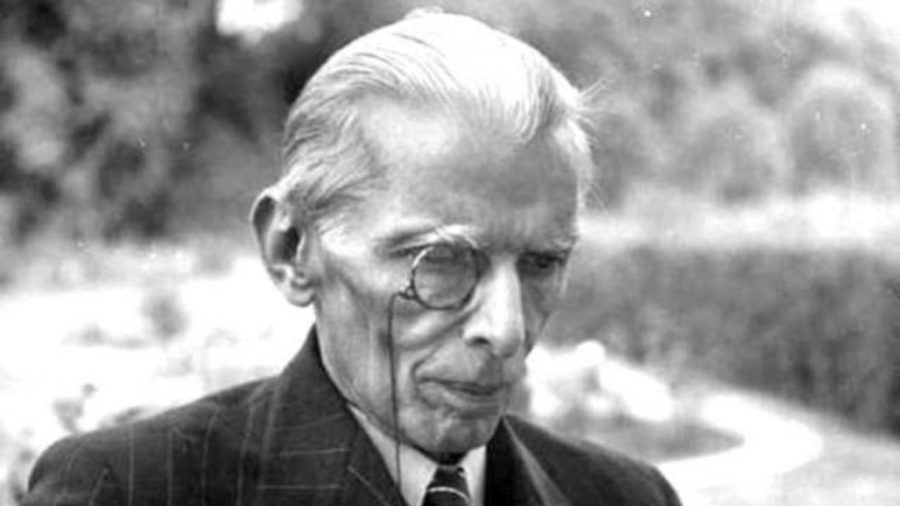

Pakistan’s founder Muhammad Ali Jinnah has suddenly returned to the centre of political debate in Bangladesh, hailed by some as the “builder of a modern state”, a “rare individual” and even the “first father of the nation”.
The trend began after the August 2024 mass uprising but intensified around Jinnah’s recent death anniversary. Inqilab Moncho and members elected from the Islami Chhatra Shibir panel to the Dhaka University Central Students’ Union (Ducsu) have been among the most enthusiastic. Organisations representing stranded Pakistanis and several individuals have also joined in.
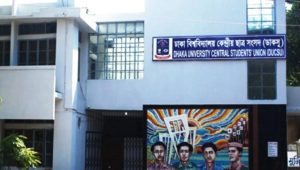
The controversy deepened after three images of Jinnah appeared in the renovated Ducsu museum. A former student tore them down, student organisations protested and Ducsu responded.
At the heart of the debate is a larger question: is Jinnah simply being reassessed as a historical figure, or is his renewed prominence part of a broader post-5 August attempt to reshape the established political narrative surrounding Sheikh Mujib and the Liberation War?
Various statements have sought to portray the Liberation War as a wrong decision and argue that people suffered enormous losses because Pakistan was “broken up”. There have also been attempts to obstruct events involving the national anthem and instances of slogans being raised in Dhaka in support of anti-independence leaders.
Dhaka University Department of Political Science Professor Mamun Al Mostofa sees little reason to regard the developments as an objective historical reassessment.
“This is an attempt to diminish Sheikh Mujibur Rahman as much as possible in the post-August ’24 period,” he said.
On 11 September, Inqilab Moncho published a photo card commemorating Jinnah as “one of the subcontinent’s leading politicians, proponent of the two-nation theory, one of the visionaries of the state of Pakistan and Pakistan’s first governor-general”.
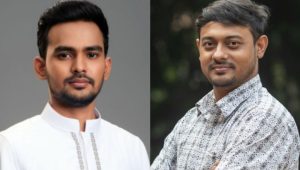
Faham Abdus Salam, son-in-law of President Mirza Fakhrul Islam Alamgir, also wrote about Jinnah.

“He is a rare individual of the twentieth century (possibly the only one) who created a state. No one else can claim that I created a state that had no reason to exist, whose very name was a made-up acronym,” he wrote.
Social media activist Afsar wrote on his Facebook page, Afsar’s Quest, “The partition of India is essentially the reason behind the hatred of Jinnah. Jinnah shattered the dream of an undivided India. It is because of Jinnah that we got Bangladesh.”
“Mujib’s ‘foolish’ followers have turned Jinnah into someone who was anti-Bangladesh and anti-Liberation War,” he added.
The comments triggered a counter-discussion over Jinnah’s personal life, secular beliefs and distance from religious practices.
Writer and researcher Asif Bin Ali wrote, “I cannot understand why Jamaat-Shibir suddenly started calling him ‘father’. Has Maududi’s politics become so exhausted in Bangladesh that Jinnah now has to be imported afresh?”
Activist Sudipta Biswas Bibhu asked why Inqilab Moncho and others from Jamaat-Shibir had placed Jinnah in the “position of a father”. He alleged attempts were being made to bring “Pakistani ideology”, “Pakistani thinking” and “religion-based politics” back to Bengal.



“Jinnah is just a pretext,” he said.
Jinnah’s place in Bengali political history has been contested since 1948.
On 21 March that year, he spoke in favour of Urdu as Pakistan’s state language at the then Racecourse Maidan, triggering a strong reaction among Bengalis, including Dhaka University students. The campaign for language rights later developed into the Language Movement of 1952.
“After he spoke in favour of making Urdu the sole state language, the political identity Jinnah acquired among the people of then East Bengal later became the principal basis for his assessment,” Professor Mamun said.
Jinnah died on 11 September 1948, 23 years before the Liberation War.
Mamun said the present debate could instead be seen as an attempt to establish another political narrative by overshadowing Sheikh Mujibur Rahman, whom he described as the architect of independence and intrinsically linked to the establishment of Bangladesh.
Numan Ahmed Chowdhury, who contested for the Liberation War and Mass Movements Affairs Secretary post from the “Independent Students’ Unity” panel in the latest Ducsu election, alleged that those who opposed the Liberation War and independence had come to power in Ducsu and were implementing their “‘original father’ Ghulam Azam’s plan for the ‘Pakistan Restoration Committee’”.
“They have restarted the praise of Jinnah as the initial step towards implementing that vile objective,” he told TIMES.
He said Jinnah had made the first assault on the Bengali struggle for liberation through language.
“The man who did not want Bengalis to be allowed to speak in their own language would certainly have opposed the Liberation War had he been alive; the pro-Bangladesh people have no doubt about that,” he said.
The debate moved from social media to the Ducsu museum after it reopened following renovation on 13 September.
A visit found three images of Jinnah on display. One was from the Racecourse Maidan on 21 March 1948. Another showed Jinnah and other All-India Muslim League leaders at its annual conference in Lahore in March 1940. The third was a Dawn newspaper clipping on the 1970 election, by which time Jinnah had been dead for 22 years.
The museum displays photographs spanning Dhaka University’s establishment in 1921 to the July 2024 uprising and the subsequent Ducsu election.
But there is no standalone or prominent photograph of Sheikh Mujibur Rahman. No photograph of him appears in sections covering the Language Movement, United Front election, Six-Point Movement, Agartala case, 1969 mass uprising, 1970 election or 7 March speech.
Asked why Sheikh Mujib was absent from the 1947-1971 section, Ducsu Liberation War and Democratic Movements Affairs Secretary Fatima Tasnim Juma told journalists: “I didn’t feel like it, so I didn’t put one up.”
Former Dhaka University student Abu Tayeb Habildar later tore down the three images. “Why has Ducsu hung these pictures of Jinnah? Shadik Kayem, do you want to make Urdu the state language?” he said.
Jatiyatabadi Chhatra Dal accused the current Ducsu leadership of abandoning “the university’s spirit of liberation” and displaying covert affection for the defeated forces of 1971 and “love for Pakistan”.
Its Dhaka University unit President Ganesh Chandra Roy told TIMES that displaying a controversial person’s picture in the museum was an act of “moral degradation”.
Liberation War veteran and Swadhin Bangla Betar Kendra artiste Kalyani Ghosh said, “Some are trying to conceal historical realities and construct a new interpretation. This is extremely dangerous. As a result, the spirit and values of the Liberation War are gradually being weakened.”
Dhaka University authorities also objected to the display of images of Jinnah and Abdul Malek, a leader of Islami Chhatra Sangha, Jamaat’s student organisation at the time.
The university said displaying images of individuals whose roles were at odds with the Language Movement and the history of Bangladesh’s independence was “in no way acceptable”.
Historical evidence shows that Islami Chhatra Sangha leaders and activists formed the Al-Badr killing force during the Liberation War. Leaders and activists of the organisation established Islami Chhatra Shibir in 1978.
Jamaat also took up arms on Pakistan’s side during the Liberation War and attempted to stop Bangladesh’s struggle for independence.