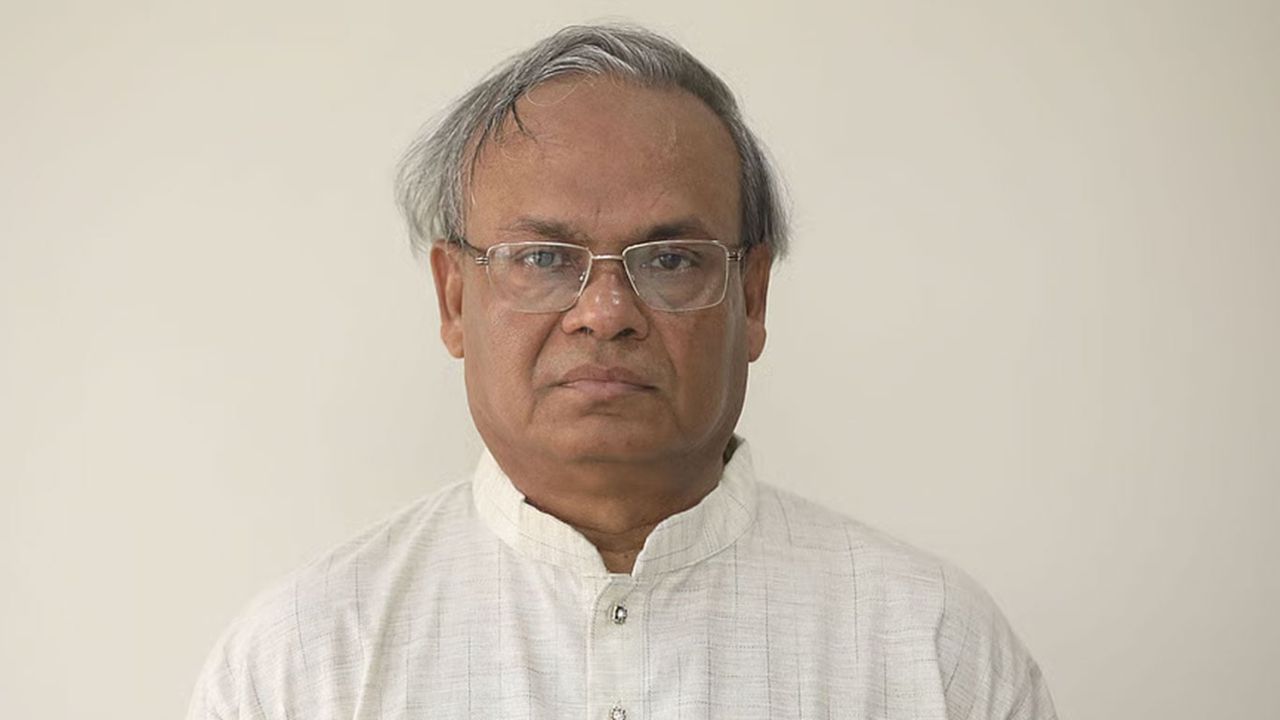



Opposition Leader and Jamaat-e-Islami Ameer Shafiqur Rahman has asked the government to clarify its position on the Matarbari deep-sea port following the Prime Minister’s recent visit to Japan.
He said, “Bangladesh must not be leased out to anyone in the name of connectivity.”
He made the remarks on Saturday morning at the inaugural rally of an 11-party alliance’s long march from Dhaka to Kushtia, held at the south gate of Baitul Mukarram National Mosque in the capital.
Referring to the prime minister’s four-day visit to Japan, Shafiqur said, “The nation must be told why he went and what he accomplished. In particular, the nation wants to know clearly whether anything is being concealed regarding the Matarbari deep-sea port.”

He added, “Those who accepted subservience in the past are now suffering the consequences. They had their ‘didi’ and ‘dada’; who do you have?”
About the demands, the Jamaat ameer said that if even one of them had been implemented, extortionists, land grabbers, corrupt individuals and drug kingpins would not have been able to raise their heads.

Criticising the BNP, he said the party had betrayed the nation and ridiculed the aspirations expressed through the referendum.




He urged the BNP to announce the implementation of the referendum’s verdict before the parliamentary session begins on 9 November.
Shafiqur also said that if such an announcement were made, the opposition would not need to organise any further programmes for the time being.
The Jamaat-led 11-party alliance began the long march at around 8:20am from the south gate of Baitul Mukarram.
The demands include implementation of the public verdict expressed through the referendum; trial of the July genocide; resolution of electricity, fuel, gas and fertiliser shortages; control of rising prices of essential commodities; improvement of the law and order situation; an end to narrow partisan appointments and politicisation; and an end to corruption, extortion and land grabbing.

Speaking at the rally, Jamaat Secretary General Mia Golam Porwar said, “BNP, the ruling party, has mistakenly embarked on the path of the fascists once again.”
He alleged that the government wanted to appoint party loyalists to key positions, including the Chief Justice, constitutional offices, the Public Service Commission and the Anti-Corruption Commission.
Porwar said that if the government created a political crisis by pushing matters that could be resolved in parliament onto the streets, it would have to face the consequences.
He also described the government’s failure to arrange the oath-taking and convene a session of the Constitutional Reform Council as a “betrayal” of the July Charter. He added, “The 11-party alliance’s movement will continue until the July Charter is implemented.”