


“I was called during puja vacation and told to leave the flat,” recalled a second-year Dhaka University student residing in a building at Azimpur Government Colony.
She said, “Coming back from home during the holidays, I was completely at a loss as to how I would search for accommodation. Upon arriving, I spent three straight days searching for a house.”
“I could not comprehend how to move so many belongings all of a sudden or where I would stay. I have no relatives in Dhaka. With immense hardship, I finally managed to secure a flat and moved in today,” she added.
Her ordeal reflects the harrowing reality currently gripping hundreds of students living as subletters across government residential quarters in Dhaka.
Another female student from Dhaka University, who resides alone in a rented room, echoed the despair, “Out of nowhere, they tell me to vacate. I live alone in a single room; as a young woman on my own, where am I supposed to go at a moment’s notice? There are serious security risks. They have turned everything into high-handed chaos.”
The sudden directive and growing distress
The turmoil stems from an urgent public notice issued last Thursday by Directorate of Government Accommodation under the Ministry of Housing and Public Works.
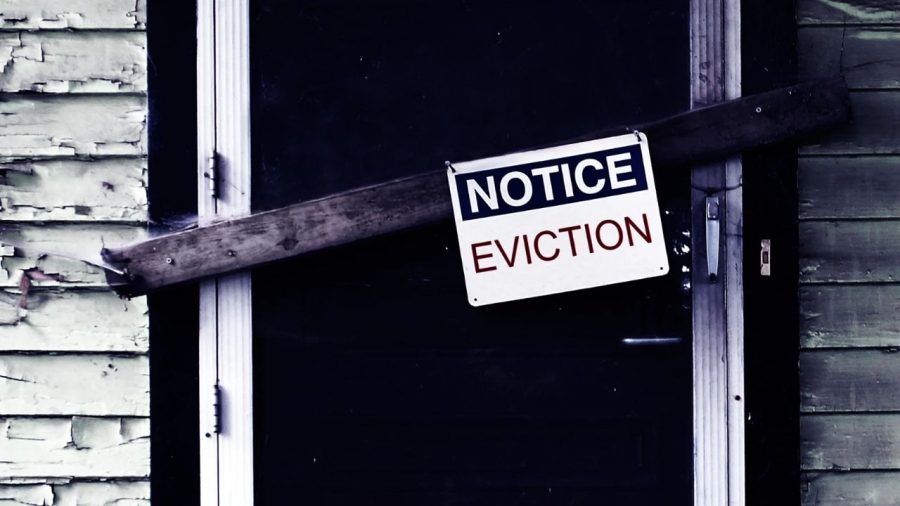
The directive strictly ordered government employees to clear all subletters or tenants from their allotted quarters by 31st October, instructing allocated public servants to reside in the residences themselves.
The notice warned that if any subletter or tenant is found in a government flat after 31st October, the allotment of the concerned official will be cancelled, alongside severe disciplinary and legal action.

For a vast number of students attending Eden Mohila College, Dhaka University (DU), Bangladesh University of Engineering and Technology (BUET), and Dhaka Medical College (DMC), these government quarters served as vital housing.
Forced to vacate abruptly due to the government decision, while a few have managed to secure new accommodation, many others remain caught in intense suffering.
A daunting question weighs heavily on their minds: burdened with all their possessions, where are they supposed to go?
Heightened surveillance, broken furniture, and privacy violations
The environment inside the colonies has rapidly deteriorated into fear and severe restrictions.
A female student from the Department of Sociology at Dhaka University recounted her experience to TIMES, mentioning that she received the news during Durga Puja vacation. As panic spread, several landlords promptly removed their subletters.




Others, hoping to hold out until the last possible moment, retained tenants under the guise of visiting relatives, whilst flat owners who previously leased out two or three rooms stopped doing so and restricted rentals strictly to single rooms.
“Initially, my parents did not treat it with urgency,” the Sociology student explained.
“However, when entering the colony, being stopped and interrogated by guards felt extremely abrupt and shocking. Suddenly, stepping outside the colony is restricted; our landlords have forbidden us from going out,” she added.
The crackdown has also severely affected everyday life and community access. A boundary wall has been erected across a local market pathway that connected to Little Angels School, forcing young children to cross busy roads and walk long distances to reach school.
Inside the flats, personal dignity and basic privacy have dissolved. “Previously, I could lock my room, but now they do not permit locking,” she added.
She said, “They are violating my privacy. They demand that rooms must not be shut and that we must sleep with doors unlocked – everything must be kept open.”
She added that “They have thrown our belongings outside or stored them in their own rooms. They speak of their own troubles – that they cannot keep us – but nobody considers where this girl is supposed to go now.”
Even government officials residing in the colony acknowledged the harshness of the situation.
Speaking on condition of anonymity, several officials told TIMES that while subletting is improper, many less solvent employees engage in it for essential supplementary income.
However, they condemned the violent eviction methods, revealing that they witnessed bed frames being deliberately smashed to force students out of the flats.

They stressed that on humanitarian grounds, the authorities ought to have extended the deadline to allow students adequate time to seek alternative shelter.
Silence of student bodies and a 3-point ultimatum
The lack of immediate institutional support has compounded the students’ grief.
Soumik Roy, a student from the Department of Mass Communication and Journalism at Dhaka University, voiced intense frustration to TIMES: “So many students are being cast out—where will they go? Nobody cares. I do not see student organisations raising even a whisper. They are our representatives, yet no one is raising a voice for so many affected students.”
In response to the mounting crisis, National Chhatra Sabha stepped forward on Sunday, submitting a three-point memorandum of demands to Dhaka University administration.
They highlighted that following the puja vacation, classes and examinations across numerous departments are commencing on Sunday, leaving students stripped of shelter at a critical academic juncture.
For female students, the emergency is particularly severe, as securing safe and affordable housing on short notice is nearly impossible.
Emphasising that the issue has escalated beyond mere housing into a question of security, dignity, and the fundamental right to education, National Chhatra Sabha declared that the university administration cannot evade its moral duty as guardians of the students.
Under their first demand, the organisation calls for a humanitarian extension granting students a minimum of one month to vacate accommodation, requiring the university administration to negotiate immediately with the Ministry of Housing and Public Works to take effective action.
Secondly, they demand full protection for female students, ensuring their complete safety and immediately halting all forms of harassment, coercion, or forced eviction during this interim period.
Finally, as a permanent solution, they urge the administration to expedite the construction of proposed residential halls within the shortest possible timeframe to resolve the chronic housing crisis permanently.