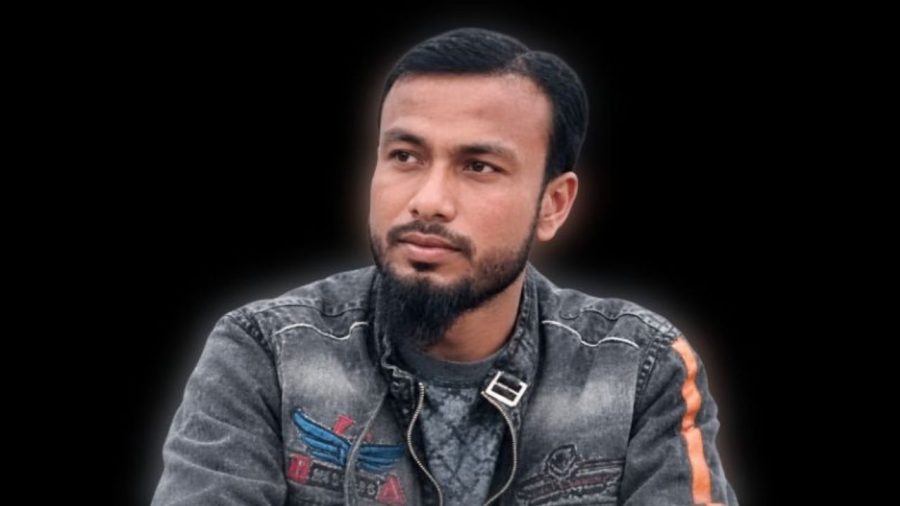



The allegation of the forced disappearance of commercial motorcyclist, fisherman Miraj Shaikh is fraught with inconsistent accounts of the victim’s family members and unsubstantiated statements by the rights defenders.
Five months ago, on April 10, Miraj went missing from Thoda hamlet of Joymonir Ghol neighbourhood under Mongla sub-district in the southwestern Bagerhat district.
The family members and rights bodies alleged that two Coast Guard members in civil attire abducted Shaikh at 7:00pm from Al-Amin’s shop at Thoda point, forcing him to get on board a fishing boat to take him to the Coast Guard’s Harbaria floating station, commonly known among locals as the pontoon. Afterward, a speedboat bearing Bangladesh Coast Guard markings in red and white came to the pontoon around 7:45pm and took Shaikh away.
Thoda is the last piece of land on the bank of the coastal Shela River, which separates the eastern flank of the world’s largest mangrove forest, the Sundarbans, from the Joymonir Ghol neighborhood, inhabited mainly by poor fishermen, forest-based criminal gangs, and robbers.
The Coast Guard maintains a floating station (named Harbaria) inside the Shela, hardly 200 metres from Thoda, with a view to combatting forest-based criminals and protecting the forest and the local people.
“Since then, Miraj has been untraceable. The Coast Guard is responsible for this enforced disappearance. He was tortured in front of family members and villagers. The police know everything about the incident,” rights activist Noor Khan, also a member of the interim government’s commission that unearthed cases of enforced disappearances during the Awami League government, told TIMES.
“The Coast Guard must return Miraj to his family members,” said Noor, without referring to any substantial evidence other than the statement of the family members and locals.
But the police see Miraj’s missing story shrouded in mystery.
Atiqur Rahman, the officer-in-charge of Mongla police station, said Miraj’s wife and mother came to his office on April 23, twelve days after the incident, informing that they suspected Miraj could have been abducted by the Coast Guard.
“But they could not present a single person who witnessed Miraj being taken away by anyone. Even they could not show any photos or videos supporting his abduction. Therefore, we registered a missing diary instead of a case regarding an enforced disappearance,” he told TIMES.
This journalist recently visited the place of occurrence, reaching out to the key persons who first broke the incident to their family members. He also met a forest-based robber leader Chhoto Sumon, who talked to Miraj 20 minutes after his alleged detention by the Coast Guard members. He said Miraj possessed Tk6 lakh collected from six fishermen abducted by the robbers, hinting that Miraj may go into hiding with the money.
Miraj’s mother stated to the Coast Guard that her son was imprisoned 10 years ago and he had some troubles over financial dealing with a local gang leader Faruk.
Allegations and conflicting statements
Nearly a month later Miraj’s disappearance, his sister, Liza Islam, held a press conference on 8 May, at the Mongla Press Club. In her written statement, she alleged that “several Coast Guard members” whisked her brother away from a shop at Thoda in Joymonir Ghol at 7:00pm on April 10. Miraj’s wife, Mukta Khatun, and several villagers were present while he was being taken.
But Mongla police officer Rahman said Mukta did not tell him that she witnessed Miraj being taken away by two plainclothesmen.
Liza also stated that the family members went to the Coast Guard base in Digraj, Mongla, the next day, April 11. The Coast Guard personnel “promised them that they would produce Miraj at 4:00pm.” The Coast Guard later denied taking Miraj away. She added that when contacted later, the officer-in-charge of the Coast Guard’s Harbaria station allegedly confessed to detaining Miraj and promised he would be released within two to three days.
In the second press conference on 26 May at Bagerhat Press Club, Liza provided a slightly revised written account: she stated that “two Coast Guard personnel in civilian clothes” whisked Miraj away from a shop at Joymonir Thoda point at around 7:00pm, placed him on a private boat owned by one Mannan, and took him to the Coast Guard’s Harbaria pontoon. He was allegedly beaten on the pontoon in front of villagers. Thirty to 40 minutes later, a Coast Guard speedboat carrying seven to eight uniformed personnel arrived near the pontoon. The speedboat clearly bore the words “Bangladesh Coast Guard.” The Coast Guard members took photos and videos with Miraj before taking him away.

Liza said eight to 10 days after the incident, two Coast Guard members and a boatman named Mizan came out of the pontoon at dead of night and took Miraj’s motorcycle away. One Coast Guard member was named Robin, while the other’s face was covered with a black mask, she claimed but did not clarify who witnessed this or how they managed to see the black mask in the remotest village lacking electricity. The Coast Guard said it has no member named Robin.
When contacted for further clarification on Tuesday, Liza told TIMES that Miraj was whisked away by two people in civilian attire after Maghreb prayer call, at around 7:00pm. But on April 10, the prayer call happened before 6.30 pm.
According to her, Miraj’s wife, Mukta Khatun, was the first person to learn that the Coast Guard had taken her husband away. A local political leader in the Joymonir Ghol neighborhood, Mosha Khan, called Mukta to inform her of the matter, Liza said, adding that Mosha had not actually seen Miraj being taken away, noting that Mosha had learned about the incident from another person whom she did not identify.
Mosha heard from Selina
On 28 August evening, this correspondent met Mosha in Joymonir Ghol Bazar and talked to him again on Wednesday and asked who called him to inform the incident.
“I was in Khulna. After Maghreb, Selina (a local woman) called me and informed that the Coast Guard had taken Miraj away. Selina saw Miraj being taken away. She and her husband catch fish with Miraj. I called my younger brother, Dulal Khan, who lived near Miraj’s house. He communicated the incident to his wife and mother,” he said.
“Miraj’s mother rushed to Thoda. She saw Miraj on the pontoon. Miraj’s mother and wife rushed to Nazmul member to inform him of the matter. Nazmul Member called the CC (contingent commander) of the Coast Guard. The CC said he would be questioned and would either be returned to the family or be produced before the court,” Mosha told TIMES.
Selina contradicts Mosha
TIMES correspondent saw Selina in Mongla on 29 August and asked her whether she saw Miraj’s detention and had called Mosha about the incident.
“I was at my house. I did not see Miraj when he was taken away,” she said, disputing Mosha’s account
Selina said, after Maghreb, some children came to her house and informed that Miraj was taken away. “I did not have the contact numbers of Miraj’s mother and wife. Then I called Mosha, who knew Miraj’s mother and wife.”
She said people dispersed when the news broke that Miraj was taken away—a statement contradicts the family members and rights defenders.
Around 8:00pm, Selina said, Miraj’s wife, mother-in-law, and father-in-law came to her house and asked who could have taken him away. “I told them that I did not see Miraj. Then we all went to Thoda together, but did not see him anywhere,” she said.




She said she called Miraj three times on April 10 because he possessed Tk 3,000, which he got from the proceeds of the sale of fish that Miraj and her husband had caught.
“Several days later, Liza came to me and informed me that they had bought a new SIM (01963994772) used by Miraj and saw from the call list that I called Miraj thrice on April 10.
“Miraj’s sister, mother, and wife allege that I am involved in the incident. [They claim] I called Miraj and made space for the Coast Guard to whisk him away. Now, they threaten me: either I give a statement that the Coast Guard whisked him away or face a case from them,” said Selina.
Cyber security and forensic expert Tanvir Hassan Zoha smells something wrong in it. “It is unusual that the family members got the call record from a new SIM card. It is not possible to view the call log of a new SIM card. The investigator must ask them how they got the call log,” Tanvir told TIMES.
“At the same time, how did they manage to get a new SIM card used by Miraj because the operators only sell SIM card to the original owner?”, he asked.
Miraj’s father-in-law Jamal came to know about his son-in-law’s detaining from some people and he went to Thoda from where he could see Miraj on the Coast Guard pontoon. He said a Coast Guard boat with black and red stripes came near the pontoon between 9.00pm and 9:30pm and took Miraj away.
His comments do not match the statements of Miraj’s wife and mother, both of whom claimed that Miraj was taken away by the Coast Guard at around 7.45 pm.
Jamal also said Miraj’s mother, wife and mother-in-law went to Nazmul Member on April 10 after Miraj was taken away, but he denied it to TIMES.
Asked whether he or anyone took video or photograph when Miraj was on the pontoon, Jamal said no.
Nazmul denies calling Coast Guard
Nazmul Hawlader, known as Nazmul Member, a member of the Joymonir Ghol union council, met this journalist on 28 August. He said he did not see Miraj’s abduction.
“I haven’t even heard anyone witnessing the Coast Guard members taking him away,” Nazmul told TIMES.
He said Miraj’s wife and mother came to him at around 9:00pm on 11 April and stated that Coast Guard members had whisked him away, though they did not actually see the abductors.
He said Miraj’s family members came to him again after 10 days, and this time his mother claimed she had seen Coast Guard members whisk her son away.
“I suggested to them: as you have seen them taking your son away, you should take legal action,” said Nazmul.
But the mobile call record shows that Miraj’s mother was in Mongla—at least one hour journey by motorcycle from Joymonir Ghol—at the time of the alleged abduction. She came to Joymonir Ghol at 10:15pm on 10 April, according to the call detail record (CDR) obtained and verified by TIMES.
“On another day, Miraj’s mother came to me and proposed that I provide some people to form a human chain in front of the Coast Guard base in Digraj and I join it. But I refused.
“After several days, wife, mother, and sister of Miraj led a group of people to attack the Coast Guard pontoon. Many of the Coast Guard members were injured,” he said.
Shop owner’s denial
Al-Amin, who was seen in a video clip stating that the Coast Guard whisked Miraj away from his shop, spoke with TIMES at Thoda, overlooking the Coast Guard pontoon, on February 28.
“Miraj and I grew up together. Miraj was not taken away from my shop. I gave a false statement that the Coast Guard members whisked him away from my shop,” he said.
Asked whether he had changed his statement fearing possible reprisal from the Coast Guard, Al-Amin said that Liza Islam, who lives in Jashore, came to him several days after the incident and suggested that Miraj would return if he blamed the Coast Guard.
“She shot the video in which I made the statement against the Coast Guard. I could not understand that the video would go viral. Now, everybody asking details about it, but I cannot answer,” he said.
Al-Amin claimed, “One human rights officer (Manobadhikar) threatened me that I would face case if I do not give statement that the Coast Guard taken Miraj away. I am in trouble now,”
Miraj had ransom money
Miraj Shaikh, whose whereabouts remain known, had a tainted past, having links with forest-based criminal gangs and robbers, according to police records available to TIMES.
His father was also a forest-based robbers and he has been leading a normal life in Jashore after surrender to the law enforcers.
Miraj used at least seven SIM cards, one of which was in use at 7:20pm—20 minutes after his reported abduction at 7:00pm on 10 April.
The call records obtained and verified by TIMES reveal that Miraj talked to the chief of the forest-based gang, Chhoto Sumon Bahini, at 7:21pm from Joymonirghol village.
This correspondent met Chhoto Sumon, who recently surrendered to the Coast Guard, on August 28 and 29 in Mongla to verify whether he had a conversation with Miraj Shaikh before being missing.
“I, Miraj, and Al-Amin are the same age. We grew up together. I lived in the forest. Miraj used to ensure provisions for us since we could not come ashore for fear of being arrested. I used to give him money in return,” he said.
“Miraj collected Tk600,000 from families in exchange for the release of six fishermen we kept as hostages in Harbaria in the Sundarbans. He was supposed to hand over the money to me, but he delayed it for several days, stating that he would come to me in a few days. I did not suspect such an incident would happen,” said Sumon.
“On 10 April, when he called me after Maghreb, I asked him ‘when are you coming’. He told me that he would return the forest entry card to the Forest Department and then see me (in the forest).
“Then I asked him, ‘Where are you?’ He responded, ‘I am going to the forest office in Chandpai. Currently, I am near the silo gate (Mongla silo in Joymonir Ghol).’ Suddenly, our conversation was cut off. I thought his phone might have run out of charge. Since then, his phone has remained off,” narrated Suman.
“As I told a TV station that Miraj has ransom money, his mother came to me and complained why I disclosed it. I replied ‘I can withdraw my statement if you guarantee that in Miraj would return.’ Then she said ‘How I can say; my son has a future.”
Sumon suspects Miraj may go into hiding or others may take him away.
Miraj had problem with Faruk
On 11 August, Miraj’s mother, Taslima Begum, gave a formal statement to the Coast Guard in presence of a police officer.
The statement read that Taslima Begum said she was in Mongla on the day Miraj went missing. She went to Thoda at 8:00pm. The boat that took Miraj away was big and was painted red and white.
Ten years ago, she said, Miraj was imprisoned. He had trouble with a local named Faruk over financial dealings two to three years ago.
What Coast Guard says
“The Bangladesh Coast Guard is in no way involved in the alleged forced disappearance of Miraj Shaikh. We are a force that has never been involved in enforced disappearances and extrajudicial killings in the 31 years of our existence. Our mandate is to arrest alleged criminals and hand them over to the police for prosecution. Furthermore, we do not even have facilities to accommodate detained persons.
In their official statements submitted to the police and the Coast Guard, the family members have nowhere stated that they witnessed the Coast Guard whisking him away.
They also falsely alleged that one of the contingent commanders (CC) has confessed that the Coast Guard took him away, but they could not give the name of the CC or provide an audio clip of the discussion.
“We are being treated like criminals without any substantiated proof. Unfortunately, human rights bodies also level such allegations against a reputed force like the Bangladesh Coast Guard without understanding the motive behind them.
“The main motive of such a smear campaign is to break the high morale of the force, relax its ongoing drives against forest-based gangs, and make space for criminals to continue the abduction of fishermen in the Sundarbans.
‘Should not blame victims’
Nur Mohammad, a former Inspector General of Police, on Wednesday told TIMES that the investigators should probe Miraj’s case from a wide angle.
“If the investigation proceeds with the assumption that a particular force has whisked him away, the investigation is unlikely to be fair,” he said.
Security analyst Commodore (Rtd) Mohammad Abdur Razzak told TIMES that the Coast Guard’s operations disrupted criminal networks in the Sundarbans, which inevitably fosters grievances against the force.
“Even if Miraj has a criminal past, that does not justify his abduction. Law enforcement agencies must locate him through a thorough investigative work, rather than relying exclusively on the plaintiff’s family members or the local people’s complaint, if any, against the Coast Guard,” he said.
“Investigating authorities should take all possibilities into consideration,” said Razzak.
Kamran Reza Chowdhury is Freelance Investigative Journalist