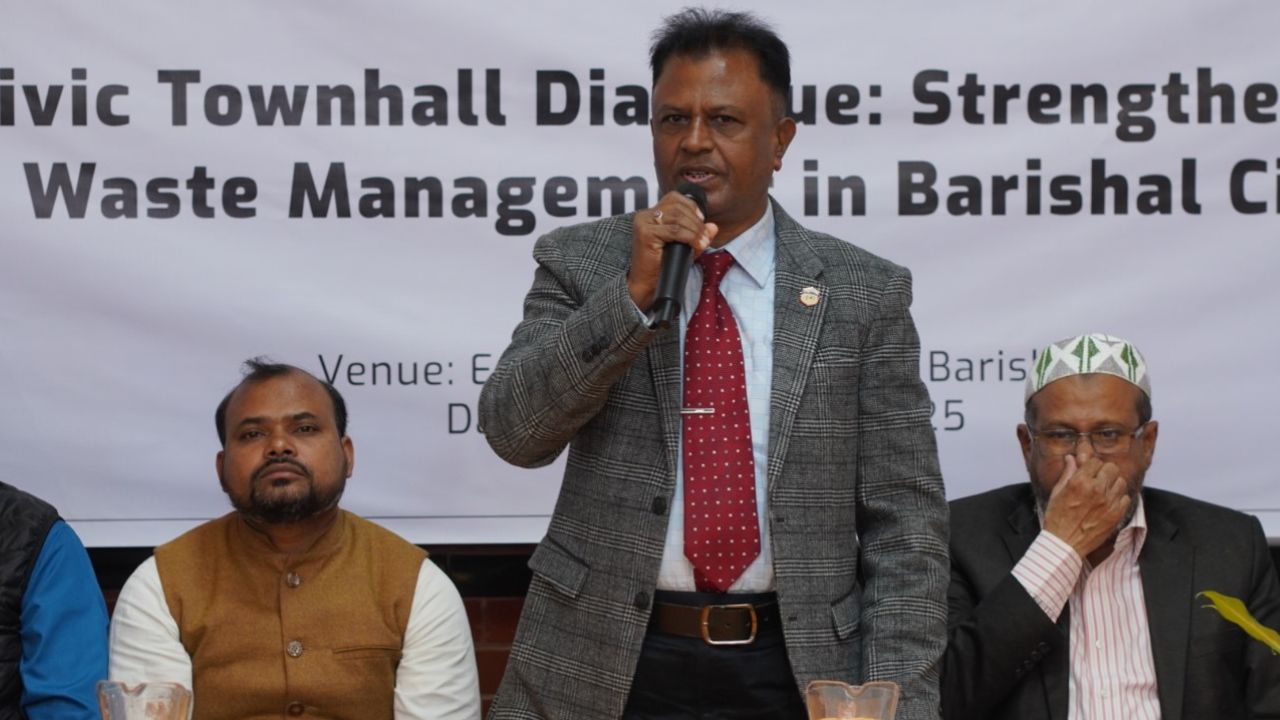



A town hall meeting titled “Waste Management Measures” was held in Barishal on Thursday to present the current state of waste management in the city and discuss steps for its improvement.
The event took place at the Euro Convention Hall, organised by Lal Sabuj Society with support from The Asia Foundation and funding from the Foreign, Commonwealth & Development Office (FCDO).
During the session, participants reviewed the existing waste management situation across Barishal, its adverse impacts, and the actions required for effective improvement.

Representatives from various government institutions, the city corporation, environmental experts, academics, youth organisations, media personnel, political leaders, and members of civil society attended the programme.
Notable attendees included Ahsan Habib, Additional Deputy Commissioner of Barishal; Mahbub Alam, Assistant Director of the Barishal City Corporation’s Sanitation Department; Abu Said Musa, District Chief Coordinator of the Central Party; Zia Uddin Sikdar, Member Secretary of Barishal Metropolitan BNP; Professor Mohammad Hossain Dulal, Naib Amir of Barishal Metropolitan Jamaat-e-Islami; Rafiqul Islam Rasel, Central Organizational Secretary of Ganadhikar Parishad; and Dr Mizanur Rahman, Member Secretary of Barishal Civil Society.




Speakers highlighted that rapid urbanization, consumer culture, and inefficient waste management have led to a significant increase in waste, posing serious concerns for the environment, public health, and climate.
They stressed the importance of introducing waste segregation systems, promoting recycling, ensuring community participation, increasing staff and resources for the city corporation, and fostering joint initiatives between local authorities and citizens.
According to the organisers, sustainable waste management can be achieved through responsible citizen behaviour, policy support, technological solutions, and regular awareness activities. Recommendations raised during the town hall will be forwarded to relevant policymaking institutions.
Speakers, organisers, and attendees collectively emphasised that coordinated and proper management practices are essential to keeping the city clean.
Teachers, local leaders, university students, city residents, and others also took part in the discussion and shared their views.