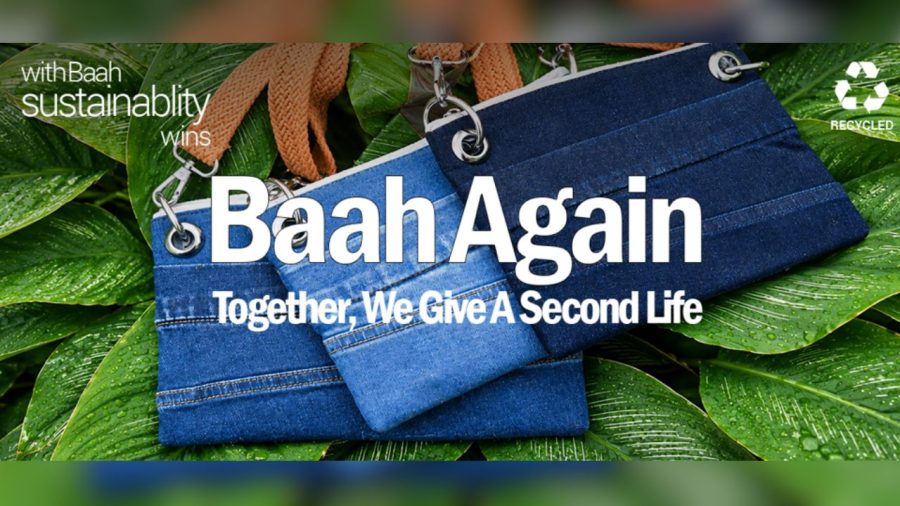



Sustainable lifestyle brand Baah has launched BAAH AGAIN, a new circularity initiative aimed at giving unwanted post-consumer clothing a new life through pre-loved, handcrafted design while creating opportunities for skilled local makers and artisans.
For more than half a decade, Baah has built its brand around sustainable design, using materials including jute, seagrass and upcycled resources to create contemporary lifestyle products, reads a press release.
With BAAH AGAIN, the brand is extending this approach to clothing.
The initiative will bring BAAH AGAIN Collection Days to workplaces, inviting employees to bring clean clothing they no longer use, including old jeans, outgrown children’s clothing and cotton garments that have been left unused in wardrobes.

Baah will collect and sort the clothing based on its suitability for transformation. Selected textiles will then be redesigned into contemporary products through Baah’s network of women makers, former garment workers and newly activated artisan communities, including members of the marginalised community.
BAAH AGAIN is not a machine-recycling programme. Instead of breaking clothing down into fibres for mechanical recycling, Baah will give suitable pre-loved garments and textiles a new life as products, retaining as much of the original material and character as possible while relying on human skill, design and craftsmanship.
The resulting products will form part of a developing BAAH AGAIN collection, creating a commercially sustainable circular model in which discarded textiles can return to use as desirable products while generating continued opportunities for skilled makers.




A workplace sustainability action
Participating organisations can host a Collection Day at their premises, giving employees a simple and practical way to contribute to clothing circularity. Employees bring clean, unwanted clothing, which Baah collects, sorts and assesses for transformation.
Baah currently reaches more than three million people across Bangladesh through its paid and organic digital communication each month, providing participating organisations with opportunities for sustainability-focused visibility around the initiative.
Building a circular ecosystem
BAAH AGAIN brings together four simple actions:
- BRING — Employees bring clean, unwanted clothing.
- COLLECT — Baah collects and sorts suitable textiles.
- TRANSFORM — Local makers and artisans turn suitable materials into new products.
- REWARD — Contributors receive a BAAH AGAIN reward for participating.
The initiative is being introduced to organisations including MNCs, banks, clubs, embassies, conglomerates, telecom companies, NGOs, schools and universities.
To make participation more meaningful, Baah, alongside its 25% BAAH AGAIN reward voucher, is also bringing together a limited group of BAAH AGAIN Sustainability Partners that will provide exclusive offers and experiences for participating employees.
The partner group includes Puro, Asus Bangladesh, Bengal Meat, ZEISS Vision Center by Opsis, Svadha, Tapout Fitness Dhaka, Tarka and Eonbazar, among a few others.
These partner offers will form part of the BAAH AGAIN Rewards, giving participants something tangible in return for taking part in the collection initiative while connecting them with brands aligned with healthier, more responsible lifestyles.
“Baah has been championing upcycling long before it became a talking point,” says Mirajul Huq, managing director and co-founder.
“Bangladesh discards nearly 880,000 tonnes of clothing every year — waste that sits in our soil and land for decades, causing lasting environmental harm. Through Baah Again, our pre-loved handicraft initiative, we’re inviting conscious corporates to join this circular journey with us. And it does more than reduce waste — it sustains meaningful work for skilled artisans whose craftsmanship rarely finds a place in the formal economy.”