
H. M. Nazmul Alam
The political cartography of South Asia and the Gulf has always been shaped by uneasy balances, fragile alliances, and the undercurrents of religion, money, and power. The recent defence pact between Saudi Arabia and Pakistan marks not just another step in that old dance but a significant turn that demands attention, especially from India. For decades, Riyadh and Islamabad have lived in a symbiotic arrangement- one trading cash for protection, the other providing military muscle in return for economic lifelines. Now that relationship has been formalised into a collective defense commitment, the consequences are bound to ripple across the region.
The agreement comes at a moment of heightened turmoil in West Asia. Israel’s war in Gaza, targeted killings of Hamas leaders abroad, and the anger that seethes through Arab societies have created pressures that Saudi Arabia can neither ignore nor control. Militarily, the Kingdom remains vulnerable despite its extravagant arms purchases. Economically, it is secure but aware that oil wealth cannot buy battlefield credibility. Pakistan, by contrast, is financially fragile but wields a hardened military and the nuclear deterrent Riyadh conspicuously lacks. Binding these two together through an explicit pact alters the geometry of security calculations, and India, long accustomed to seeing Pakistan as diplomatically isolated, must now take stock of this revival.
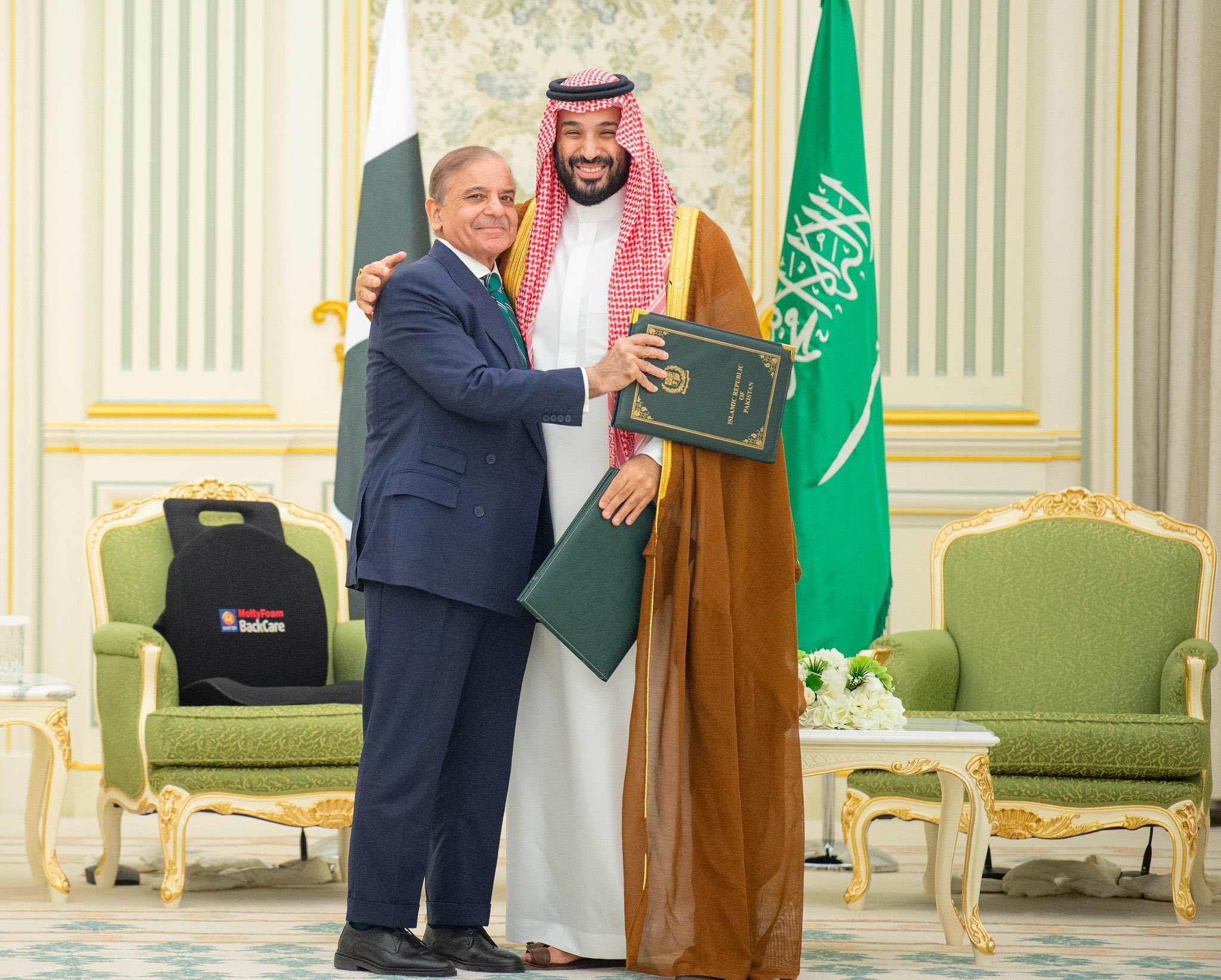
Symbolism is critical in geopolitics, and the symbolism here is unmistakable. The pact’s most striking clause, treating an attack on one as an attack on both, introduces a collective defence logic into the Riyadh-Islamabad axis. Even if the language remains aspirational, the intent carries weight. For Pakistan, this is an elevation of status: it gains not only fresh assurances of financial aid but also recognition as a protector of Gulf security. For Saudi Arabia, it imports nuclear shadow and military experience without the political risks of developing such capabilities at home. Together, the two countries broadcast a message of unity at a time when the Arab world is fractured and uncertain.

For India, the implications are unsettling. The rivalry with Pakistan has always been defined by military confrontation and diplomatic maneuvering. India’s strikes across the border, whether in response to terrorist attacks or as deterrent shows of force, have operated within the framework of a bilateral hostility. With Riyadh stepping into the picture, even symbolically, those actions may no longer be seen as confined to two neighbours but as provocations against a wider bloc. This creates an additional layer of restraint that did not exist before. Any military engagement now risks drawing in the prestige and political capital of Saudi Arabia, complicating India’s calculations of escalation.
Beyond the battlefield, there are deeper economic and social dimensions. Millions of Indian workers live and labour in Saudi Arabia, sending home billions in remittances every year. This community is not only an economic artery but also a soft power anchor for India’s ties with the Gulf. The new pact raises the question of whether their security could be indirectly affected if relations were to sour in the wake of a Saudi tilt toward Pakistan. While such scenarios remain speculative, they highlight how fragile the fabric of expatriate security can be when larger geopolitical tectonics shift.
The energy dimension is equally significant. Pakistan has long depended on deferred payment facilities and direct Saudi oil aid to stabilise its economy. This pact strengthens that dependency further. In times of crisis, Islamabad can expect Riyadh to deliver not just money but also political cover. That deepens the Saudi stake in Pakistan’s survival and enhances Pakistan’s claim to relevance in Gulf affairs. India, which has painstakingly built its own energy partnerships in the region, must now contend with a Pakistan emboldened by the perception of guaranteed backing from one of the richest kingdoms in the world.



There is also the question of regional influence. Over the past decade, India has sought to project itself as the indispensable partner for Gulf monarchies- an emerging economic powerhouse, a source of labour and technology, and a counterweight to both Iran and China. The Saudi-Pakistan pact complicates that narrative. It reminds Arab capitals that Pakistan, despite its domestic turmoil, retains unique assets: a nuclear arsenal, a professional military, and an Islamic identity that carries weight across the region. The pact therefore resurrects Islamabad from the margins and inserts it into regional power equations with a vigor it has lacked for years.
Timing, too, matters. This agreement comes just after fresh India-Pakistan tensions flared in Kashmir, following a terrorist attack that killed Indian tourists. New Delhi’s retaliatory operations underscored its willingness to impose costs on Islamabad. Yet the pact now raises an uncomfortable question: how would Saudi Arabia react if similar confrontations escalate in the future? Would Riyadh confine itself to words of solidarity, or would it leverage its financial and diplomatic tools more directly in Pakistan’s favour? Even ambiguity on this front is enough to alter deterrence dynamics.
In many ways, the pact represents a mutual hedge. Saudi Arabia seeks military credibility it cannot purchase from Western arms dealers alone. Pakistan seeks economic guarantees it cannot obtain from multilateral lenders without strings attached. Their embrace formalises a longstanding transaction but also elevates it into a public declaration of unity against unnamed enemies. For India, this is a reminder that Pakistan’s isolation is never permanent. Religion, shared history, and complementary needs can always bring Riyadh and Islamabad back into tighter orbit.
Critically, the agreement underscores Pakistan’s continuing ability to monetise its military strength. Even in the depths of economic crisis, it has leveraged its armed forces and nuclear status into renewed strategic relevance. For a state whose economy resembles a sinking ship, this capacity to extract rents from external patrons is nothing short of remarkable. Saudi Arabia, for all its resources, has chosen once again to underwrite this pattern. That choice signals to India that Pakistan’s weakness should not be mistaken for irrelevance.
The ripple effects may extend beyond Saudi Arabia. If Riyadh can formalise defence ties with Islamabad, other Arab states unsettled by Israel’s actions or skeptical of Western guarantees may consider similar arrangements. This would multiply Pakistan’s relevance across the region, positioning it as a provider of military reassurance to regimes awash in money but short on combat credibility. For India, such a development would dilute its carefully cultivated image as the Gulf’s partner of choice and expose it to a revived competition for influence in West Asia.
None of this is to suggest that Saudi Arabia and Pakistan will seamlessly translate their pact into operational unity. Riyadh remains deeply dependent on American security guarantees and Western arms technology. Pakistan remains beset by political instability, insurgencies, and fiscal crises. Yet the very act of formalising their cooperation matters, because it alters perceptions-and in geopolitics, perception often shapes reality. The sight of Saudi and Pakistani defense ministers clasping hands and declaring unity resonates across the Islamic world, and it reintroduces Pakistan as a player in Gulf security at a moment when India had assumed the field was tilting in its favor.
The Saudi-Pakistan pact is thus more than an agreement; it is a signal. It signals that Pakistan, despite its fragility, retains cards it can play. It signals that Saudi Arabia, despite its wealth, feels insecure enough to seek protection in Islamabad’s military shadow. And it signals to India that the assumptions of Pakistan’s isolation, of Riyadh’s tilt toward New Delhi, and of a stable Gulf partnership cannot be taken for granted. Alliances are fluid, shaped by events beyond South Asia’s borders, and this latest development reminds India that it operates in a region where the sands are constantly shifting.
The writer is an Academic, Journalist, and Political Analyst