
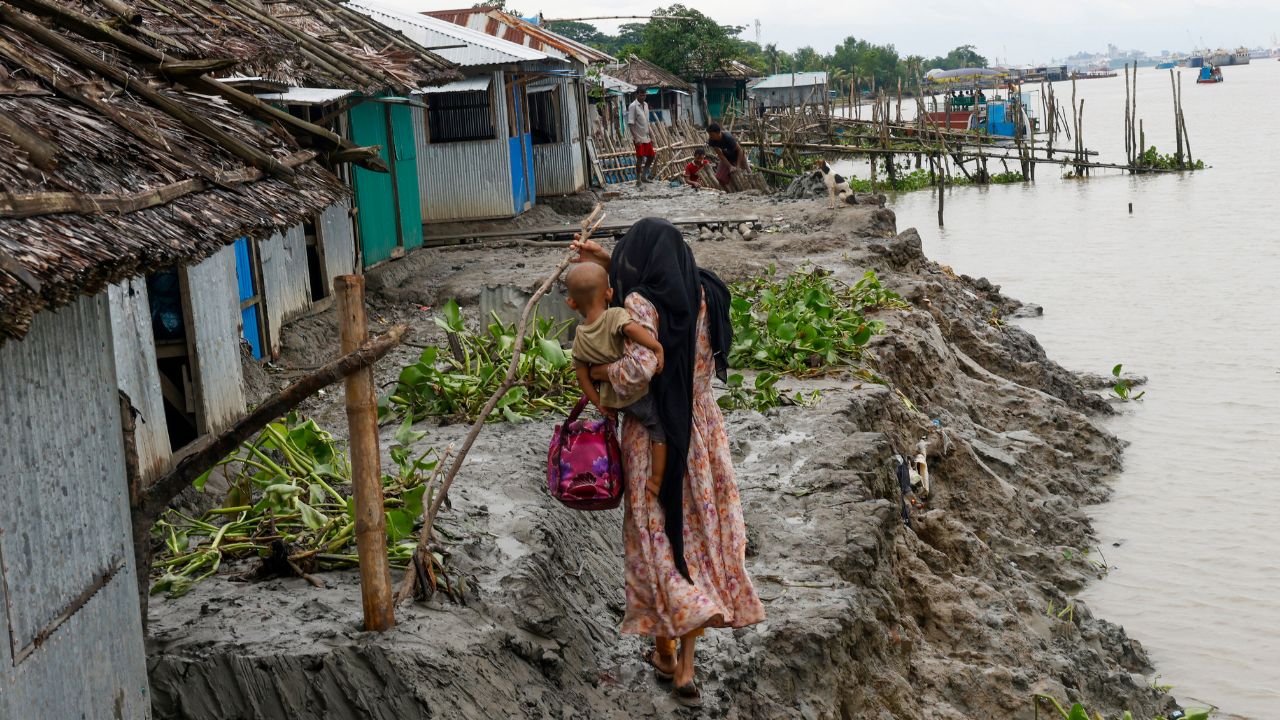



As the sun goes down, a soft mist settles over the Pashur River along the Bay of Bengal coast. The wind carries the smell of salt, while the damp, heavy mud underfoot tells another story. This is when life begins to stir in Banishanta, where the only road is slowly disappearing into the river.
Known as Bangladesh’s second-largest red-light district, Banishanta was established in 1954, north of the Kumarkhali Canal near Mongla. As more people settled there, it grew and later moved to the west bank of the Pashur River.
But the new home brought little security. For decades, life here has remained a struggle for survival, shaped by poverty, social exclusion and the relentless river.
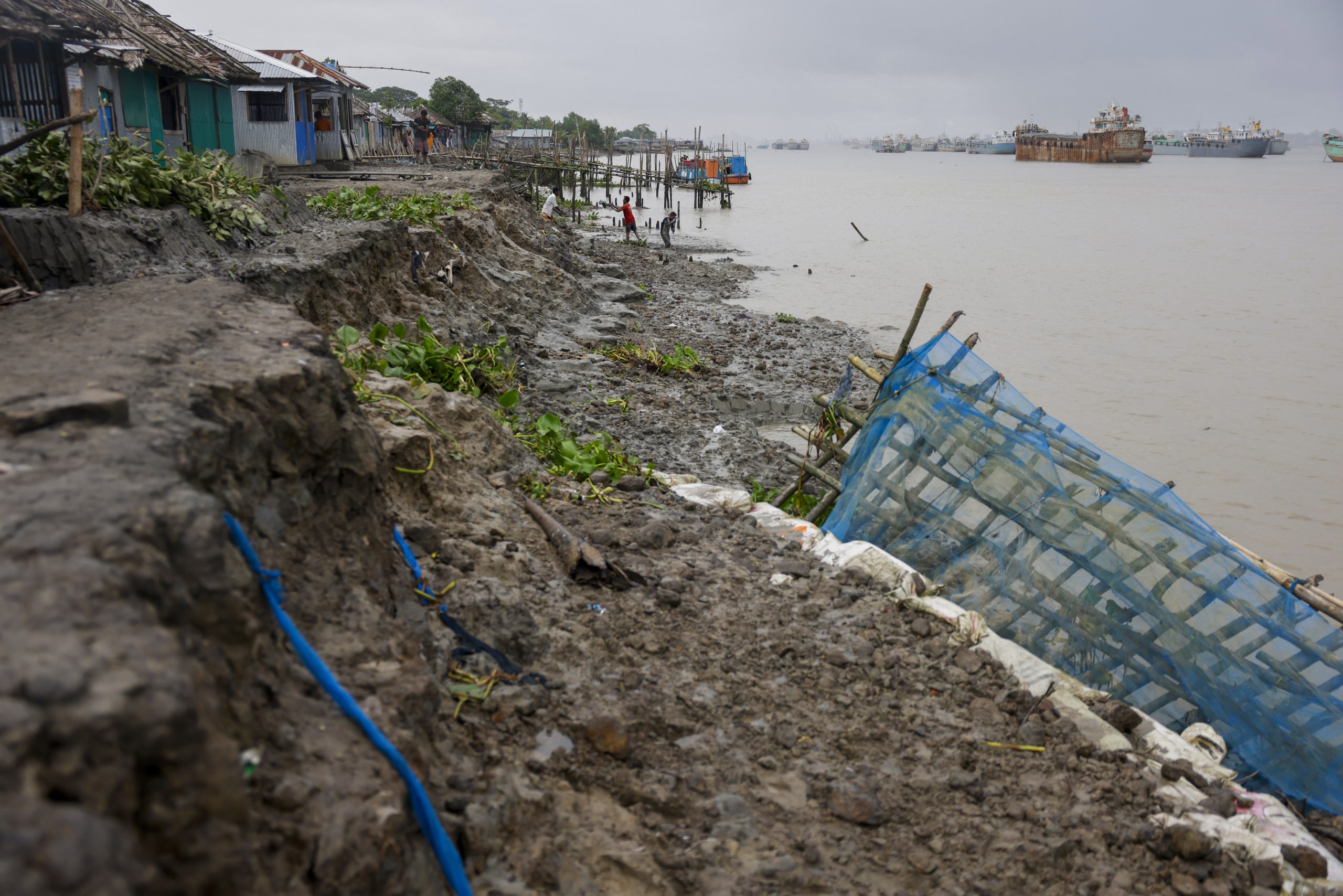
Today, a narrow, muddy path runs along the riverbank, the only route to the market, school and home. There is no alternative.

Even on ordinary days, it is difficult to cross; during the rainy season, it becomes treacherous. The mud deepens, the ground turns slippery, and in the fading light, every step risks a fall.
Each year, more land disappears, leaving steep, broken edges and mud deep enough to reach the knees. The threat now extends beyond the red-light area, with residents across Banishanta Union on the west bank also fearing that the river could take their homes.




There was once an effort to protect the area. In 2013, the Water Development Board built an embankment along the riverbank, with construction carried out by a Chinese company.
By 2017, parts of it had begun to fail. Repairs never came, and erosion continued largely unchecked, eating away at the land where people live and work.
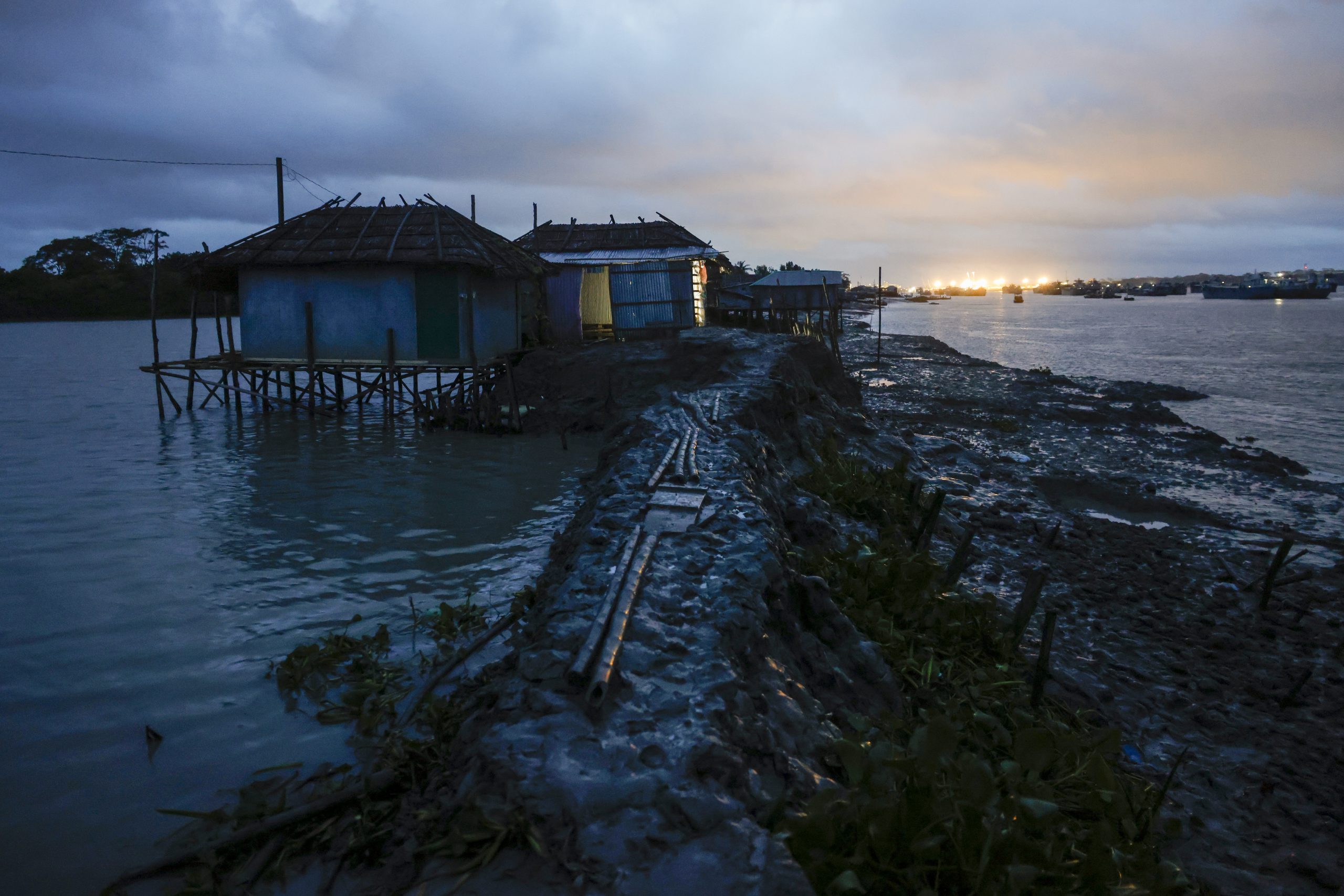
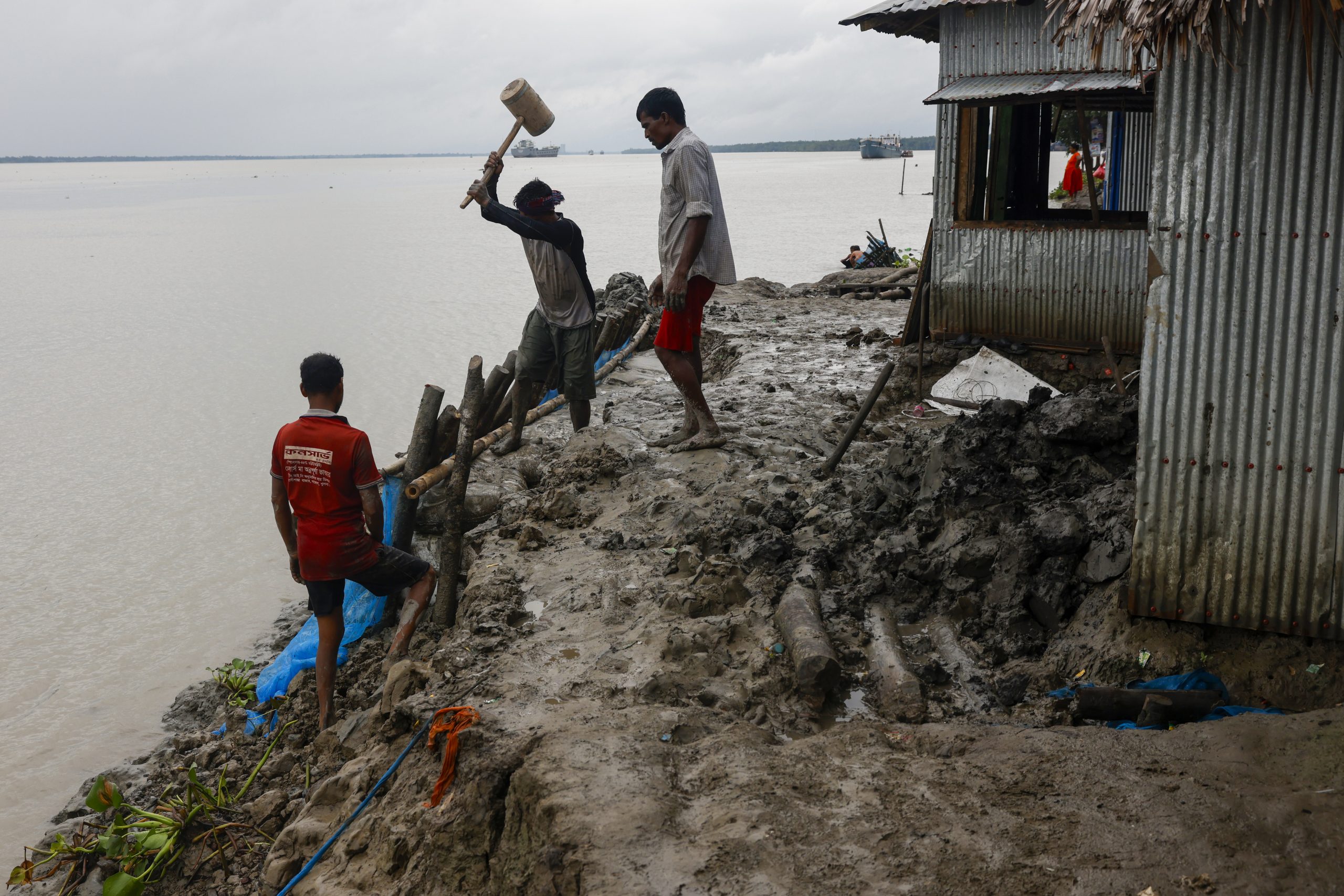
As the bank retreats, the river moves closer to the houses. In some places, erosion has reached their foundations. With little protection in sight, residents have begun defending themselves with bamboo poles, old plastic sheets and torn fishing nets. The barriers may not survive a single rainy season, but doing nothing is not an option.
Against the force of the Pashur, their defenses look fragile, yet they reflect the determination of people fighting for every remaining piece of ground.
Yet every day, the people of Banishanta walk the same broken path. They cross the mud to reach the market, send their children to school and return home beside a river that keeps moving closer. They have little choice but to keep going.
In that daily journey lies the quiet resilience of Banishanta, a community fighting not only to protect its land, but to preserve a way of life in a place where the ground beneath them is slowly disappearing.