


People no longer gather along the Buriganga River as afternoon falls. Families no longer come to walk or spend their leisure time by the river.
The vast open spaces stretching from Buckland Bund to Coronation Park have largely disappeared. Children’s games, political gatherings and cultural events that once took place there are now memories.
Large parts of Buckland Bund in Sadarghat are occupied by temporary shops, truck and pickup parking and businesses. Coronation Park, once a popular leisure spot, has disappeared, with parts of its former site now used as warehouses for onions, garlic, ginger, lemons, chillies and other goods.
The Dhaka South City Corporation (DSCC) itself is among those occupying parts of the site.
The adjacent Ladies Park has been replaced by a hawkers’ market. Only the name remains on the building.
The loss of these spaces has reduced opportunities for recreation and children’s play, eroding an important part of civic life in Old Dhaka. The parks that remain are also under pressure.
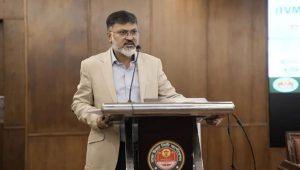
“Unplanned urbanisation is gradually shrinking open and green spaces in Old Dhaka. The lack of administrative oversight and mismanagement are also responsible,” urban planner Sheikh Muhammad Mehedi Ahsan told TIMES of Bangladesh.

Ahsan, vice-president of the Bangladesh Institute of Planners, said parks and open spaces help control air pollution and temperature, protect biodiversity and provide opportunities for recreation and mental development. Their continued loss could make Dhaka increasingly unliveable, he said.
Alamgir Kabir, general secretary of Bangladesh Poribesh Andolon, said open spaces were also important for air circulation and as places of refuge during disasters such as earthquakes and fires. Trees, he added, help trap dust and reduce the impact of air pollution.
City corporation itself occupies Coronation Park
Historian Muntasir Mamun’s “Dhaka: Smriti Bismritir Nagari”, along with other writings, refers to the historic Coronation Park on the Buriganga in Sadarghat.
The park was established in 1911 to mark the coronation of King George V. The area stretching from Northbrook Hall to what is now Ladies Park was then an important venue for public gatherings and recreation.
In 1949, the Quaid-e-Azam Physical Training Centre and a wrestling stadium were built in the middle of the park, with the eastern and western sections subsequently becoming known as Coronation Park and Ladies Park respectively.




After the Liberation War, the training centre was renamed Nabajug Sharir Charcha Kendra. Much of the two parks had already disappeared by then. In 2009, the training centre and wrestling stadium were abolished and the Dhaka City Corporation built a five-storey “multipurpose building” on the site.
Local resident Bishnudev Saha told TIMES: “I used to hear that there was a park here. But now the entire area is occupied by shops, warehouses and crowds.”
From Ladies Park to hawkers’ market
Ladies Park, the western section of Coronation Park, was an important recreational space for women at a time when dedicated open spaces for them were rare in Dhaka.
The park existed until the early 1980s, after which commercial structures gradually took over the site. The DSCC eventually built the Ladies Park Hawkers’ Market there.
The three-storey building now houses wholesale hosiery and clothing shops on its lower two floors, while the top floor contains warehouses and tailoring shops.
Although “Ladies Park Hawkers’ Market” is prominently displayed on the building, the park itself no longer exists.
Abdul Malek, who has been doing business there for 35 years, said, “I have been doing business here all these years. I have only heard the name. I have never seen the park.”
Where is Buckland Bund?
Buckland Bund once ran along the Buriganga from Sadarghat towards Babubazar. Built around 1866, much of its construction cost was borne by Dhaka residents, while the municipality was initially responsible for its maintenance.
The bund became a popular place for walking and leisure, but its character gradually changed.
It was handed over to the Bangladesh Inland Water Transport Authority (BIWTA) in 1963 and later came under the Dhaka City Corporation. Encroachment, shops, warehouses, loading and unloading of goods and waste have since eroded its open character.
Tofail Hasan, a local businessman, said, “I have no idea that there was ever a bund here. The idea that there used to be an open space here seems unbelievable.”
Surviving parks also under pressure
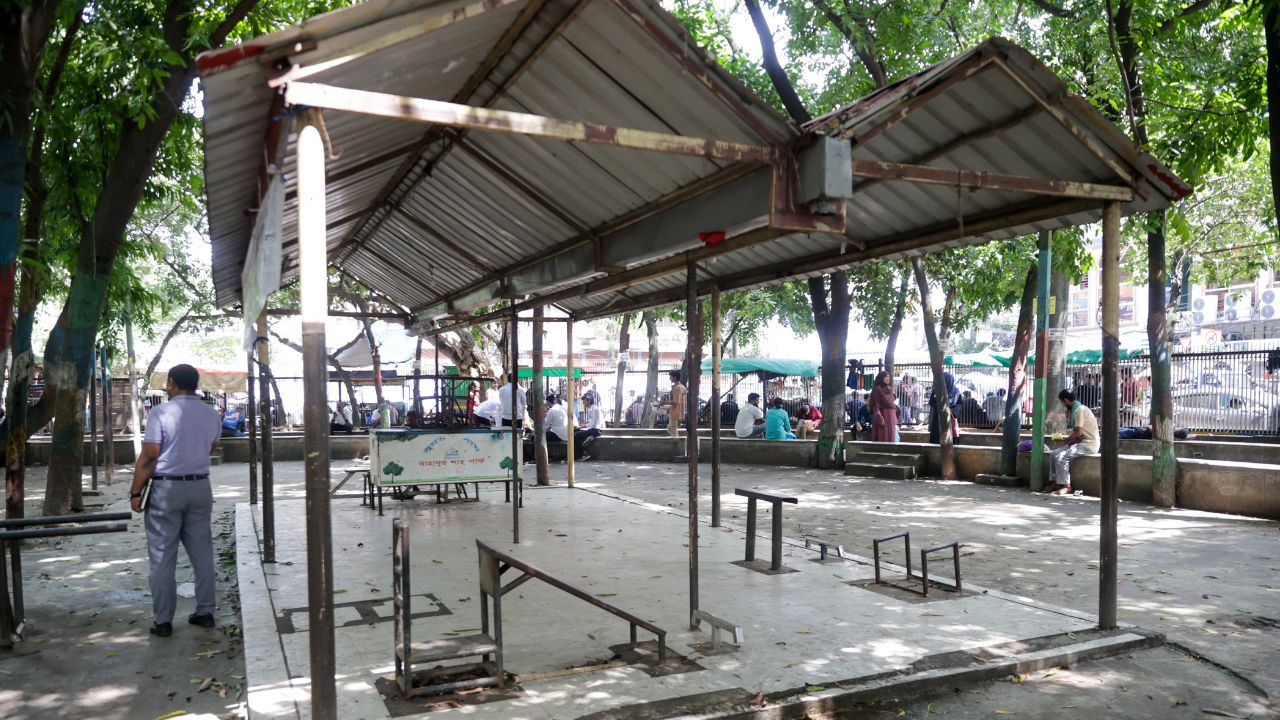
Bahadur Shah Park in Laxmibazar, formerly Victoria Park, remains in use but faces traffic congestion, noise pollution, commercial activity and inadequate maintenance. Temporary shops have also appeared around it.
DSCC Chief Estate Officer Md Rezaul Karim said an organisation had obtained permission to hold a tree fair there but shops were later set up beyond the approved scope. A magistrate was sent to the site and the shops were closed, he said.
Malitola Park, on English Road between Ray Saheb Bazar and Tantibazar, has also suffered from mismanagement, poor cleanliness and encroachment. Although the DSCC later renovated and beautified it, complaints remain over inadequate maintenance, security, damaged infrastructure and encroachment in some areas.
Baldha Garden in Wari, another major green space in Old Dhaka, was established in 1909 by zamindar Narendra Narayan Roy. Its collection of rare native and foreign plants has made it an important botanical garden and research centre.
Garden curator Taslima Khatun told TIMES that air pollution was harming the plants. “In particular, when the amount of dust increases in winter, a layer of dust settles on the leaves. As a result, they cannot properly receive the sunlight needed for photosynthesis,” she said.
Rezaul Karim said some parks were open to the public with facilities such as walking paths, while others had specific restrictions. “They are managed according to the type of park,” he said.