The image was striking and unsettling in equal measure. A group of journalists, some of them veterans of the profession and former and current holders of senior posts in journalists’ bodies, took to the streets in an open political procession in favour of a parliamentary candidate.
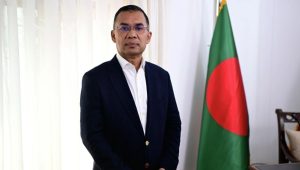
That the candidate happens to be the BNP chairman and that the constituency is Dhaka-17 is politically significant, but not the core issue.
The deeper concern lies in the fact that these were not party activists masquerading as journalists; they were journalists themselves, proudly documenting and amplifying their partisan role on social media.
For many citizens, the spectacle was jarring because journalism, by its very nature, is expected to stand apart from organised political mobilisation.
When those tasked with questioning power are seen marching in support of it, the moral authority of the profession begins to erode. What might once have been discreet political sympathies have now become overt campaigning, blurring lines that democratic theory insists must remain visible.
Partisan journalism is not a new phenomenon in Bangladesh. Since the country’s independence in 1971, political power has repeatedly sought to domesticate the press, while sections of the media have willingly entered into that embrace.

Journalists have been rewarded with positions, privileges and proximity to power, while political actors have benefited from favourable coverage and silence on inconvenient truths. This transactional relationship has gradually hollowed out journalism’s watchdog role, replacing scrutiny with access and accountability with allegiance.
What distinguishes the current moment is not the existence of partisanship but its brazenness. Open campaigning by working journalists signals a collapse of professional inhibition. It also reflects a broader media culture in which political loyalty is often viewed as a rational career strategy rather than an ethical breach.
In such an environment, journalism ceases to be a public service and instead becomes an extension of party machinery, dressed in the language of reporting but driven by political calculation.
The fall of the Awami League government had briefly raised hopes that journalism might reclaim some of its lost ground. Many believed that the end of a period widely criticised for media intimidation and co-option would allow space for professional renewal. Yet those hopes now appear premature.


The faces may change, but the structure remains stubbornly intact. Old cronies are replaced by new ones, and the profession continues to be shaped less by editorial judgment than by political alignment.
The problem is compounded by what many observers describe as a reward system embedded in the political economy of the media.
Journalists who demonstrate loyalty to a party are often rewarded after, or even during, their media careers with posts in state-owned institutions, positions in country’s foreign missions, advisory roles, or other forms of patronage.
This expectation of future reward creates powerful incentives for self-censorship and selective reporting long before any formal political transition occurs. Newsrooms, in turn, internalise these pressures, producing a media landscape marked by polarisation and echo chambers rather than pluralism and debate.
Defenders of partisan engagement often argue that complete neutrality in journalism is an illusion, pointing out that editorial decisions inevitably reflect values and perspectives. While this is true, it conflates bias with activism.
A journalist’s worldview may shape how stories are framed, but actively campaigning for a party candidate represents a categorical shift from interpretation to participation. It is the difference between analysing politics and becoming part of it.
Democratic theory assigns journalism the role of the Fourth Estate precisely because it is meant to remain institutionally separate from executive and party power. That separation allows the media to expose wrongdoing, challenge narratives and amplify marginal voices.
When journalists cross over into organised party politics without leaving the profession, they compromise not only their own credibility but also the collective trust upon which journalism depends.
There is nothing inherently wrong with journalists holding personal political beliefs. They are citizens, after all, with the same voting rights as anyone else.
The ethical breach occurs when those beliefs are performed publicly through rallies, processions and campaign activity while still claiming the authority of journalism. At that point, the profession’s purpose is fundamentally questioned. One cannot simultaneously serve as an independent observer and a political foot soldier.
The consequences of this convergence are already visible. Public trust in the media continues to decline, not merely because of state pressure or digital misinformation, but because audiences increasingly perceive news coverage as an extension of partisan conflict.
When journalism becomes propaganda by another name, it no longer informs citizens; it mobilises them selectively, suppressing inconvenient facts and reinforcing existing loyalties.
Ultimately, the question is not whether journalism and politics can ever intersect, but under what terms. In functioning democracies, journalists who wish to enter politics are expected to leave the profession, precisely to protect its integrity.
That firewall is not an abstract ideal but a practical safeguard for public trust. When it collapses, journalism loses its distinct democratic function and becomes just another arena of power struggle.
If journalism in the country is to recover any measure of credibility, it must confront this crisis honestly. That requires professional bodies to draw clearer ethical lines, news organisations to enforce them, and journalists themselves to make a choice.
One can pursue politics, or one can practise journalism. Trying to do both at once serves neither democracy nor the public.