


Bangladesh Jatri Kalyan Samity has blamed successive governments’ flawed transport policies, corruption and excessive reliance on road infrastructure for the rising number of road accidents, saying decades of neglect of railways and waterways have made travel increasingly dangerous.
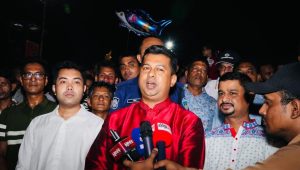
The organisation made the allegations in a statement issued by its Secretary General Mozammel Hoque Chowdhury on Wednesday, ahead of National Road Safety Day on 22 October, calling for sweeping reforms in transport planning, regulation and road safety enforcement.
According to the organisation’s media monitoring data, at least 1,25,405 people were killed and 1,76,249 injured in 72,736 road accidents across Bangladesh between 2014 and 30 June 2026.
It said the actual casualty figures could be several times higher, citing hospital records, and claimed that road deaths during the period exceeded casualties in ongoing conflicts, including the Russia-Ukraine and Israel-Palestine wars.
Chowdhury said waterways and railways once accounted for 80 per cent of passenger transport before independence, while roads handled the remaining 20 per cent. Road accidents were consequently limited to 20 per cent during that period, he claimed.

He alleged that successive governments had gradually reduced railway and waterway networks while prioritising road construction and expansion, shifting 80 per cent of passenger traffic onto roads.
The organisation accused international lenders, including the World Bank and International Monetary Fund, of drawing Bangladesh into debt traps through development and reform programmes that it alleged had facilitated corruption and misappropriation of public funds.
It also claimed that corruption and policy failures had contributed to an 80 per cent increase in road accidents, holding previous governments responsible for what it described as “genocide on roads”.




The Samity particularly criticised corruption, mismanagement and disorder during the previous Awami League administration, alongside extortion involving transport owners, workers and a section of police officers.
It identified unfit vehicles, unlicensed and underage drivers, defective road infrastructure, drug-impaired driving, speeding, irregularities in vehicle fitness certification and driving licence issuance, and the use of untrained drivers as major contributors to accidents.
The organisation said successive administrations had failed to develop integrated public transport, mass transit and dedicated bus networks despite considerable investment in roads.
It also expressed concern over the proliferation of unauthorised vehicles, including battery-operated autorickshaws, ride-sharing motorcycles, compressed natural gas (CNG)-powered autorickshaws, locally assembled Nosimon and Karimon vehicles, Mahindra and Piaggio vehicles manufactured in neighbouring countries and pickup vans converted into Legunas.
Such vehicles had worsened congestion and increased accident risks, it said.
Other contributing factors identified by the Samity included the uncontrolled movement of motorcycles and three-wheelers, missing road dividers, trees obstructing visibility at sharp bends, highway construction defects, mechanical faults, traffic violations and wrong-way driving.
It also cited extortion, carrying passengers in goods vehicles, overloading, risky overtaking and driving for prolonged periods without adequate rest.
To address the crisis, the organisation recommended placing the Ministry of Road Transport and the Bangladesh Road Transport Authority (BRTA) under the leadership of local and foreign transport experts instead of bureaucrats.
It called for a modern, technology-driven nationwide bus network, digital traffic control systems and improved driver licensing through advanced training and assessment.
The Samity also proposed dedicated service lanes alongside footpaths on major highways, adequate pedestrian crossings, road signs and markings, and regular road safety audits to ensure construction and maintenance standards.
It urged structural reforms to eliminate extortion, ensure proper wages and fixed working hours for drivers, modernise vehicle fitness inspections and remove overaged public transport vehicles from service.
The organisation further called for strengthening BRTA’s operational capacity and establishing a Traffic Training Academy to improve transport management and road safety.