


The Teesta’s water level has risen again due to upstream flow and rainfall, marking the seventh time the river’s level has increased this season.
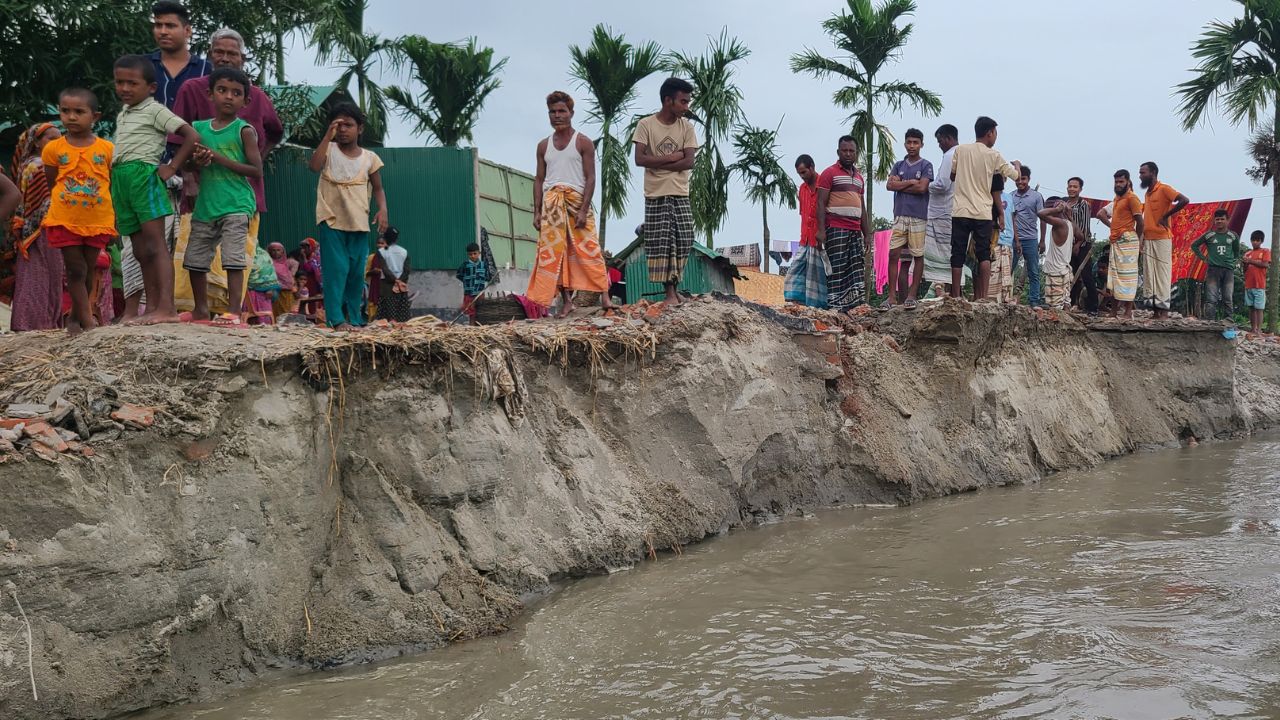
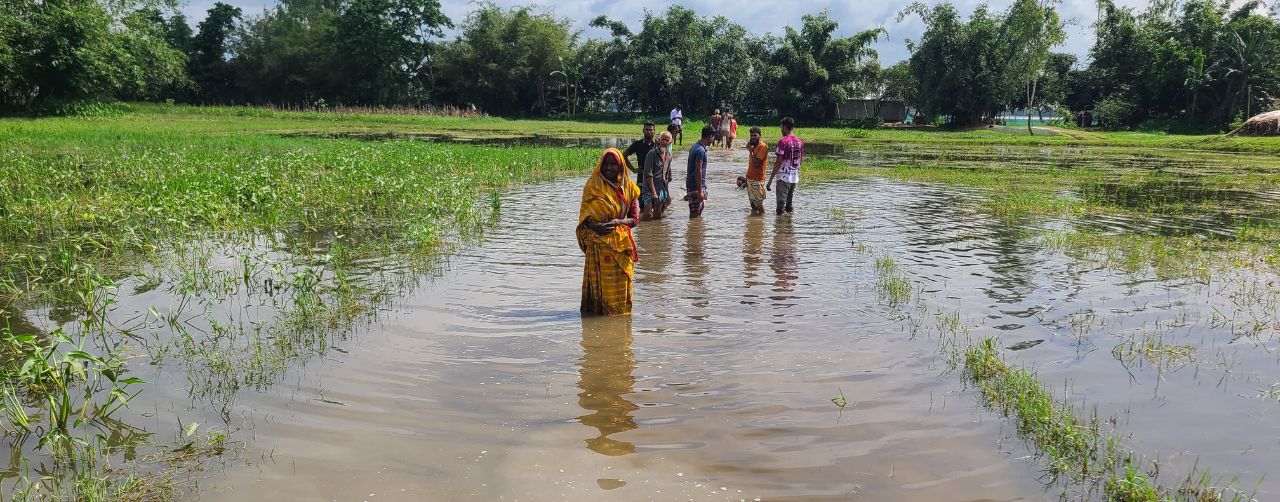
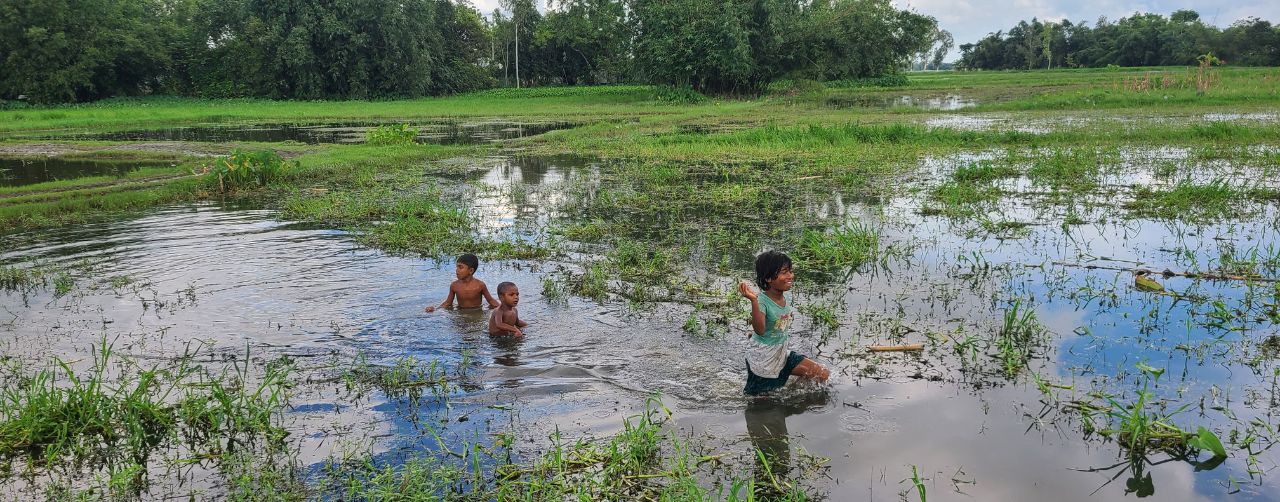
The rising waters have flooded char and low-lying areas across the basin, submerging Aush paddy fields and triggering severe riverbank erosion that has left countless families helpless.
According to Superintending Engineer of the Water Development Board’s northern region Ahsan Habib, the water level at the Teesta Barrage point was flowing one centimetre below the danger level at 6am on Tuesday. By 6pm, it had receded to 17 centimetres below. But the damage had already been done.
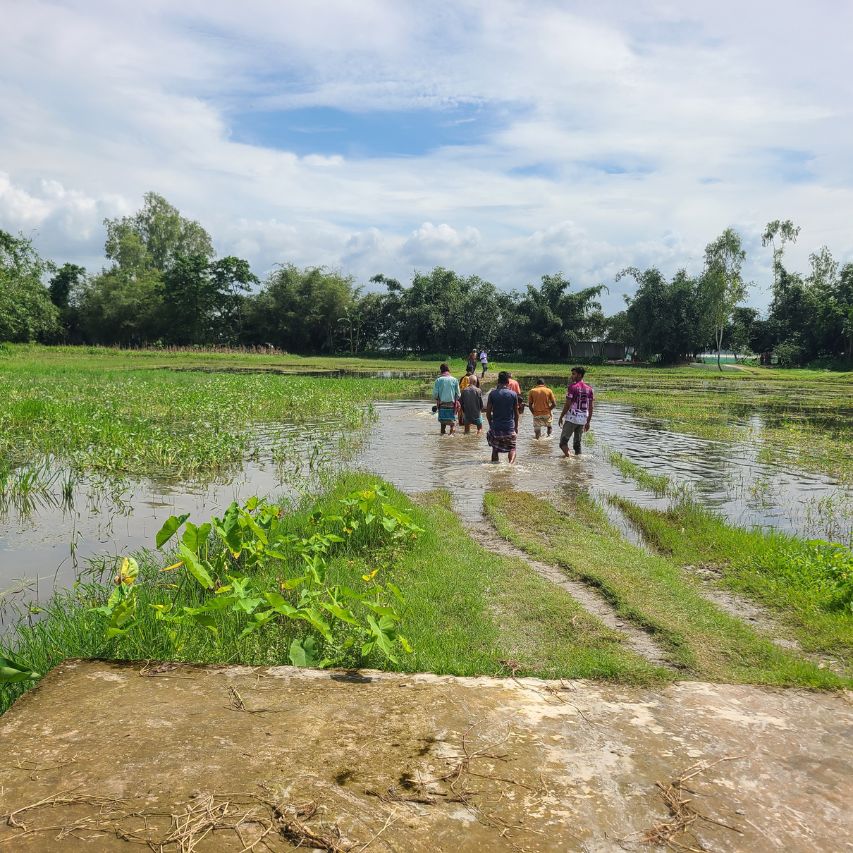
The rising water has flooded vast stretches across the Teesta basin, including Dimla and Jaldhaka in Nilphamari; Hatibandha, Kaliganj, Aditmari, and Sadar in Lalmonirhat; Gangachara, Kaunia, and Pirgacha in Rangpur; Rajarhat, Chilmari, and Ulipur in Kurigram; and Haripur in Sundarganj, Gaibandha.

Hundreds of homes are now underwater, roads are submerged, and several road links have been cut off. Newly planted Aush paddy across hectares of land has been submerged, along with vegetable fields and seedbeds. Hundreds of ponds have overflowed, washing away fish stocks and leaving farmers in deep distress.
Mohsin Ali, a farmer from West Ichli village in Gangachara’s Lakkhitari Union, said water in the Teesta basin has risen and fallen seven times so far this season.
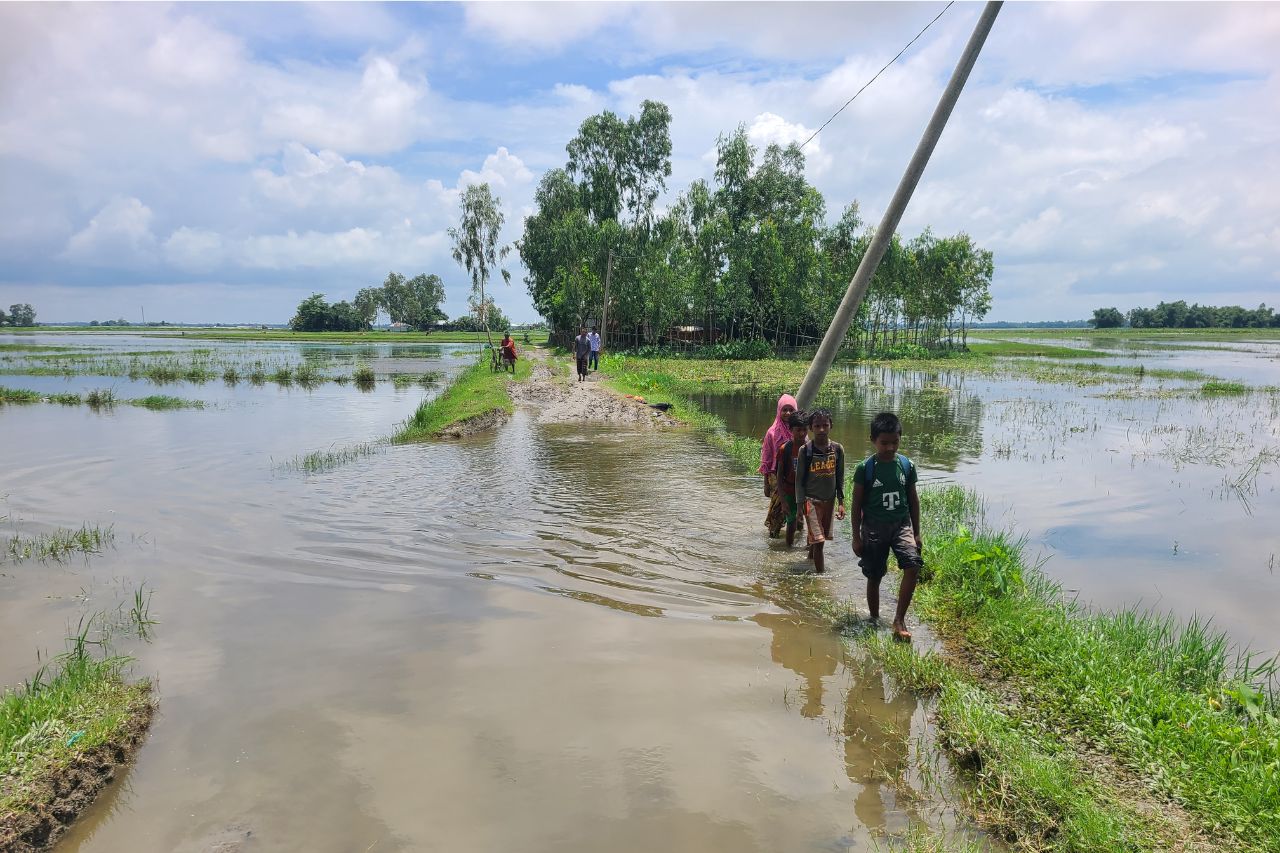
“I could not cultivate 70 per cent of my planned main crop. Groundnut cultivation failed, and over half of my maize was submerged. Now, newly planted Aush paddy is under deep water,” he said.




Syed Ali, a fish farmer from Kachari Para in Gangachara’s Nohali Union, said rising water caused all the fish to escape from his four-bigha pond. “I have lost everything,” he said.
Erosion has been the worst this time, alongside fluctuations in water levels. Already, at least 20 erosion points have developed in Rangpur alone, including areas like Bridge Bazar, Kachari Para, Char Bagdohara, and Char Nohali in Nohali Union; Binbinia in Kolkonda Union; and Chalapak in Gajghanta Union.
Sultana Begum, wife of Mostafizur Rahman Mostar’s brother from Kachari Para, said she had lived there with her family for 40 years. “I had a brick-built house, but within the last five days, the Teesta’s ferocious currents have swallowed it,” she said, her voice trembling. “We are left with nothing.”
Families devastated by the water and erosion have yet to receive support from local authorities. Chairman of Nohali Union Council Ashraf Ali said he visited the sites on Tuesday following the upazila nirbahi officer’s orders.
Upazila Executive Officer of Gangachara Jesmin Akhter said she has submitted a full report to the Water Development Board and the deputy commissioner. “I have requested arrangements for geo-bags in the erosion-hit areas on an urgent basis,” she said.
Rangpur Deputy Commissioner Mohammad Ruhul Amin said severe erosion has occurred alongside waterlogging this season. “We have informed the Water Development Board and higher authorities. Instructions have been given to take urgent measures,” he said.
The Water Development Board reported that erosion has hit at least 150 points across the 242-kilometre basin on both sides of the Teesta, including several of its own embankments and protective structures.
Rangpur Divisional Commissioner Md Shahidul Islam said, “We are informing the ministry every morning with updates on erosion and water-level fluctuations. Work to prevent erosion is ongoing. Field administrations have been instructed to keep a vigilant watch over the Teesta basin.”
As the river continues its relentless assault, the people of the Teesta basin are left counting their losses and hoping that help arrives before the next rise.