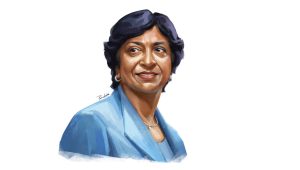
In a city that rarely pauses, where exhaustion often passes as normal, wellness remains one of the least prioritised aspects of everyday life. Yet, quietly and consistently, Shazia Omar, widely known as the “Yoga Mama” of Bangladesh, has been working to change that narrative.
From introducing yoga to a country unfamiliar with the practice to training thousands of students and building a growing wellness movement, her journey is as much about cultural shift as it is about personal healing. In this conversation, she speaks about yoga as a necessity, the misconceptions surrounding spirituality, the invisible stress women carry and many more.
TIMES: If you could introduce one habit to every Bangladeshi student, what would that be?
Shazia Omar: I would love to introduce yoga to all students of Bangladesh because yoga is an all-round practice that is called a form of treatment. It includes breath work, movement, and meditation. A regular practice of yoga does something incredible for your body.
If the gym is about strengthening your outer muscles, yoga is about inner strengthening. It improves your parasympathetic nervous system, which allows you to relax. It improves your lung capacity, helping you breathe in more oxygen per breath. It improves circulation, flexibility, stamina, cardio strength, pretty much everything. So, in my dreams, everybody in Bangladesh would know how to do yoga.

TIMES: You’re known as the “Yoga Mama” of Bangladesh. Why is that?
Shazia: When I moved here in 2005, no one was really teaching yoga. I was the first to introduce it in a structured way. I started at South Avenue, then moved to places like the American Club, IC, the Health and Healing Centre, and eventually my own studio. Over the years, many of my students have become teachers themselves. I’ve had the opportunity to teach more than 5,000 students. That’s how it has spread across the city and hopefully soon, across the country.
TIMES: You talk about mind, body, and spirit. But many people are uncomfortable with the spiritual aspect. Why?
Shazia: There’s a common misunderstanding that yoga is a Hindu practice and that it goes against Islam, but that’s not true. The spiritual aspect of yoga is about being embodied, being aware of your breath, inhabiting your body, and entering meditative states.




Meditation is not tied to any one religion. It’s an ancient practice that helps us harness the power of our mind, our intuition, and our inner clarity. It’s dangerous to dismiss yoga and meditation as belonging to another culture. These are tools we should claim, practice, and use to reach our highest potential.
TIMES: As a woman building this wellness movement, have you faced resistance?
Shazia: Absolutely. The journey for women is harder because of our deeply ingrained patriarchy. Almost every social structure still favours men. Whether you walk into a bank, a boardroom, or a political space, you’ll see more men than women. There have been challenges, but things are changing. More women are graduating from universities with strong capabilities. At Flow Fest, more than half of our team are women. The younger generation is pushing forward, and that’s exciting to see.
TIMES: Do women experience stress differently from men?
Shazia: Women’s stress is often invisible and unspoken. There’s the double burden, working professionally and then managing the emotional labour at home. There are also experiences like postpartum depression, menopause, and breastfeeding challenges, which are unique to women and rarely discussed. They remain almost taboo.
In rural areas, girls are often discouraged from sports or physical activity. Sports are often seen as only for men, like cricket, football, even things like surfing or being in the water. Women are deprived of these spaces, which are so important for building strength and staying active. Girl children are also often not prioritised, especially when there’s a shortage of protein in the home. We see practices where eggs and chicken are given to the boys first. So, it’s prevalent across different levels of our social and cultural milieu; we see it happening all the time.
TIMES: Do you think yoga is becoming a privilege rather than a necessity?
Shazia: Yoga is very much a necessity. It’s something everyone should learn in school. It’s a free form of self-care. Once you know how to practise yoga, you don’t need to rely as much on doctors or pharmaceuticals for basic well-being. It’s not a luxury; it’s something meant for everyone.
TIMES: Ten years from now, what do you hope to achieve?
Shazia: Flow Fest has been around for three years. We’ve had over 11 festivals and reached more than 50,000 people. In ten years, I hope we live in a country where everyone knows yoga, breathwork, and meditation. Where people feel safe asking for help, because seeking help is courageous, not shameful. I hope for a more open, accepting society that supports both mental and physical health, with the knowledge and systems to handle these challenges.
TIMES: If someone in Dhaka feels exhausted and lost, where should they begin?
Shazia: Two simple things. First, seek help; you’re not alone. Talk to someone who can support you. Second, take five minutes to meditate. Even a few minutes can calm the mind, reduce anxiety, and bring clarity. Sometimes, that’s all it takes to begin.