


For decades, anthrax has lingered in Bangladesh’s northern and western agricultural belts, resurfacing with the monsoon as rain disturbs spores buried deep in the soil. This year, the familiar cycle has returned, with outbreaks spreading across several districts after infected cattle were slaughtered and their meat entered local communities.
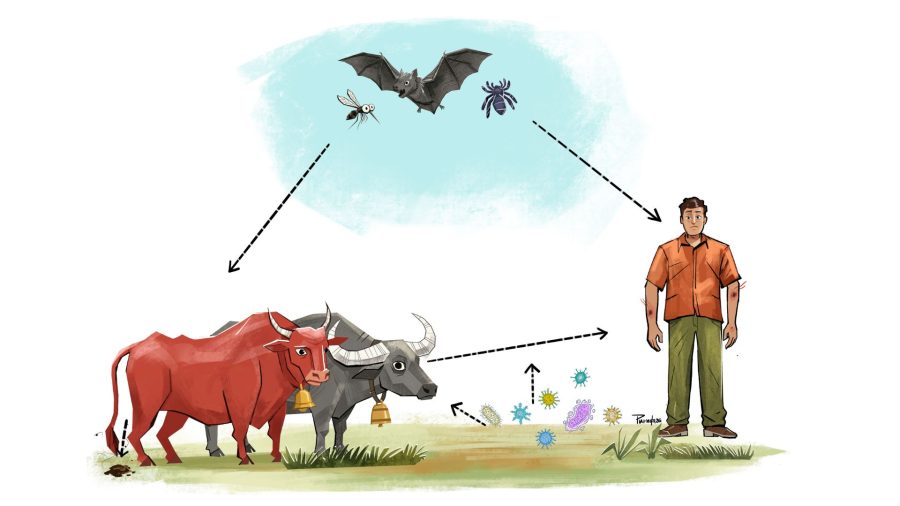
Locally known as “toka”, the disease is mainly transmitted by direct contact with infected livestock, which contract the infection by ingesting or inhaling spores from contaminated soil, grass, or water while grazing. Anthrax manifests in three distinct forms depending on the route of exposure: cutaneous anthrax, which occurs through handling of contaminated hides, wools, or meat; gastrointestinal anthrax, contracted by consumption of raw or undercooked meat from a sick animal; and inhalation anthrax, caused by breathing in airborne spores.
The infection typically causes skin ulcers with a distinct black centre, severe localised swelling, fever, nausea, and abdominal pain. If promptly treated with standard antibiotics, many patients recover within a few weeks, but some develop severe systemic anthrax, which can lead to life-threatening complications like sepsis, internal haemorrhaging, or fatal meningitis.
First detected in 1986, anthrax has long become a recurring aspect of Bangladesh’s rural landscapes; the 2026 outbreak first escalated in March, when 12 villagers in Natore district contracted cutaneous anthrax after slaughtering and handling an ailing cow. By September, the transmission surged dramatically across Rangpur, Gaibandha and several other regions. The spread has left at least 53 people undergoing treatment.

The infection has had a stronghold in Gaibandha’s Sundarganj upazila, where a single infected cow was slaughtered in September. The distribution of its meat to roughly 100 local families has ignited a widespread medical emergency.
In these regions, farmers often butcher dying or infected livestock and sell the contaminated meat in local markets at discounted prices in a desperate attempt to recoup their massive capital losses. Driven by economic desperation and the fear of total financial ruin, smallholder farmers often rush to emergency-slaughter moribund cattle before they die naturally, which would render the meat religiously forbidden and culturally unsellable.
“Anthrax primarily occurs through the consumption and handling of infected domestic cattle, with cases often increasing during the rainy season when the disease spreads more easily. Therefore, cattle should be vaccinated, especially in affected areas,” said Dr Mohammad Mushtuq Husain, public health expert and former chief scientific officer of the IEDCR.



He urged farmers to have their cattle vaccinated or treated at local government upazila livestock offices, as it will protect the people butchering and handling the cattle and reduce the risk of transmission to others. He also warned against the butchering and consumption of dead animals and advised that the carcasses needed to be buried as soon as possible.
“Infected meat should not be left out anywhere in the open, as it can spread anywhere through the meat. Also, people need to be careful about where they are slaughtering and butchering the animals, as the spores of the disease remain in the soil and can contaminate the meat,” Dr Husain further added.
A precise medical strategy that pairs rapid antibiotic treatment with highly targeted preventative care is essential to control the anthrax crisis. Because it is an aggressive pathogen, seeking medical attention at the first sign of symptoms is important.
If caught early, the infection is highly curable with standard, widely available antibiotics like ciprofloxacin, doxycycline, or penicillin. These medications stop the bacteria from releasing lethal toxins and ensure a full recovery within weeks.
“If someone is infected with anthrax and develops symptoms, they should seek medical attention immediately. They must be properly diagnosed by a doctor and begin appropriate treatment as soon as possible to help manage the disease,” said Dr Mohammad Mushtuq Husain.
For individuals directly exposed to the infection but not yet showing symptoms, public health officials can deploy antibiotics as post-exposure prophylaxis to neutralise the infection before it can take root.
However, unlike routine childhood immunisations, human anthrax vaccines are not deployed for mass public campaigns due to limited global supplies and complex multi-dose schedules. Instead, vaccinations remain strictly reserved as a specialised preventative shield for high-risk individuals such as researchers, veterinary officers, and emergency response personnel. This operational reality leaves rapid antibiotic intervention as the primary frontline defence for the general public.
For the communities living through these outbreaks, anthrax is more than a seasonal health threat. It is a reminder of how quickly an unseen danger can move from the environment into everyday life, turning ordinary rural practices into moments of profound risk.
As the monsoon recedes, the immediate threat may begin to fade, but the spores remain quietly embedded in the landscape, waiting for the conditions that allow them to return. Until then, for the families affected, the hope is simply that this year’s outbreak will not become another chapter in a cycle they have been forced to confront again and again.