Russian President Vladimir Putin has proposed to US for extending nuclear weapons limits, beyond the arms control agreement expiration.
Speaking at a meeting of Russia’s Security Council on 22 September, Putin said, “Russia is ready to maintain the central limits of the New START Treaty for one additional year beyond 5 February, 2026.”
Putin added that future decisions would depend on the assessment of global security environment.
The proposal marks a new move by the Kremlin amid strained ties with the US over the ongoing Ukraine conflict.
The New START accord, originally signed by former US President Barack Obama and then-President Dmitry Medvedev, restricts each side to 1,550 deployed nuclear warheads and 700 delivery systems, including missiles, bombers, and submarines.

The treaty was extended once for five years by Putin and former US President Joe Biden in 2021, but no formal mechanism allows a second extension.
Putin’s latest offer effectively invites President Donald Trump, to agree to an informal one-year rollover to prevent immediate lapse in arms control measures.
White House Press Secretary Karoline Leavitt said Putin’s proposal “sounded reasonable,” though Trump would make his own statement.

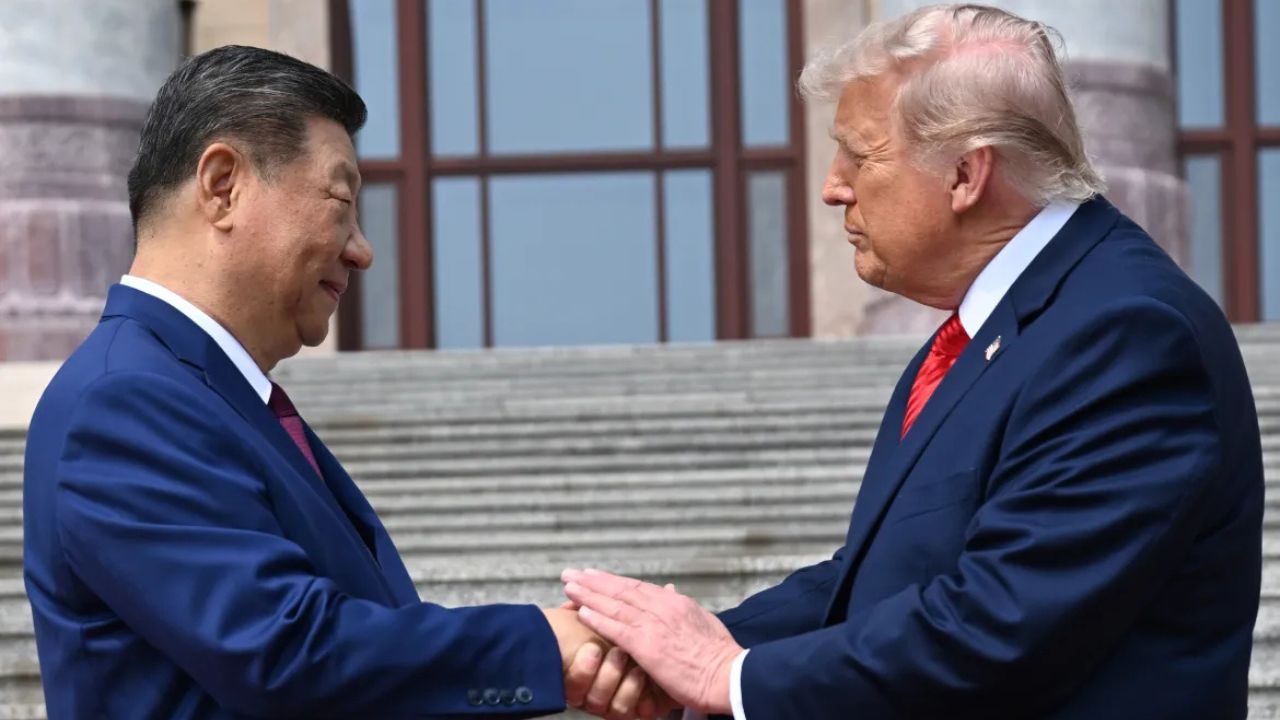


He has previously voiced concern about the treaty’s potential expiration, saying in July that he would prefer to preserve existing limits on nuclear deployments.
Putin emphasized that this offer aims to “uphold global non-proliferation goals” and reopen dialogue between Moscow and Washington. “This step will only be meaningful if the US acts in good faith and refrains from actions that erode the balance of deterrence,” he warned.
The Russian leader faces growing diplomatic pressure to end Ukraine war, and analysts see the statement as an attempt to demonstrate flexibility on international security issues while retaining strategic leverage.
Despite Putin’s overture, formal talks to overhaul or replace the treaty have yet to begin.
Deep divisions over Ukraine continue to stall dialogue, though Trump has expressed interest in pursuing a broader arms control framework that could include China—an idea Beijing has firmly rejected.
China’s foreign ministry welcomed Russia’s “constructive approach,” urging both nuclear superpowers to further reduce their arsenals “in a verifiable and legally binding manner.” Arms control advocates also reacted positively.
Daryl Kimball, executive director of the Arms Control Association, described the offer as “a welcome opportunity to preserve stability.” He called on Washington to reciprocate, saying such an agreement “could help reduce one of the world’s most immediate existential threats.”
Still, Putin signaled vigilance toward US initiatives, warning that any move to expand missile defenses or deploy space-based interceptors could “undermine efforts to preserve strategic stability.”
“The practical implementation of destabilising systems would nullify the balance we are trying to maintain,” Putin cautioned. “Russia will respond accordingly.”
If accepted, the temporary extension could provide a narrow window for renewed diplomacy—offering the two powers a chance to rebuild a fragile framework of nuclear restraint that has anchored global security for over a decade.