


Rajshahi University (RU) authorities have removed a controversial artwork from a campus exhibition following intense criticism for portraying the 2024 mass uprising as “greater” than the 1971 Liberation War.
The University’s Public Relations Administrator SM Kamruzzaman confirmed the removal on Monday morning. He stated that the complication arose because the artworks had not been reviewed beforehand, adding that the administration would not indulge any controversial issues.
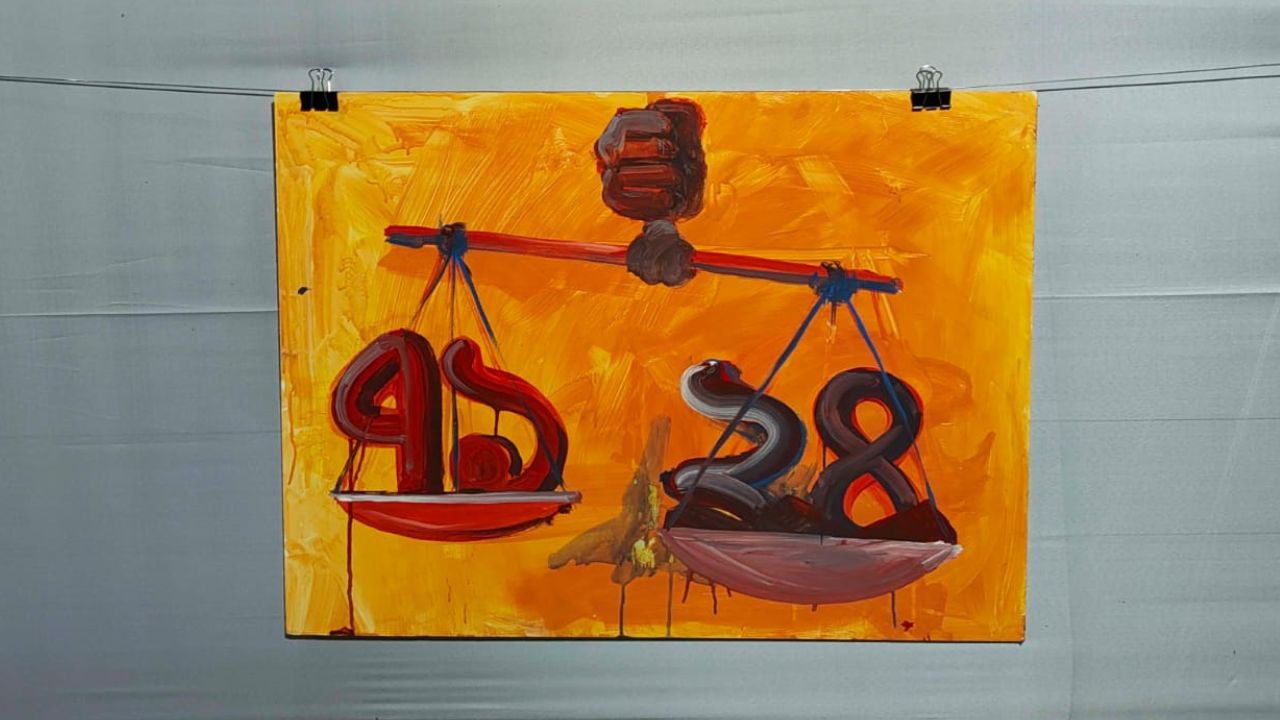
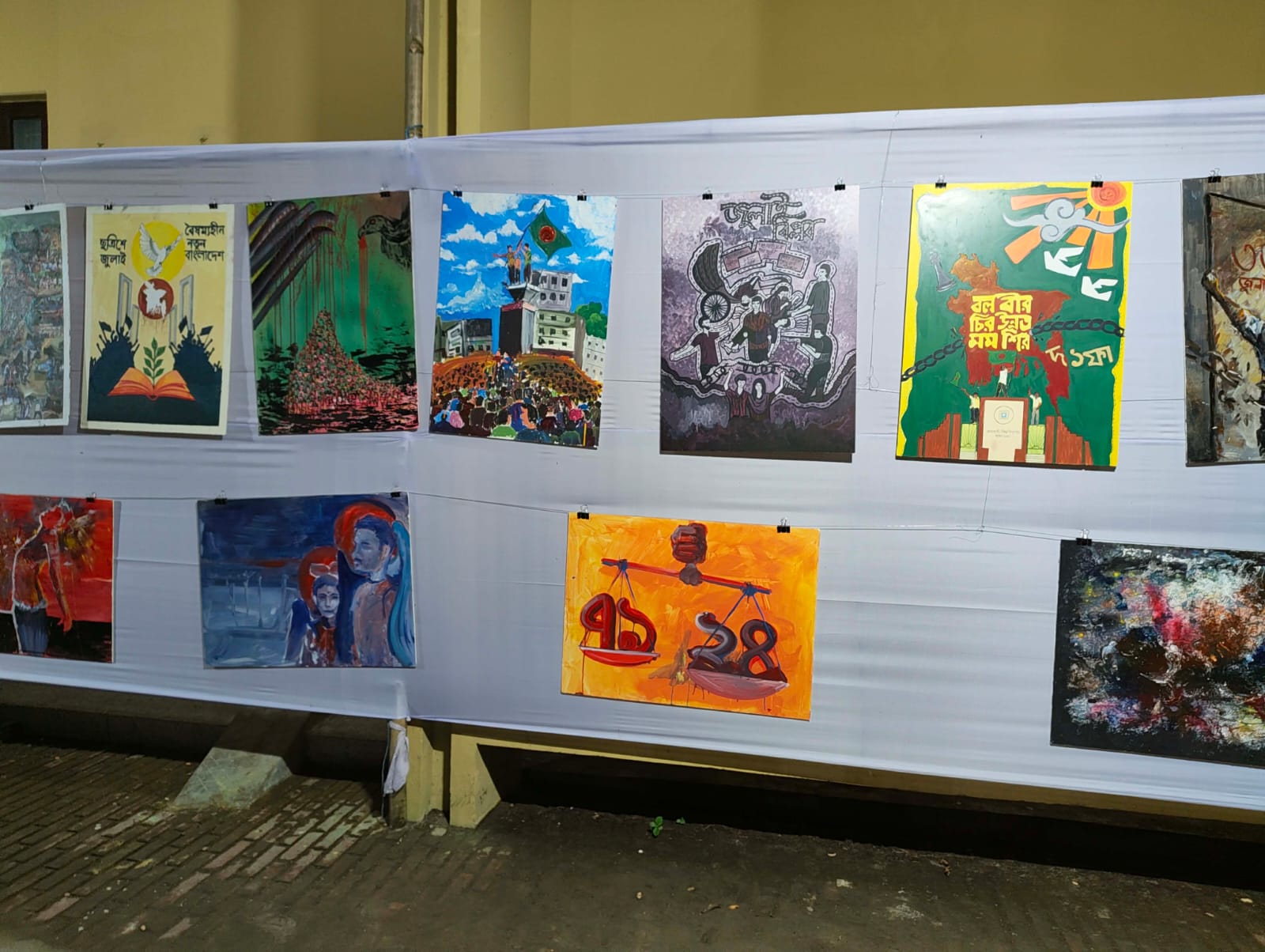
The artwork in question depicted a clenched fist holding a pair of scales. On one side, “71” was written in red, while “24” was written in a darkish hue on the other. The scale holding “24” hung lower, suggesting it carried more weight or significance than “71.”
The piece was part of an exhibition titled “July Mass Uprising: Free Motherland in Paint and Brush,” organised by the Faculty of Fine Arts to mark July Mass Uprising Day 2026.

A total of 80 artworks, produced during an art camp, were selected for the exhibition, which commenced on Sunday morning and is scheduled to continue until 8pm on Tuesday.
The depiction drew sharp reactions from various student organisations on campus. Fuad Ratul, the RU branch convener of the Socialist Student Front, told TIMES of Bangladesh that the tendency to pit 1971 and 2024 against each other undermines national unity and only benefits “defeated forces.”
Sultan Ahmed Rahi, president of the university branch of Chhatra Dal, remarked that while 2024 is a significant chapter, it does not become “bigger” by belittling 1971. “There is no need to insult one history to establish another,” he added.
When questioned about the oversight, the Dean of the Faculty of Fine Arts, Mohammad Ali, claimed he was not on campus and had not had the opportunity to see the paintings. He noted that the artworks were selected through a registration process overseen by Professor Ariful Islam of the Department of Ceramics and Sculpture.
Professor Ariful Islam, however, claimed he had only signed a letter and that the images were sent to the exhibition without being verified.
Public Relations Administrator Kamruzzaman further clarified that the event was under the supervision of the Faculty of Fine Arts, and the PR department’s role was limited to designating the Senate building as the venue for the exhibition.
He maintained that the PR office was unaware of the specific content of the artwork.