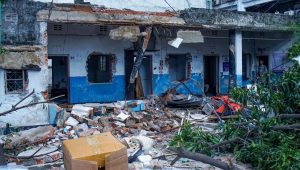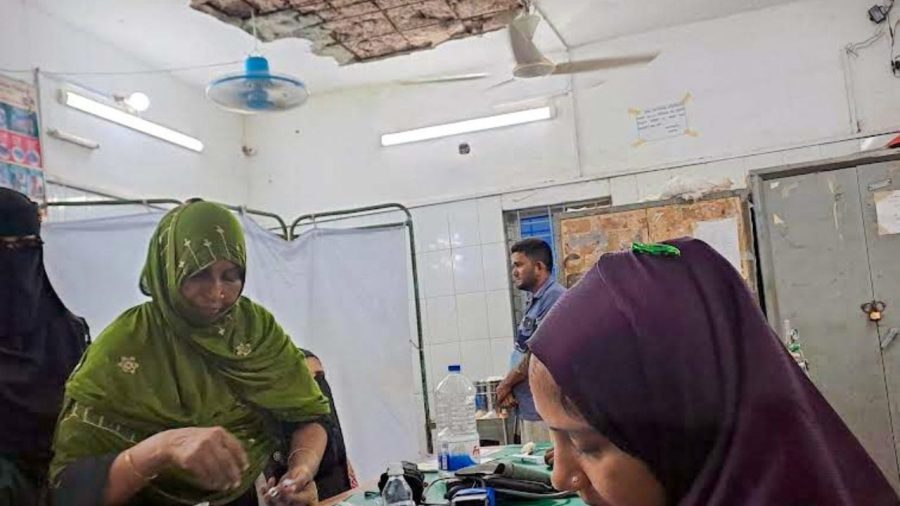



Cracks run across the building, plaster peels off the walls and water leaks through the roof. Declared unsafe a year ago due to the risk of collapse, this building continues to house medical services because there is no alternative facility.
The 50-bed Sarankhola Upazila Health Complex in coastal Bagerhat is grappling with a host of problems beyond its deteriorating infrastructure. The premises are littered with dirt and rubbish, while the stench from the toilets permeates the wards, making it difficult for patients to breathe comfortably.
Severe shortages of doctors and other staff have further crippled services. The operation theatre has remained closed for nearly eight years, the X-ray room has been locked for an extended period, and a high-capacity generator worth nearly Tk1 crore lies idle due to a lack of fuel.
The health complex has, in effect, become a patient itself, severely undermining healthcare for more than 150,000 people in the coastal upazila. With facilities for caesarean sections, surgery and diagnostic tests lying out of service, residents are being denied access to essential medical care close to home. Many are forced to travel to other areas or seek treatment at private facilities, adding to the financial burden on an already disadvantaged population.
The health complex and four union-level facilities – one sub-health centre and three union health centres – have a combined requirement of 39 doctors. Only 11 are currently in post.

Sarankhola has no specialist physicians, including in gynaecology and paediatrics, leaving patients without access to essential specialist care.
Of the 30 sanctioned nursing posts, only 22 are filled. Just one cleaner is available against five sanctioned posts. Overall, the facilities have 86 staff against 171 sanctioned positions, including doctors and other personnel.
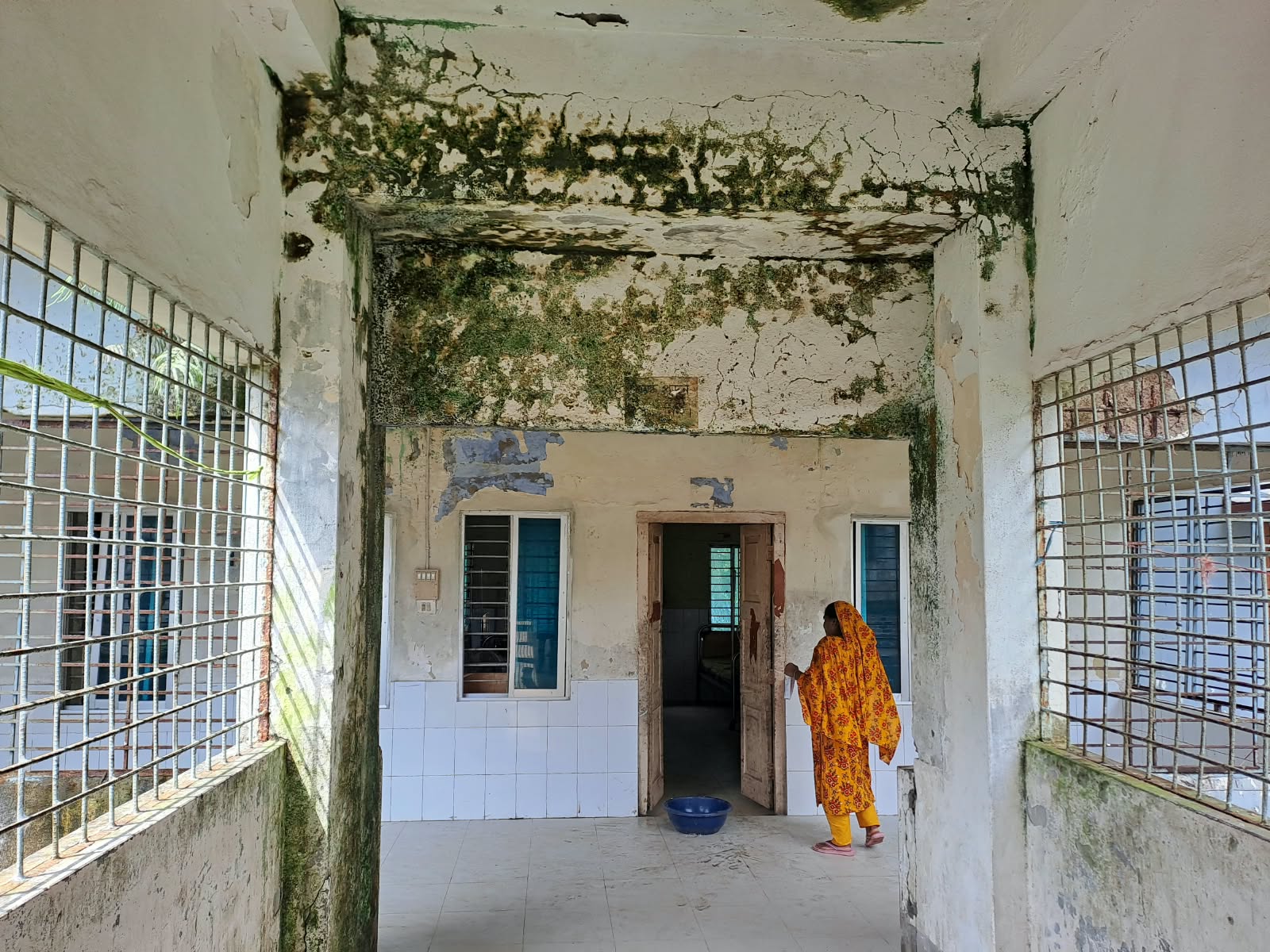
According to people concerned with the facility, the staffing shortfall makes it extremely difficult to provide adequate healthcare to the area’s large population.
The operation theatre has remained unused since 2018 due to the absence of a surgery consultant. Valuable surgical equipment is deteriorating from prolonged disuse, while patients are being deprived of procedures that could otherwise be performed locally, including caesarean sections and minor surgeries.




The closure has hit poorer residents particularly hard, as they must now turn to private clinics and hospitals for caesarean sections and other minor operations. According to hospital sources, some are forced to travel to Bagerhat or Khulna for treatment.
During a visit, the glass doors of both the operation theatre and the X-ray room were found to be locked, with valuable medical equipment lying unused and deteriorating.
Large cracks were visible across the roof, walls and beams, with fallen plaster exposing reinforcing steel bars. Water seeped through the roof, forcing staff to place buckets and basins beneath the leaks. In the emergency department, a large section of ceiling plaster had fallen away, yet the ceiling fan continued to operate.
Despite the risks, hundreds of patients continue to receive treatment in the building every day.
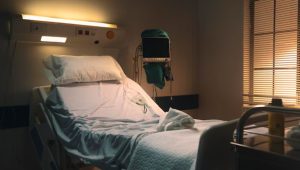
Admitted patients Farida Begum, Maya Begum and Sabuj Mia said they were afraid to stay beneath the cracked ceilings and beams, fearing that the structure could collapse at any moment. Water dripping from the roof had also soaked their beds.
They complained that the toilets were unclean and the stench spread throughout the wards, making the hospital environment unbearable. Instead of helping them recover, staying at the facility could make them even more unwell, they said. Yet they had little choice but to seek treatment there.
Emergency department physician Morsheda Akter Sumi said staff had been forced to move to another part of the department after plaster fell from the ceiling. Cracks had since appeared in the ceiling of that area as well.
“Several hundred patients visit the emergency department every day. We have to continue providing treatment while taking these risks,” she said.
Sarankhola Upazila Health and Family Planning Officer Priya Gopal Biswas said the Health Engineering Department declared the building unsafe in September 2025. However, all activities continue in the structure because no alternative facility is available.
The Health Engineering Department has submitted a proposal to the Directorate General of Health Services for the construction of a temporary tin-shed facility, but there has been no visible progress, he said.
Beyond the structural hazards, the shortage of doctors and other staff has further strained services, Biswas said. The 50-bed facility admits 60 to 70 patients a day, and the shortage of beds often forces patients to stay in the corridors.
“It is not possible to provide proper healthcare to such a large population with limited staff and beds. Unless the higher authorities resolve these shortages quickly, there is little we can do,” she added.