


Bangladesh’s public health facilities are failing to convert allocated funds into healthcare services, with 94 per cent of surveyed facilities ending fiscal year 2024-25 with unspent money due to procurement delays, rigid budget rules and weak management capacity, a new study has found.
The findings from the Power and Participation Research Centre (PPRC), commissioned by the Health Economics Unit (HEU) of Ministry of Health and Family Welfare, point to an execution problem rather than a funding shortage in the country’s public health system.
The study, titled “Bridging Gaps in Bangladesh’s Public Health System: A Rapid Facility-Level Assessment of Expenditure Efficiency towards Ensuring UHC-Compliant Health Service Delivery,” assessed 22 public health facilities across all eight divisions, reviewing budget utilisation, procurement records, service availability and operational constraints.
Overall health budget utilisation stood at 85 per cent in FY2024-25, but spending gaps were concentrated in operational areas where facilities have greater discretion. Development budget utilisation was lower at 75 per cent, while secondary facilities recorded the weakest overall execution at 78 per cent.
The study found that unspent funds were driven by delayed approvals, fear of audit objections, inflexible budget codes, weak financial management capacity and fund releases arriving late in the fiscal year.

The under-execution of budgets has not translated into better service availability. Essential medicines remain the largest gap, with only 22 per cent of public facilities having adequate stocks.
Medicine availability was 22.7 per cent at upazila health complexes, 23.9 per cent at secondary facilities and just 11.5 per cent at tertiary facilities. The study said timely supply from Essential Drugs Company Limited (EDCL), which provides around 62 per cent of medicines, could increase availability to nearly 90 per cent.
Diagnostic services face a similar mismatch between investment and delivery. While laboratory infrastructure exists in 81-91 per cent of primary and secondary facilities, services are frequently disrupted by shortages of reagents, broken equipment and a lack of trained operators.




Imaging capacity remains particularly underused. Sustained availability over a 12-month period was only 17-33 per cent, with 79 per cent of unused services linked to non-functional equipment.
The shortage of medical technologists is limiting the use of existing healthcare infrastructure.
Nearly 40 per cent of sanctioned medical technologist posts under the Ministry of Health and Family Welfare remain vacant, leaving expensive diagnostic equipment without qualified operators.
Of the 6,406 sanctioned medical technologist positions, around 3,892 are filled. Tertiary facilities face the biggest challenge, with advanced equipment often dependent on outsourced or borrowed staff.
The study also found gaps in emergency supplies despite adequate availability of routine items. While gauze, cotton, syringes and gloves were widely available, critical items such as tourniquets and bag-valve-mask resuscitators remained unavailable in a large number of facilities.
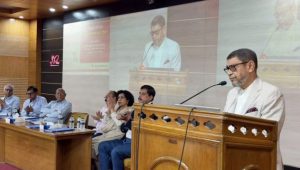
PPRC Executive Chairman Hossain Zillur Rahman said the priority should shift from increasing health allocations to improving the system’s ability to turn money into services.
“Effective budget utilisation is constrained by limited capacity, procedural bottlenecks, rigid budget codes, weak data and supply shortages,” he said, recommending immediate recruitment of medical technologists, stronger digital monitoring and simpler procurement processes.
The study recommended decentralising financial authority, revising rigid budget categories, establishing a dedicated health management cadre and modernising EDCL and the Central Medical Stores Depot to improve supply reliability.
Health Economics Unit Director General Dr Md Enamul Haq said stronger management systems, integrated databases and real-time budget monitoring would be necessary to improve resource allocation and accountability.
Health Minister Sardar Md Sakhawat Hossain said transparency, accountability and performance discipline must become central to healthcare administration to ensure public spending reaches citizens through better services.