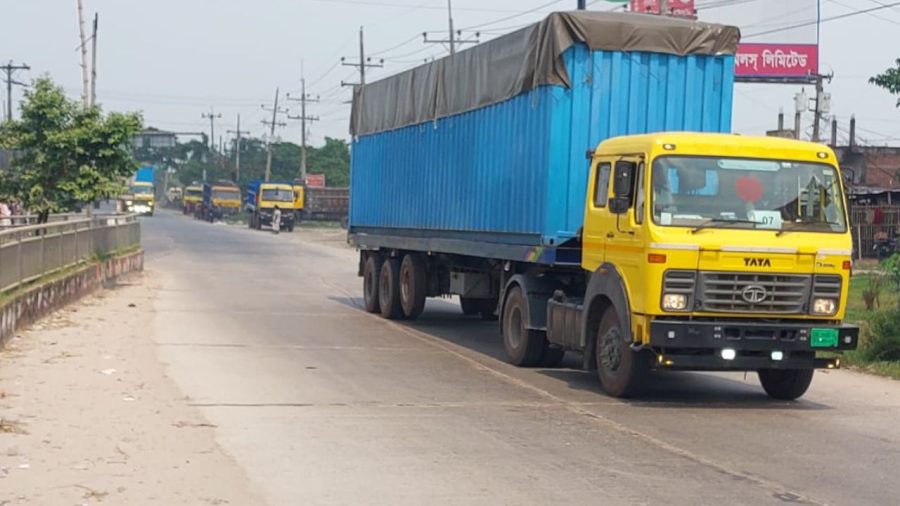



The first batch of uranium has reached the Rooppur Nuclear Power Plant under special security arrangements provided by the Bangladesh Army.
The convoy carrying the uranium arrived at the project site in Ishwardi upazila of Pabna around 12:20pm on Saturday after travelling by road from Dhaka. The nuclear fuel arrived at Hazrat Shahjalal International Airport in Dhaka on Friday night aboard a special cargo flight from Russia.
Between November and December, an additional 48 uranium fuel assemblies for the plant’s first unit and 163 for the second unit will arrive in Bangladesh on nine flights. The fuel shipments will travel from Russia through Kazakhstan, Turkmenistan, Pakistan, Afghanistan and India before reaching Bangladesh.

According to sources, the nuclear fuel will be delivered in nine consignments, with seven designated for the second unit of the Rooppur plant and two for refuelling the first unit. Russia’s state nuclear energy corporation, Rosatom, said the full fuel supply will be delivered by December.
Fuel has already been loaded into Rooppur’s first unit. However, as one-fourth of the spent fuel in that unit must be replaced after about one and a half years, the required fuel is being brought in advance.



Under the agreement, Russia will supply fuel for the first three years, after which Bangladesh will have to import fuel at set intervals for fuel replacement.
The total generation capacity of the two units at the Rooppur Nuclear Power Plant is 2,400 megawatts. Although fuel loading in the first unit has been completed, the timeline for power generation experienced delays due to various complications.
While electricity generation was scheduled to begin this month, it could not take place due to a defect in the safety valve. A senior official of Nuclear Power Plant Company Bangladesh Limited (NPCBL) confirmed on Wednesday that repair work on the safety valve was completed successfully.
However, several more critical tests must be conducted before electricity generation can begin. If these tests prove successful, electricity generated from the first unit will be added to the national grid, while construction and commissioning activities for the second unit continue to progress.