Trade officials are being trained to use artificial intelligence to sift through the data, documents and agreements that underpin Bangladesh’s trade policy, signalling an effort to bring AI into government economic analysis.
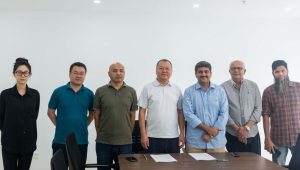
The Commerce Ministry on Sunday began a five-day programme for 30 officials focused on using AI to analyse import-export data, market prices, government documents and international trade agreements.
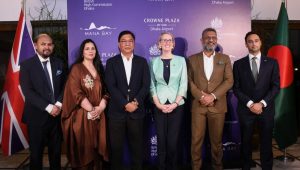
The programme, running from 9 to 13 August, is being jointly organised by the Commerce Ministry, UK International and the United Nations Development Programme (UNDP).
Commerce Minister Khandakar Abdul Muktadir said AI could make government work faster, more efficient and more data-driven, particularly in analysing trade flows, monitoring demand and prices and assessing the potential effects of trade policies.

That could shorten the time officials need to turn large volumes of trade information into policy inputs. But the gains depend on how the technology is governed. Muktadir stressed the need for data security, privacy, transparency and human oversight alongside wider AI adoption.
The training goes beyond generic generative AI skills. Officials are learning prompt engineering and how to use AI to summarise and analyse government documents, prepare letters, memorandums, speeches and press releases, and examine import-export and market-price data.




The programme also covers supply chains and the analysis of World Trade Organisation agreements, free trade agreements and preferential trade agreements. Sessions will examine how AI can support global trade policy, policy-making and e-governance.
For a ministry responsible for negotiating and implementing trade policy, the practical value lies less in producing documents faster than in processing information that would otherwise require substantial staff time.
Better use of trade data could help officials identify market shifts and assess policy options more quickly, although AI-generated analysis still requires human verification.
Owais Parray, senior economic adviser at UNDP, said AI could help policymakers process large volumes of data, documents and information more quickly, reducing workloads and enabling them to draw more systematically on past experience when developing future trade and industrial policies.
Parray cautioned against relying entirely on AI and called for continued human judgement and oversight. He also backed further training on trade-specific AI models.
Maruf Azam, project manager of the Transformative Economic Policy Programme-2, also spoke at the opening.
The UNDP-funded programme will conclude on 13 August with capstone projects and presentations. Its immediate target is 30 officials; the larger test will be whether those skills translate into faster, better-grounded trade decisions.