When Saudi Arabia reopened its cinemas in 2018, the move sent ripples through the Muslim world. A country that once had no public film screens suddenly positioned itself as a cultural hub. Within a few years, new production cities like NEOM, JAX Studios, and Film AlUla began emerging; the Red Sea International Film Festival (RSIFF) launched in Jeddah; and a bold development engine called the Red Sea Labs was formed to build a generation of filmmakers who could tell stories from Saudi Arabia, the Arab world, Africa, and Asia with global competence and confidence.
To understand how this transformation works from the inside, I sat down with Ryan Ashore, the Head of Red Sea Labs, who has been leading the Foundation’s talent development programs since 2022. In our conversation, Ashore explained how the Labs nurture storytellers, bridge cultural regions, and prepare filmmakers for a newly globalized Arab cinema.
ABU SHAHED EMON:
The Red Sea Festival takes place around the same time as several regional markets—Goa’s Film Bazaar, Singapore, Cairo, El Gouna, and Doha. Doesn’t this overcrowding affect participation?
RYAN ASHORE:
I don’t see it as a clash; it’s actually a convergence. Because Red Sea comes last in that chain, it becomes a natural meeting point. By December, many producers, programmers, and funders have already traveled through those festivals. In Jeddah, all those conversations come together.
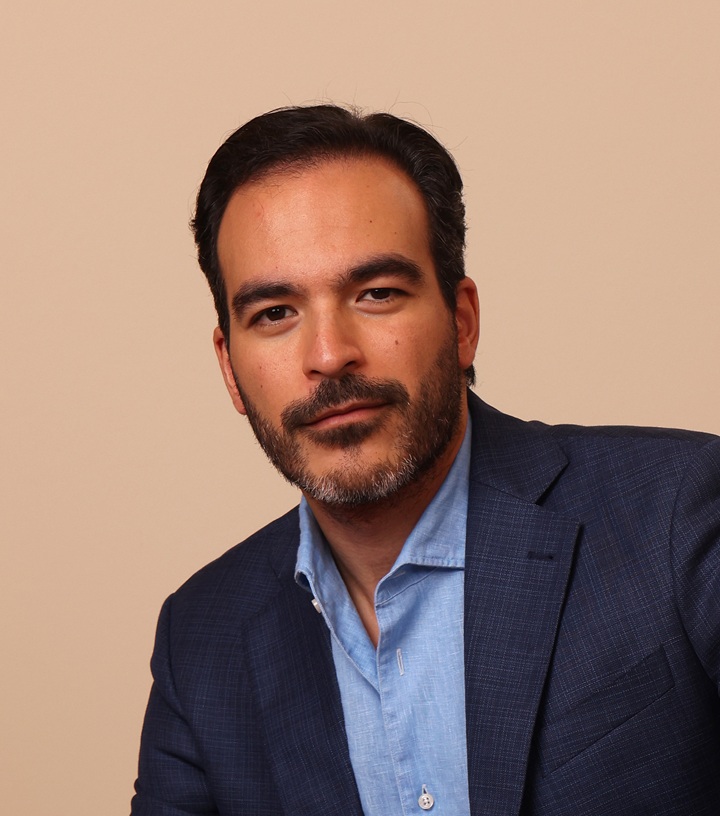
Director of Red Sea Labs
It helps us attract a broad mix of voices from the region and beyond. The only downside is that we rarely get to attend those other events ourselves because we’re preparing for our own festival. But this rhythm has built an ecosystem where everyone meets at the Red Sea before closing the year.
ABU SHAHED EMON:
At the heart of this transformation is the Red Sea Labs. How do you define their mission inside this broader cultural shift under Vision 2030?
ASHORE:
Our mantra is simple: Story is everything.
The Red Sea Labs exist to support storytellers—writers, directors, and producers. And supporting storytellers is not easy. It’s not about hosting one workshop and calling it a day. It’s about walking with them for years, from early script development to festival exposure to production.
Since the Labs began six years ago, we’ve supported over 330 artists. Not thousands, but that’s intentional—we care about depth. We run programs that look at every angle of storytelling: the Lodge for feature films, the SeriesLab for episodic storytelling, Music and Sound Labs for composers, and even animation and video-game storytelling.
One of my favorite workshops last year was led by game designer Mike Fisher. He asked participants to invent a video game from scratch—to think about narrative choices, character arcs, and sound. It showed how story logic crosses mediums. Whether it’s film, series, or games—storytelling is universal.
ABU SHAHED EMON:
The Labs started as a domestic initiative but now include filmmakers from Africa and Asia. What motivated that expansion?
ASHORE:
It’s part of our strategic evolution. We began by nurturing Saudi filmmakers, then expanded to the Arab world, then Africa, and finally Asia.

Each step changed us. When African filmmakers joined, the energy and rhythm of their storytelling brought new life to the Labs. When we included Asia—especially South and Central Asia—we found many gifted filmmakers who lacked institutional support.
So we asked: What if Jeddah could become the place where these underrepresented voices from the Global South come to grow?
Our role is to help them tell their stories authentically—not reshape them to fit someone else’s idea of their culture. That’s why mentorship is so important. We bring global experts, but we also protect each filmmaker’s voice.
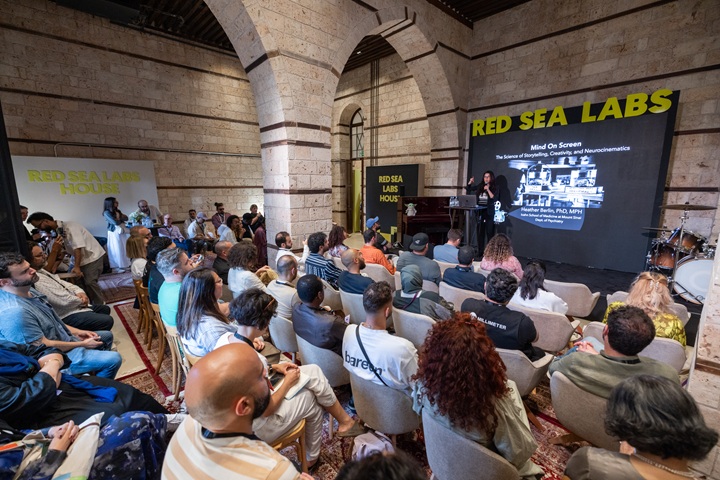
And of course, it’s not just regional—it’s global outreach too. We invite filmmakers like Spike Lee to teach, to share how he made Malcolm X—which, by the way, shot in Mecca in the early ’90s when Saudi was still closed. To have him back here as a mentor now feels symbolic—history coming full circle.
ABU SHAHED EMON:
Saudi Arabia’s production capacity—NEOM, JAX, AlUla—is expanding fast. How do the Labs adapt so filmmakers can actually work in these world-class facilities?
ASHORE:
That’s a big priority for us. Traditionally, labs like ours focus on creative development—writing, directing, producing. But we saw that the industry also needs skilled professionals below the line.
So we created The Apprentice Program. It’s not a shadowing exercise or a short internship. It’s a real job placement where participants are hired and paid by actual productions.
For example, four apprentices worked on Modi, the Johnny Depp film that the Red Sea Fund co-financed. They worked in production, sound, art, and set design. They weren’t fetching coffee—they were part of the crew.
When they returned home, they brought that experience back to local companies. That’s how you build a sustainable industry: one project at a time, one department at a time.




ABU SHAHED EMON:
You often hold workshops in AlUla and Jeddah’s Old Town. What’s the purpose of integrating these cultural sites into film training?
ASHORE:
It’s very intentional.
We take all twelve feature projects from the Red Sea Lodge, along with their writers, directors, producers, and mentors, to AlUla for a full week. They explore the new sound stages and post facilities, but they also visit Hegra, a 3,000-year-old archaeological site. They meet local people, learn about the region’s heritage, and eat in small family-run restaurants.
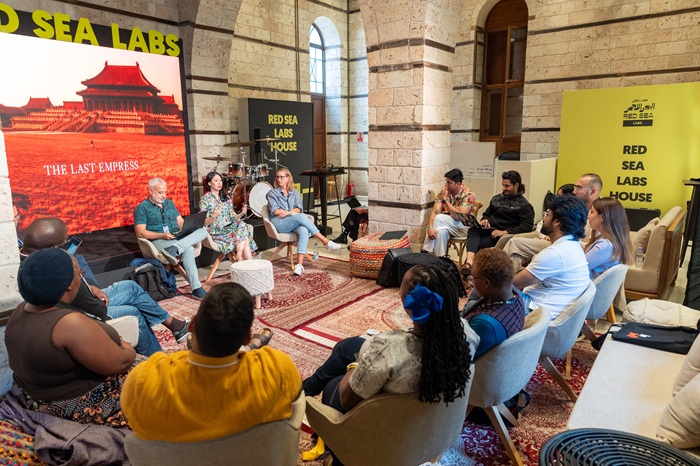
Then in Jeddah, at Al-Balad, the Labs House itself is modeled after traditional architecture. Filmmakers from around the world walk through the alleyways, talk to locals, experience the sounds and smells of the city.
That’s not tourism—it’s immersion. Creativity grows when you’re grounded in real places.
ABU SHAHED EMON:
Your collaborations with TorinoFilmLab, Film Independent, and USC have become benchmarks. What does success look like for these partnerships?
ASHORE:
For us, success means access and outcome.
During the festival, we host over 150 participants through programs like Film Independent’s Global Media Makers, USC’s Middle East Media Initiative (MEMI), and ACTV (African Content Television).
We’re not just connecting filmmakers to producers—we’re connecting them to the right producers. Those who understand the value of development and diversity.
Every year, several of our projects are picked up for co-production or further financing through these partnerships. It’s about making sure the projects developed here don’t stay isolated; they move into the world.
ABU SHAHED EMON:
The Red Sea International Film Festival claims a “zero-censorship” ethos. How does that work in practice?
ASHORE:
At the festival, films screen as their creators intended. That’s non-negotiable if you want to be part of the global festival circuit.
Theatrical releases within Saudi Arabia follow a separate national classification process, similar to other regional markets. But within the Labs and the Festival, creative integrity is protected.
We’ve hosted stories on every topic—social, political, personal. The point is to build trust so that filmmakers know this is a genuine creative space.
ABU SHAHED EMON:
Many readers in Bangladesh wonder if the Red Sea Fund supports specifically “Muslim stories” or faith-linked narratives.
ASHORE:
We don’t categorize projects that way. Our applicant base already includes many filmmakers from Muslim-majority countries—Indonesia, Pakistan, India, across Africa and the Gulf. So the stories come naturally: post-9/11 diaspora experiences, social comedies, stories about modern faith and identity.
We don’t decide based on labels. We look for truthful storytelling that moves audiences.
ABU SHAHED EMON:
When filmmakers from regions like Bangladesh want to apply, what should they keep in mind?
ASHORE:
Start with a strong story. Don’t worry if it’s “commercial” or “festival.” We want projects with emotional and artistic clarity.
A good script is a good script.
We like daring ideas—not necessarily tragic or extreme—but stories that are told with conviction and beauty. And please don’t fear rejection. Some of our best alumni were rejected by other labs multiple times.
I remember a project from Nigeria and Kenya—a small story about a boy obsessed with catching a pink fish. It had been turned down by nearly every lab. They got into Red Sea, won our Fund award, and later premiered at Venice on a €200,000 budget. Their perseverance and belief in their story made the difference.
We receive nearly 600 submissions for only 12 feature slots. So clarity matters—your logline, treatment, and budget realism must all be strong. But above all, show why you are the only person who can tell this story.
ABU SHAHED EMON:
How do you maintain relationships with alumni once they graduate from the Labs?
ASHORE:
We’ve built a proper Alumni Program. We map where our graduates are around the world and keep in touch.
We invite them back as mentors and project readers. Amjad Al Rasheed, director of Inshallah a Boy, returned to talk with young Saudi filmmakers—some making their first shorts. He spoke for over an hour about his journey, from early drafts to Cannes. That kind of exchange builds confidence and continuity.
ABU SHAHED EMON:
What does the next decade look like for Red Sea Labs and Saudi’s film economy?
ASHORE:
The immediate impact is already visible—jobs, tourism, infrastructure. When people fly in for the festival, stay in Jeddah, eat, travel, they’re part of a growing creative economy.
But the deeper impact is cultural. Jeddah is becoming a festival city. Locals now identify with the event—it’s part of their calendar.
By 2035, I see the Red Sea Labs as a Global South hub for film development—where stories from Asia, Africa, and the Arab world are nurtured with professional rigor. If we continue this path, Saudi Arabia will stand alongside Europe and Hollywood—not by imitation, but by confidence in its own identity.
For filmmakers in Bangladesh and South Asia, the Red Sea Labs represent more than a funding opportunity—they signal a new geography of collaboration. As the world’s creative gravity shifts southward, Jeddah is positioning itself as a bridge between regions once left out of the cinematic mainstream.
In Ryan Ashore’s words, “Story is everything.”
For a generation of storytellers from Dhaka to Dakar, that story might now begin by the Red Sea.
Interview By Abu Shahed Emon, Filmmaker