
Bangladesh is heading into the 2026 national election amid what journalists describe as the most dangerous environment in recent history, with new findings pointing to unprecedented levels of physical and digital threats.
The election, scheduled for early 2026, is set against a background of intense political polarisation, rising confrontation, and a volatile security climate, according to a study conducted by Digitally Right.
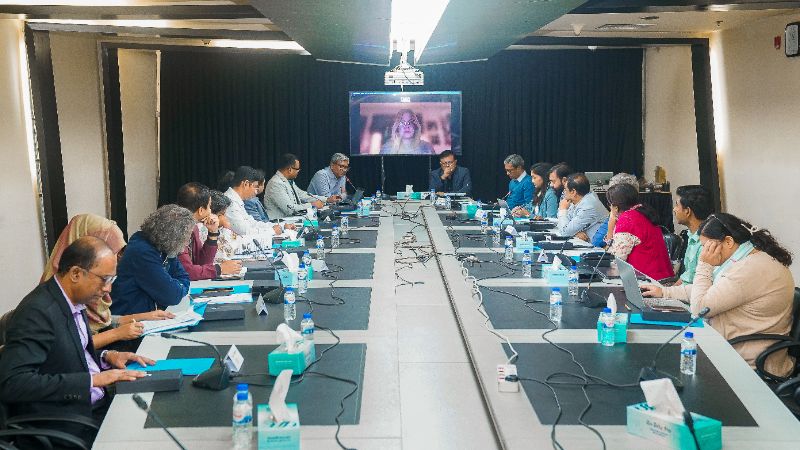
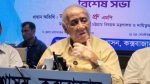
The survey findings were disclosed at an event at The Daily Star Centre on Saturday. Editors and senior journalists from different media outlets were present there and discussed with concerns the safety aspects of journalists.
Past elections have witnessed violent clashes, suppression of dissent, and intimidation of the press, but the latest assessment warns that the coming polls may be riskier than any previous national vote.
At the discussion, participants requested the political parties to make open commitment that they would not attack journalists. The government should also clearly make an announcement that it would ensure safety and security for journalists covering the upcoming election, they added.
Study indicates intensified threats
The study, conducted by Digitally Right under the “Media Safety in the Digital Age” initiative in partnership with the Fojo Media Institute at Linnaeus University and supported by the Swedish International Development Cooperation Agency (SIDA), draws on a survey of 201 journalists across 19 districts and 10 in-depth interviews.
It outlines the scope of both physical and digital dangers journalists expect while covering the election, as well as the alarming gaps in preparedness within newsrooms nationwide.
The findings reveal widespread fear of violence. A total of 89 per cent of journalists anticipate assault or beatings while covering the election, while 76 per cent expect verbal harassment and 71 per cent foresee intimidation.

Female journalists report particularly acute vulnerabilities, with half fearing sexual harassment and 40 per cent fearing sexual assault.
Many respondents link these risks to an increasingly unstable political climate, where clashes among rival political groups, weakened law enforcement, and frequent mob violence heighten dangers for those reporting from the ground.
Local reporters fear hostility from all political sides and note that protection from newsrooms or authorities is often lacking.
Digital harassment strategic, gendered
Journalists also expect widespread digital interference during the polls. The study shows that 75 per cent anticipate disinformation campaigns designed to discredit their reporting, while 65 per cent expect hacking attempts aimed at compromising devices or accounts.
Women journalists foresee a particularly intrusive digital environment, with 80 per cent expecting surveillance of their devices and online activities, compared with 68 per cent of men. In addition, 56 per cent of respondents anticipate personal smear campaigns, including fabricated content intended to undermine their credibility.
Female journalists report distinctly harsher digital attacks, driven by gendered harassment, deepfake risks, impersonation, and targeted online abuse. Many fear that coordinated online campaigns will be deployed to silence them or tarnish their reputations as the election nears.



These digital risks are compounded by vulnerabilities in local outlets, where journalists report frequent exposure to online threats, rising disinformation, pressure to delete evidence such as photos or videos, and increased trolling intended to discourage coverage.
Preparedness alarmingly low
Despite the scale of threats, preparedness within news organisations remains critically insufficient.
Most newsrooms have no assigned person or protocol to support journalists during safety threats, and fewer than a quarter of journalists receive safety gear or training from employers. The study also finds that 77 per cent of respondents report no established protocol for digital safety in their newsroom.
Male journalists are nearly three times more likely than women to have a personal safety plan, revealing a clear gender gap in access to preparedness resources.
Digital readiness is particularly weak. Many journalists lack training on secure communication tools, device encryption, phishing avoidance, emergency response, or strategies for preserving digital evidence.
As a result, respondents rely largely on personal coping mechanisms rather than structured institutional support.
Political actors identified as primary perpetrators
Over 90 per cent of surveyed journalists believe political actors and their supporters are the leading perpetrators of violence or harassment during election coverage.
Law enforcement agencies and extreme religious groups were also identified as significant sources of risk, especially by women and regional journalists.
Participants described political labelling, distrust in the media, rising extremism, mob violence, and targeted disinformation as key drivers of heightened election-period threats.
Many highlighted deteriorating law and order and noted that police often fail to protect reporters when violence erupts. Some warned that the absence of one major political party from the field could intensify instability, providing opportunities for miscreants to exploit the situation.
A high-risk election with minimal protection
With fears of physical assault affecting nearly nine out of ten journalists and expectations of digital harassment widespread across gender and region, the study concludes that the 2026 election poses exceptional risks for the media.
The combination of political hostility, insufficient institutional safeguards, and extensive disinformation threats contributes to a far more hazardous environment than seen in previous electoral cycles.
The report recommends long-term safety training, clearer newsroom protocols, gender-sensitive protections, and strengthened access to legal and emergency support.
It stresses that these measures must be backed by public commitments from political parties and law enforcement to protect journalists from violence, harassment, and intimidation.
‘Journalists routinely subjected to threats’
Jamuna Television’s Assignment Editor Roksana Anzuman Nicole said that journalists are routinely subjected to threats because of the news they publish.
She added that the level of risk is significantly higher for women journalists, who are often targeted with online harassment and sexualised attacks aimed at silencing them or socially discrediting them.
Samakal Associate Editor Zakir Hossain said, “Those who harass or attack journalists often receive protection from political parties.”
He added that if political parties publicly commit that journalists will be able to work freely during the election period without obstruction or threats, it would be a positive step towards ensuring their safety.
Editor, Special Affairs of TIMES of Bangladesh, M Abul Kalam Azad said, “Journalists’ safety depends on the nature of governance and politics within a state. Citing past elections, he noted that until the 2008 election journalists carried out their duties with courage facing no threat or restriction, but thereafter fear and apprehension began to take hold due to the government’s repressive behaviour.”
“Every media house should have a safety plan, even in a limited scale, for their journalists covering the next election,” he pointed out.
Among others, AFP Bureau Chief Sheikh Sabiha Alam, New Age Chief Reporter Mustafizur Rahman, BDNews24 Chief Reporter Jahidul Kabir, RTV Chief News Editor Elias Hossain, and Ekattor Television Special Correspondent Shahnaz Sharmin were present at the discussion.
Fojo Media Institute’s Project Coordinator (Asia) Maria Peterson joined the roundtable online.