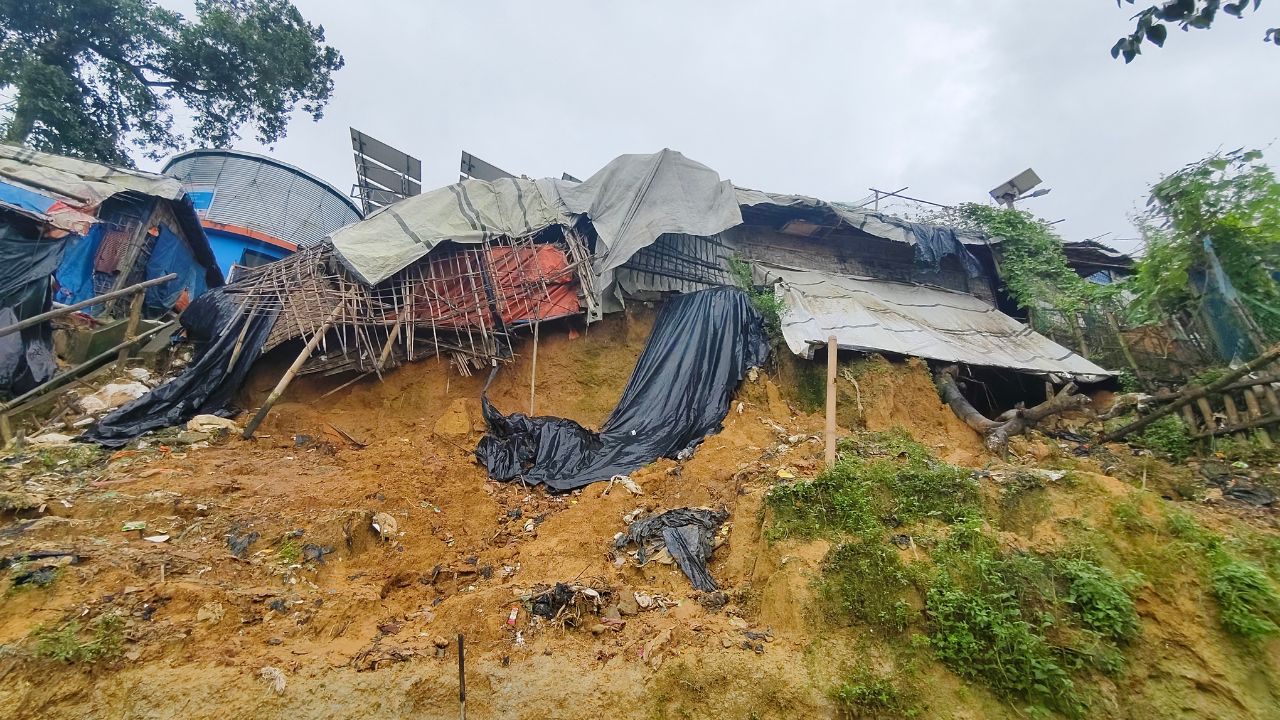



In the early hours of 6 July, as families slept in bamboo-and-tarpaulin shelters across the Rohingya camps of Cox’s Bazar, the deforested hillsides above them simply gave way. Landslides struck at least four locations that morning, burying homes under mud and debris.
At least eight people, mostly women and children, were killed and several injured, according to Fire Service officials.
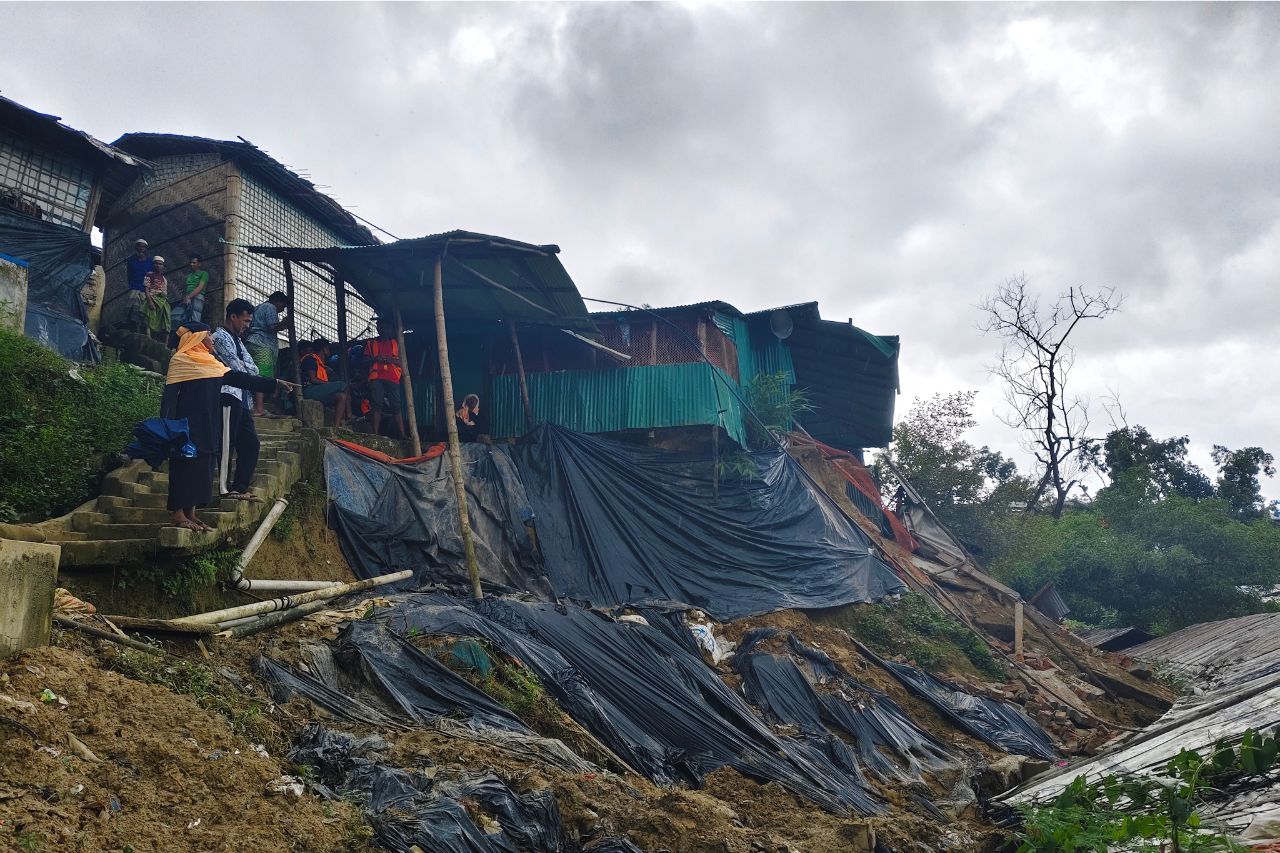
Three days later, tragedy struck again: A landslide collapsed onto a learning centre in the camps, killing seven students and a teacher.

By mid-July, Human Rights Watch put the confirmed toll from the month’s landslides at 17, while other assessments placed it as high as 18, with children accounting for most of the dead.




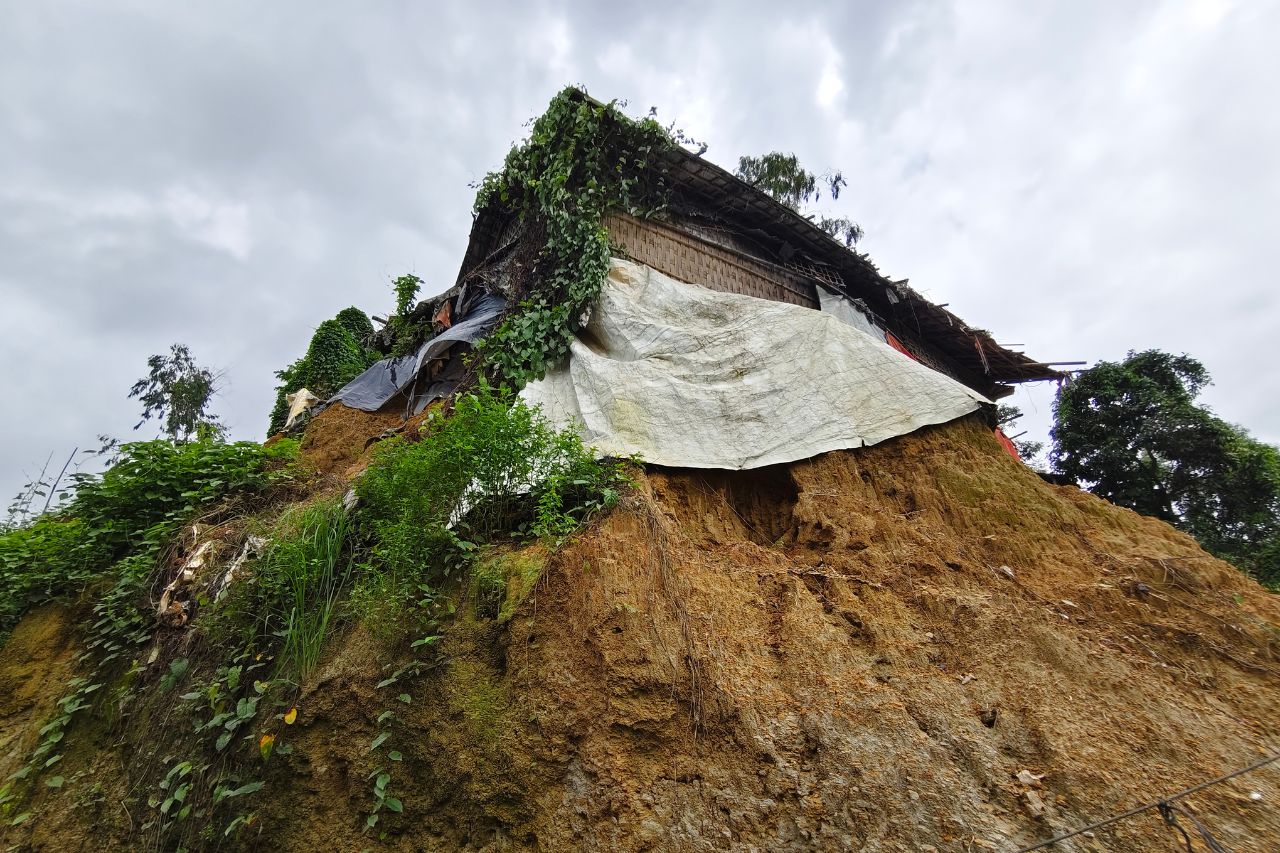
The displacement has been just as severe. Between 4 and 9 July alone, 95 separate landslides displaced more than 4,300 people, according to the Rohingya Coordination Platform, partially damaging nearly 2,800 shelters and destroying 13 outright, part of a broader wave of 286 weather-related incidents that affected over 26,000 refugees that week.
None of this is new to Cox’s Bazar, home to roughly 930,000 registered Rohingya refugees living on some of the steepest, most deforested slopes in the region.
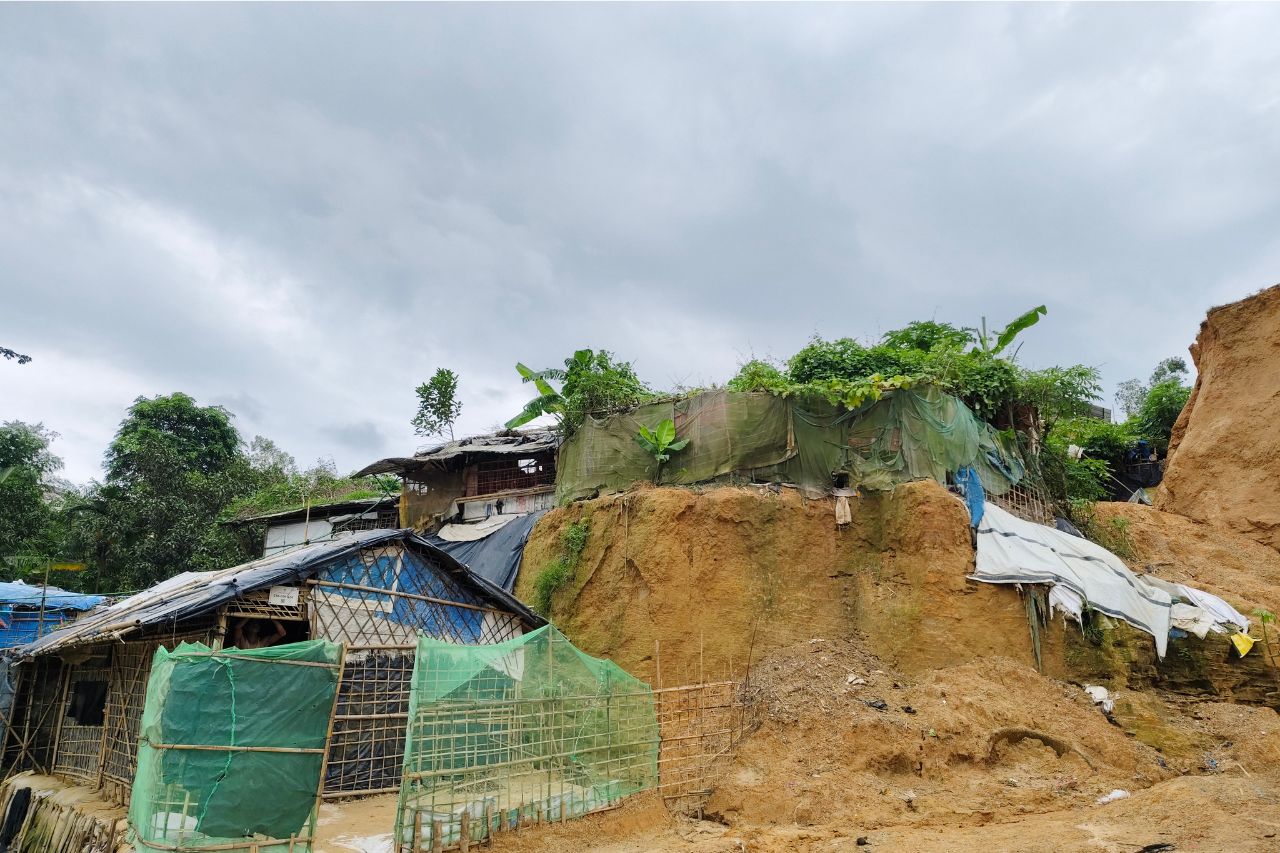
In 2024, a single monsoon season displaced 1.3 million people across the camps and destroyed or damaged 20,000 shelters – a scale this year’s disaster has not yet matched, but one aid groups warn it is trending toward, as funding for drainage, embankments, and slope stabilisation has failed to keep pace with the camps’ worsening vulnerability.
Bangladeshi authorities have relocated more than 1,000 refugees from the highest-risk zones since the landslides began, though many families have refused to leave homes that, however precarious, remain the only shelter they have.