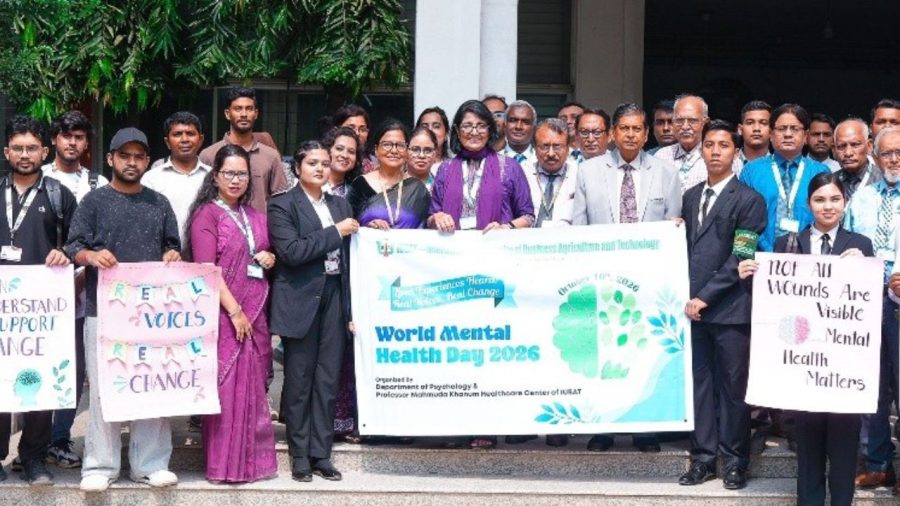



International University of Business Agriculture and Technology (IUBAT) organised a day-long mental health awareness programme on its campus on 10 October, bringing together students, faculty members and staff for a rally and a fair aimed at reducing social stigma and promoting access to mental health support.
The programme, jointly organised by the university’s Department of Psychology and Professor Mahmuda Khanum Healthcare Centre to mark World Mental Health Day 2026, featured a series of awareness activities under the theme “Lived Experiences Heard: Real Voices, Real Change”, the university said in a press release.
The activities began at 11am with a mental health awareness rally that passed through key areas of the campus, carrying messages promoting empathy, social support and greater understanding of mental health issues.

A day-long Mental Health Fair was also held at the IUBAT Study Arena, featuring six stalls set up by mental health service providers.
Participating organisations included the Mind Check Station of Professor Mahmuda Khanum Healthcare Centre, iSELF, Psychological Health & Wellness Care (PHWC), Healing Heart and The Compassion Collaboration.




The stalls provided students, faculty members and staff with information on mental health, counselling services, awareness initiatives and available support systems.
IUBAT Vice-Chancellor Abdur Rab, Pro-Vice-Chancellor Mohammad Mahmudur Rahman and Treasurer and Director of Administration Selina Nargis attended the programme, encouraging greater awareness and positive action on mental health across the university community.
Students, faculty members and staff participated in activities throughout the day.
The organisers highlighted mental health as a fundamental component of overall well-being, influencing how individuals think, feel, learn, make decisions, develop relationships and manage everyday challenges.
This year’s theme emphasised the importance of recognising individual experiences and giving people a voice in discussions about mental health.
The organisers said listening to lived experiences could help challenge negative perceptions, reduce stigma and foster a more empathetic and supportive society.