Initiatives have been taken, and commissions formed at different times to modernise the police and keep the force away from controversy and political influence, but tangible progress remains elusive.
This is apparent as the recommendations of the Justice Aminur Rahman Khan Commission have been ignored, and the draft of Bangladesh Police Ordinance 2007 has not been implemented.
The Police Reform Commission – formed by the interim government – has submitted its recommendations. Work has begun on some of the immediately implementable recommendations, but many remain stuck.
Besides, resentment has grown among police personnel as the final draft of the independent Police Commission Ordinance does not include representatives of serving officials.
Questions regarding the nature of police work, a crisis of trust, objections, debates, and criticisms are plaguing this force. Allegations about a lack of professionalism remain rampant, while concerns about political use have not subsided.
Moreover, the crisis of public confidence has not been alleviated.
Inspector General of Police (IGP) Baharul Alam has said many recommendations have been implemented, and the remaining ones will be addressed in phases.
Members of the Reform Commission, former IGPs, and human rights activists have pointed out that although political parties and government officials make a lot of promises, a democratic social system and political goodwill are a must to rebuild the police into a professional force.
Speaking to TIMES of Bangladesh, constitution expert Barrister Sara Hossain said, “Many recommendations of the Police Reform Commission are not being considered. These should be implemented.
“There are directives from the court on matters including deaths in custody and amendments to the Code of Criminal Procedure (CrPC). Those must be implemented. I have my doubts about the implementation of the recommendations.”
The Police Reform Commission was formed on 3 October 2024.

The 11-member commission, led by former secretary Safar Raj Hossain, submitted its recommendations to Chief Adviser Muhammad Yunus on 15 January this year, after reviewing stakeholder opinions and previous various recommendations.
The recommendations span 8 pages of the 111-page report. Sources say the police recruitment process is compliant with the recommendations, but its reflection cannot be seen at the ground level.
Safar Raj said, “We have submitted the report and recommendations. Implementation is the government’s responsibility.”
A change in uniform
The police received new uniforms on Saturday. As part of the reforms, this new uniform is initially being supplied on a limited scale. In the first phase, the Dhaka Metropolitan Police (DMP) personnel received the new uniform.
Under new regulations, range and metropolitan police personnel are wearing uniforms of different colours, replacing blue and green.
The Police Reform Commission, formed by the interim government, has recommended over a hundred reforms. Among these, the police have implemented 11 out of 18 recommendations identified by the government for immediate implementation.
The full implementation of four recommendations has stalled due to a lack of funds. Five matters are stuck due to the involvement of multiple ministries. Besides, the full implementation of some recommendations needs a lot of time.



What are the recommendations?
The Reform Commission has made recommendations on several key measures, including protecting human rights; stopping the malpractice of filing cases accusing unknown persons; forming special teams for investigating criminal cases; interrogation in a glass room during remand.
Recommendations also include investigating allegations of human rights violations through the Human Rights Commission; creating a fit-list for promotions up to the ranks of Police Superintendent; ensuring height, weight, and physical and mental tests for the recruitment of assistant superintendents of police; increasing the number of women police.
Presence of women police during the arrest and interrogation of women; ensuring leave is taken within a specified period; keeping duty within working hours; resolving accommodation problems; exercising caution in raids and searches on waterways; strategies for dealing with movements, blockades, and aggressive behaviour.
Changing the promotion examination system up to the ranks of Constable and Sub-Inspector; ensuring transparency in recruitment, transfer, and promotion; holding regular citizen meetings and assemblies; ensuring the presence of a magistrate, local public representative, and prominent persons during raids on residences at night.
Forming an influence-free and accountable force; maintaining schedules for GD recording, case filing, investigation, and verification at police stations; refraining from checking political ideology in employment; ensuring the trial of police members controversial for the arson in July-August 2024.
Launching a DNA lab and crime scene unit in each division; strengthening 999 instead of creating a separate emergency call service for ensuring citizen safety; strengthening 999 instead of a separate helpline for human rights violations; and forming a committee in each police station or upazila to prevent police corruption.
From the Ministry of Home Affairs, a letter was sent to the IGP on 3 June directing them to take steps regarding the immediately implementable recommendations of the Police Reform Commission.
For recommendations requiring financial contribution, the police have been asked to send proposals to the ministry.
The Police Reform Commission has recommended creating a fit-list and posting police superintendents (SP) and officers-in-charge (OC) from a list regularly updated at set intervals.
It has been recommended to take effective measures for the immediate implementation of the directives of the Appellate Division of the Supreme Court regarding arrest, search, and interrogation.
Reform Commission member and human rights activist ASM Nasiruddin Elan said the behaviour of the police has improved slightly, as they are not shooting openly now.
Mentioning that none of the previous governments implemented reform proposals, Elan expressed optimism that the next elected government will implement the current commission’s recommendations.
The recommendations state that it is desirable, based on expert opinion, to decide whether the proposed Police Commission will be a statutory body under the purview of an act or an institution with a constitutional framework.
The structure of the Police Commission, its scope of work, constitutional or legal obligations, and matters to be included in the law require judicial analysis and proper examination.
Recommendations have been made for people-friendly policing, including holding regular town hall meetings, forming citizen security committees, increasing public awareness under the title “Be a Policeman for a Day,” further strengthening and expanding the community policing system, and increasing service-oriented and people-friendly activities.
It has been stated that during night-time, the presence of an Executive Magistrate/representative of local government/local prominent person must be ensured during house searches.
Former IGP Abdul Qaiyum said the Police Reform Commission report did not mention an independent police commission. However, the government has accepted the police’s proposal to form a police commission.
He added, “To build the police as a professional force, a democratic social system is required, so that they can work uniformly during every government’s tenure. The police will take action when needed, as stated in the CrPC.
“However, cruelty and over-reaction are not acceptable. The tendency to use the police politically must be abandoned. Political goodwill is a must. Only then will the police be accountable and respectful of the law.”
Qaiyum also mentioned that the British police work in that manner. “Although much is said, every government wants to use the police. If the political government is not sincere, the police can never become a professional force,” he pointed out.
Justice Aminur Rahman Commission
In 1988, a full-fledged Police Commission was formed under the leadership of Justice Aminur Rahman with the aim of modernising the police. This committee submitted a report in two volumes with twenty chapters spanning 328 pages.
The second volume contains all reference materials and documents. The commission submitted nearly 200 recommendations to ensure the qualitative standard of police service.
The commission clearly declared that “the Police Department cannot be held solely responsible for its faults.” This is a responsibility that must be shared by the government, the police, and the citizens.
The commission identified nine main reasons behind the ineffectiveness of the police force.
The United Nations Development Programme (UNDP) and UK-based development organisation DFID launched the first phase of the Police Reform Programme towards the end of 2005, which continued until September 2009.
Afterwards, the second phase began and continued until 30th September 2014. Subsequently, a project titled “Strengthening the Bangladesh Police” was launched under the leadership of UNDP.
Although recommendations were made for combating corruption, increasing police professionalism, and opening access to justice, not much change has occurred.
Police commission ordinance not finalised
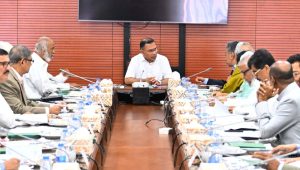
The draft of independent Police Commission Ordinance, 2025, was finalised at a meeting held at the Ministry of Home Affairs on 9 October. The Ministry of Law will now examine and review it, then take the next administrative steps aiming to formulate it as an ordinance.
Sources concerned indicate that the Police Commission Ordinance-2025 could be formulated soon, subject to the president’s approval.