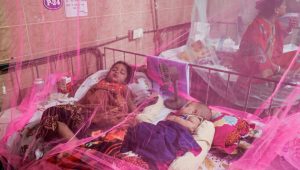
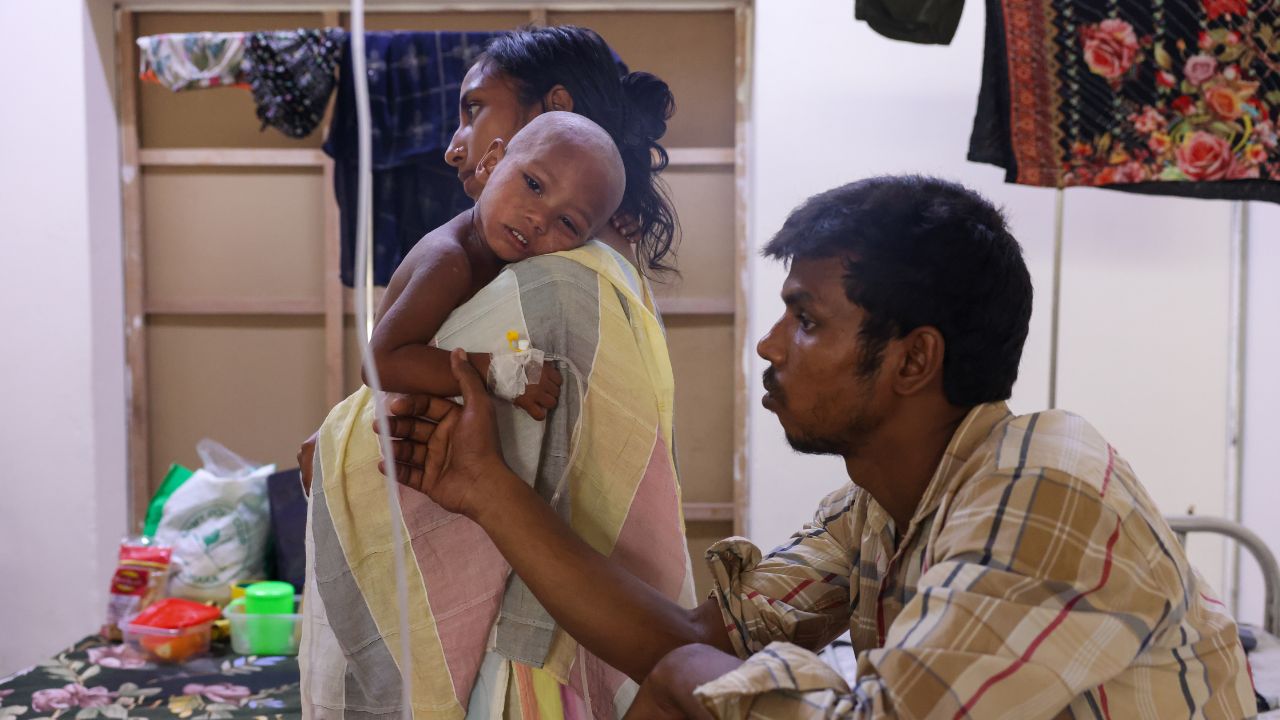
Although measles-related deaths have declined slightly compared to the previous month, the outbreak remains active, with transmission continuing at a worrying pace and infection and mortality levels still exceeding those seen in the early stages of the crisis.
Public health experts say the outbreak is showing signs of slowing after reaching its peak, but it remains active and continues to pose a significant health risk.
They warn that measles cannot be declared under control until two consecutive weeks pass without any new cases, a benchmark Bangladesh is yet to achieve.
According to data from the Directorate General of Health Services (DGHS), a total of 670 deaths were recorded among suspected and confirmed measles cases between 15 March and 19 June.
Of these, 577 were among suspected cases and 93 among confirmed cases.
During the same period, 1,01,851 infections were reported, including 90,982 suspected cases and 10,869 laboratory-confirmed infections.

An analysis of data from the past three months shows that while the death rate has fallen slightly this month compared to the previous month, the overall level of transmission remains alarming.
Moreover, both infection and mortality rates remain higher than during the outbreak’s initial phase.
Between 19 May and 19 June, 195 deaths were reported over 31 days, averaging 6.3 deaths per day. During the preceding period, from 19 April to 19 May, 258 deaths were recorded over 30 days, translating into a daily average of 8.6 deaths.
While the decline from April-May suggests the outbreak has passed its deadliest phase, more than six children are still dying each day on average.




By comparison, the first 36 days of the outbreak, from 15 March to 19 April 19, saw an average of 6.02 deaths per day. This means the daily death rate during 19 May-19 June remained slightly higher than during the outbreak’s initial stage, despite falling from the peak recorded in the previous month.
Public health expert and former principal scientific officer of the Institute of Epidemiology, Disease Control and Research (IEDCR), Mohammad Mushtuq Husain, said the decline is not occurring automatically and requires sustained public health intervention.
“It is true that the outbreak is coming down from its peak. But it will not subside on its own,” he told TIMES of Bangladesh.
“If effective measures are not taken, infections and deaths may continue. Scientific and proactive interventions can accelerate the decline. Otherwise, with the dengue season approaching, more people could become infected, while those who have already suffered infections may become increasingly vulnerable because of weakened immunity.”
A similar pattern is evident in infection numbers, although the reduction in cases has been even less pronounced.
Between 19 May and 19 June, an average of 1,205 new infections were reported daily. During 19 April-19 May, the average stood at 1,249 cases per day.
In contrast, the first phase of the outbreak, from 15 March to 19 April, recorded an average of 751 daily infections.
The figures indicate a sharp rise in transmission after April, followed by only a marginal decline over the past month.
By 19 April, Bangladesh had recorded 27,049 infections and 217 deaths. One month later, infections had surged to 64,515 and deaths to 475.
By 19 June, the number of infections had crossed 1,00,000, while the death toll had reached 670.
The data suggest that transmission accelerated significantly from May onward. Although mortality has eased slightly from its peak, the outbreak remains in a concerning phase and has not yet been brought under control.
Mushtuq Husain cautioned against interpreting the recent decline as a sign that the crisis has ended.
“Assuming the emergency is over simply because daily deaths have fallen would be a dangerous mistake,” he said.
“Daily measles deaths are not normal in Bangladesh. Thousands of people are still being infected every day, and this remains a public health emergency. We need active interventions, including door-to-door vaccination campaigns, rapid response teams and the identification of unvaccinated children. Measles can only be considered under control after two consecutive weeks without any new cases, and we are still far from that point.”