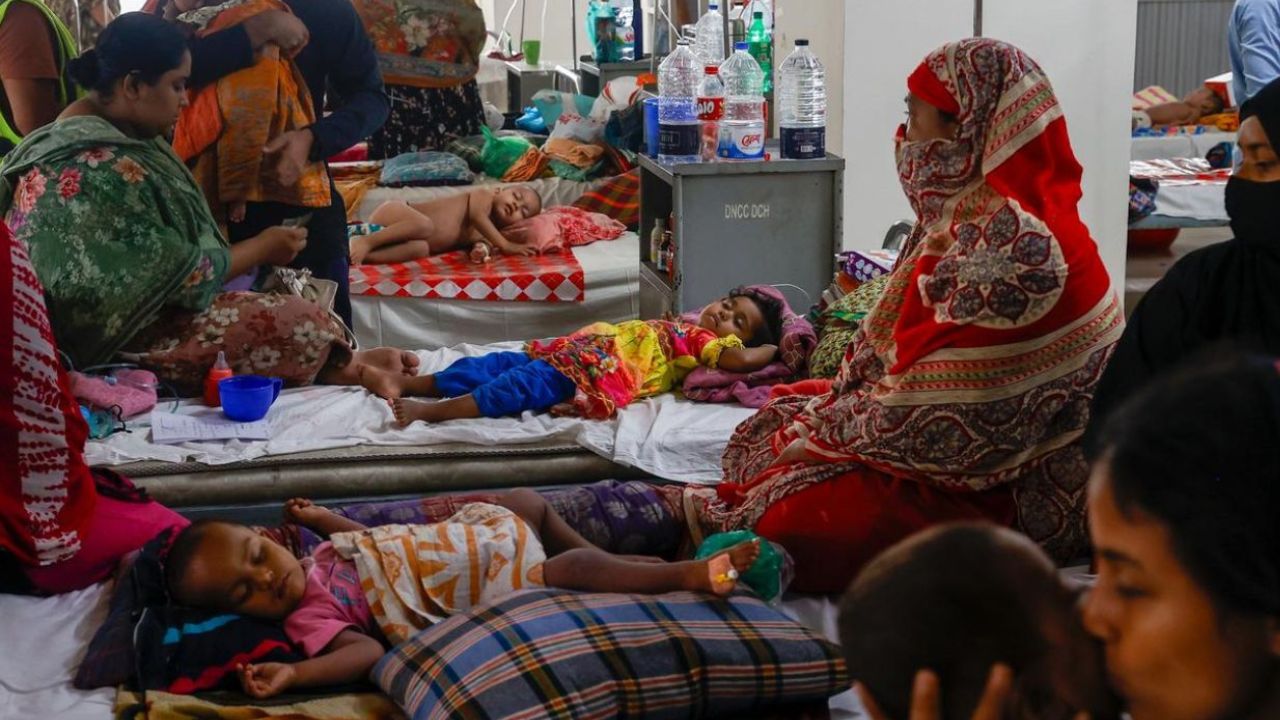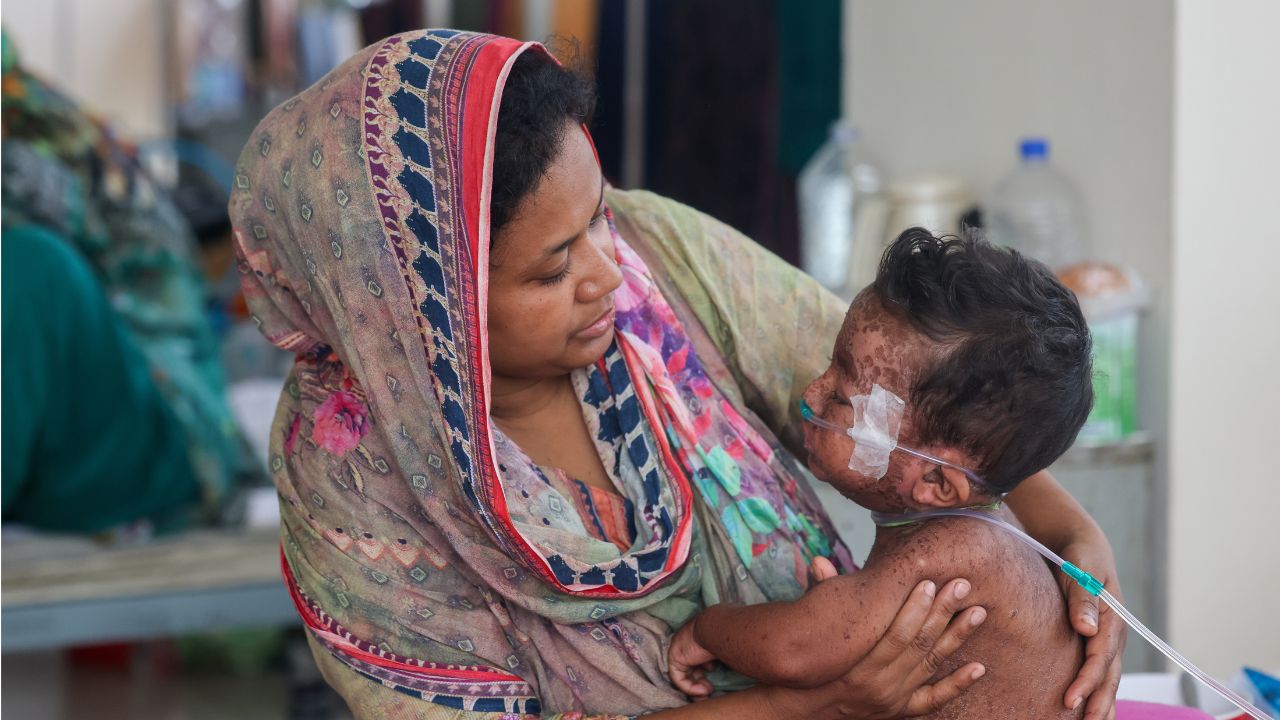



Bangladesh’s measles outbreak appears to have moved beyond its deadliest phase, with both daily infections and deaths declining from their peak earlier this year.
However, the outbreak remains far from over. By 1 August, the country had recorded 1,45,241 cumulative infections and 840 deaths, the highest measles death toll in Bangladesh’s history.
Since the outbreak began, the country has averaged 1,037 new infections and six deaths a day, meaning measles continues to pose a major public health challenge despite signs that the epidemic is gradually slowing.
Although the overall numbers of infections and deaths have continued to rise, the daily averages suggest that the intensity of the outbreak has eased.
The figures indicate that, while the outbreak is slowing, it is far from being brought under control.
Government authorities said most children currently contracting measles were found to have missed vaccination because their families were unaware of the programme, were away from home or did not consider immunisation important.
The government is expanding measles vaccination beyond its initial target by identifying and immunising children previously missed by routine immunisation services. Health assistants are also conducting outreach at the upazila level to help bring the outbreak under control.

Data covering the period from 15 March to 1 August show that the outbreak followed three clear phases: a rapid rise through April, a peak in late April and May, and a gradual slowdown since June.
As of 1 August, Bangladesh had recorded 1,45,241 confirmed and suspected measles cases and 840 deaths linked to measles and measles-like illness. During the 140 days since the outbreak began on 15 March, the country averaged about 1,037 new infections and six deaths a day, underscoring the sustained burden on the healthcare system.
The outbreak gained momentum rapidly during its first month. Between 15 March and 19 April, authorities reported 27,049 infections and 217 deaths over 36 days.
This translates into an average of 751 new infections and 6.02 deaths a day, indicating widespread community transmission from the early stages of the outbreak.
The situation worsened significantly over the following month, making it the most severe phase of the epidemic.
Between 20 April and 19 May, Bangladesh recorded 37,466 new infections and 258 deaths in just 30 days. The country averaged 1,249 new infections and 8.6 deaths a day, the highest daily rates recorded during the outbreak.
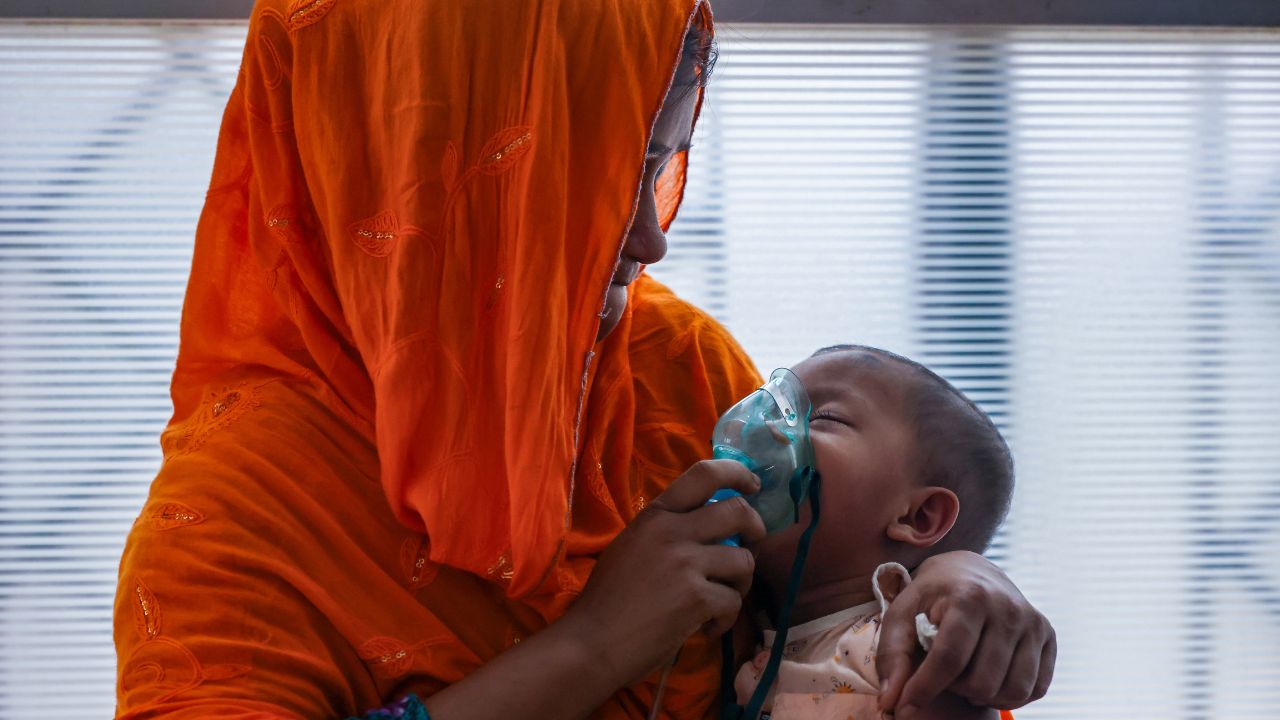



Compared with the previous period, the daily infection rate increased by about 66 per cent, while the daily death rate rose by nearly 43 per cent.
This period marked the outbreak’s peak, with the virus spreading faster than at any other time and deaths reaching their highest daily level.
Although transmission remained intense, the outbreak began to lose momentum after May.
Between 20 May and 19 June, another 37,336 people were infected and 195 died. The daily average of new infections fell slightly to 1,205, while daily deaths declined to 6.3.
The relatively small decline in infections suggests that the virus was still circulating widely, but the sharper fall in deaths indicates that the outbreak had begun to become less lethal than at its peak.
The trend became more apparent over the following weeks.
Between 20 June and 27 July, the country recorded 43,390 additional infections, the largest increase in absolute numbers during any reporting period. However, this period covered 39 days, longer than the previous periods.
When adjusted for time, the daily average was 1,113 new infections, lower than in both the April-May and May-June periods.
Deaths continued to decline more rapidly than infections. During the same period, 155 people died, equivalent to 3.97 deaths a day, less than half the daily mortality recorded during the outbreak’s peak between April and May.
The latest figures up to 1 August reinforce the same trend. Between 19 June and 1 August, 170 deaths were reported over 44 days, averaging 3.86 deaths a day and confirming that mortality has continued to fall even though transmission remains widespread.
An analysis of the data shows an important distinction between the total number of cases and the intensity of the outbreak.
Although June and July recorded the largest increase in total infections, this was largely because the reporting period was longer.
On a daily basis, the period from April to May remained the worst, recording both the highest number of new infections and the highest number of deaths.
The data suggest that Bangladesh has moved beyond the outbreak’s peak. Daily infections have declined from 1,249 during the peak period to around 1,113, while daily deaths have fallen from 8.6 to fewer than four.
DGHS Director General Prof Pravath Chandra Biswas told TIMES on Saturday that the ongoing nationwide measles vaccination campaign had already exceeded its initial target, as health authorities had identified more children requiring immunisation than originally estimated.
“Our initial target was 18 million children. But that number has now increased because we found that many more children remained outside our original estimate,” he said.
He noted that the campaign had already vaccinated around 18.9 million children, while routine immunisation had continued alongside it. Following instructions from the health minister, local health authorities and frontline health assistants had also been directed to identify and vaccinate children who were previously missed.
“The daily number of new infections, which was once around 1,300 to 1,600, has now fallen to about 700 to 900,” he said.
However, he cautioned that some deaths were still being reported because of complications that developed weeks after the initial infection.