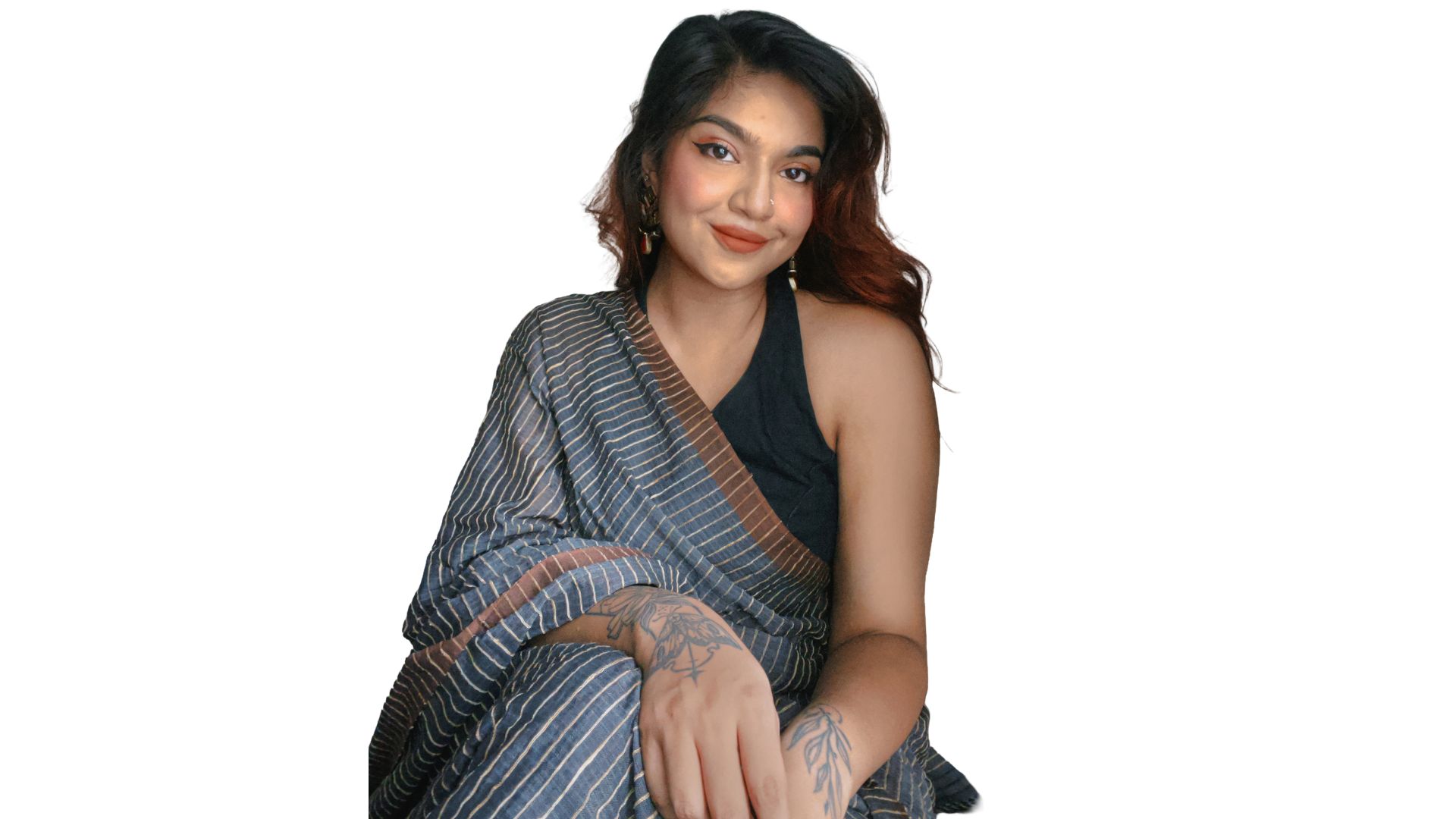



From leaving the security of a corporate career to building one of Bangladesh’s most distinctive creative studios, Maleena Dhrity Gomes has carved out her own path in the design industry. In a conversation with TIMES of Bangladesh, the Creative Director of Aneemal Studios reflects on entrepreneurship, overcoming gender stereotypes, working with AI, learning from failure, and why the future of creativity lies in empowering others.
TIMES: Your career has been shaped by creativity. What shaped you and how did your journey into this industry begin?
Maleena: I started out in art school; that’s really where my journey with creativity began. Midway through my studies, while looking for work as a student, I knew I wanted to pursue something related to art. Back then, I was young and wasn’t entirely sure what I wanted to be when I grew up, but I found my way into advertising.
That first advertising job taught me so much about different industries and served as a pivotal moment for me. But after working there for a long time and graduating, I realised I didn’t want to do that kind of client-driven corporate work long-term. I wanted my own design studio where I could choose the projects I took on and express my creativity authentically. So, I took a leap of faith, quit my job, and launched my studio. Thankfully, a few clients initially trusted me with smaller projects. Now my studio (Aneemal Studios) is 8 years old.
TIMES: As a woman leading a creative studio in Bangladesh, have you ever felt the need to prove yourself more than your peers?
Maleena: Of course. Earning trust doesn’t come easily from everyone. I’ve walked into client meetings where people heard about my studio’s work, but when they met me in person, they’d ask, “Oh, is it you? Won’t your boss be coming?”
Because I’m a woman and carry myself a certain way, people haven’t always taken me seriously at first glance. I’ve repeatedly had to put in extra effort to demonstrate, “Yes, I am the right person for this job, and I know what I’m doing.”
The same challenge comes up when leading new teams. People often expect a creative director to be an older, authoritative male figure. When they see me, some lose that automatic sense of deference. I have to convince my team through my experience and direction that they should trust my leadership.
TIMES: What keeps you inspired and motivated?

Maleena: Knowing that my work makes a genuine impact. While I’ve worked with big brands, the most gratifying projects are often with small businesses, independent brands, or friends who need design support. Knowing my creativity helped build someone’s dream business is a huge driver for me.
On a personal level, my dad was a major inspiration. He was a musician and a bit of a rebel in his era. He fought to build a career outside traditional norms, and my grit, leaving a stable job to run a business, definitely comes from his influence.
TIMES: With the rapid evolution of AI in the creative industry, do you think human creativity will always hold the edge?
Maleena: Any creative who claims they don’t use AI tools at all is missing out! But at the end of the day, humans train and direct those systems. AI can’t function without a human mind prompting it, visualising the concept, and curating the output.
Prompting and guiding design is an art form unto itself. Genuine imagination, taste, and emotional nuance come from human experiences. AI can generate options, but it can’t feel or visualise things the way we do. People will always value the human touch over automated output.
TIMES: Clients often have very specific requests that may not match your creative vision. How do you handle those situations?
Maleena: Every client has different expectations, and it’s my job to understand what they’re trying to achieve before defending my own ideas. If a client asks for something that I don’t think works, for example, changing a colour or making a design element more prominent, I first try to understand the reason behind that request.




Usually, they’re trying to solve a problem rather than simply changing the design. Once I understand that, I can suggest a better solution that achieves the same goal while maintaining the quality of the design.
It’s not personal. Clients aren’t trying to attack my creativity; they’re trying to communicate what they need. My responsibility is to solve that problem in the best possible way. Of course, there are times when we have to compromise, but I always try to offer better alternatives first.
TIMES: Running your own studio can easily become overwhelming. How do you maintain a healthy work-life balance?
Maleena: In the early years, the anxiety of running a business made me overwork constantly, day and night, without breaks. Over time, I realised I needed strict boundaries to stay sane. Now, I treat my studio like a structured job where I clock out by a certain time (like 5:00 PM), and I strictly enforce no-work weekends for both my team and myself. Setting those clear boundaries was transformative not just for my mental health, but also the quality of my work.
TIMES: What role do you think women specifically have been playing in Bangladesh’s creative industry?
Maleena: I think we’re seeing a real shift. More exhibitions, creative fairs and independent platforms are giving women opportunities to showcase their work. What’s even more inspiring is that many women are turning hobbies into businesses.
Today, if you’re good at making something, whether it’s illustrations, crafts, ceramics or handmade products, you have platforms where you can share your work and build an audience. That simply wasn’t as accessible before.
When one woman succeeds, it encourages others to believe that they can do it too. I think that’s one of the biggest changes happening in Bangladesh’s creative community today.
TIMES: What are your dreams for Aneemal Studios and for yourself in the future?
Maleena: Right now, I’m designing the studio with a long-term vision. I’m already personally training a few people because I don’t want Aneemal Studios to become entirely dependent on me.
I want to reach a point where I can step back and say, “You guys run it,” while I offer support behind the scenes. I want the studio to stand on its own.
My teammates are part of me, but they don’t all have to become copies of me. Someone might learn client management from me. Someone else might become an excellent motion graphics designer. Another person might develop typography the way I approach it. Everyone will have their own strengths.
More than anything, I want Aneemal Studios to become a platform that supports new creators. If a freelance project comes to me and I can’t take it on for some reason, I’d love to pass it on to another talented Bangladeshi creator or designer. That’s the kind of platform I want to build.
TIMES: With eight years to look back on in the rearview mirror for Aneemal Studios, if you had to do it all over again, what would you do differently?
Maleena: One thing for sure, I wouldn’t try to do everything by myself. Back then, I believed I had to handle every aspect of the business alone. Now I know that if someone is better than me in a particular field, I should partner with them.
Collaboration is much more powerful than trying to do everything yourself.
Also, in the beginning, I was too focused on “doing business.” If I could go back, I’d worry less about that and focus more on building the right foundation.
TIMES: Was your confidence something you were born with, or was it built through setbacks and experience?
Maleena: Definitely through setbacks. I don’t think anyone is confident all the time. I’ve had plenty of failures and moments of doubt.
One thing about me is that I’m actually a very good loser. Whenever I fail, I try to learn something valuable from it. Then, when I face a similar situation again and avoid making the same mistake, my confidence grows threefold.
Once you’ve experienced failure, you know how to handle it the next time. That’s where real confidence comes from.
TIMES: If you could leave people with just one message, what would it be?
Maleena: That’s a difficult one; I think I’d have to think about it. But off the top of my head, I’d say two things. First, be yourself. Second, hold your ground.
From my own experience, I’ve realised that whenever I tried too hard to impress people, things didn’t work out as well. But whenever I stood by what I believed in and confidently said, “No, this is how it should be,” that’s when things started to change.
Having confidence in your own judgment is incredibly important. Don’t let people convince you that you can’t do something. Sometimes you have to prove it, not necessarily to others, but to yourself.