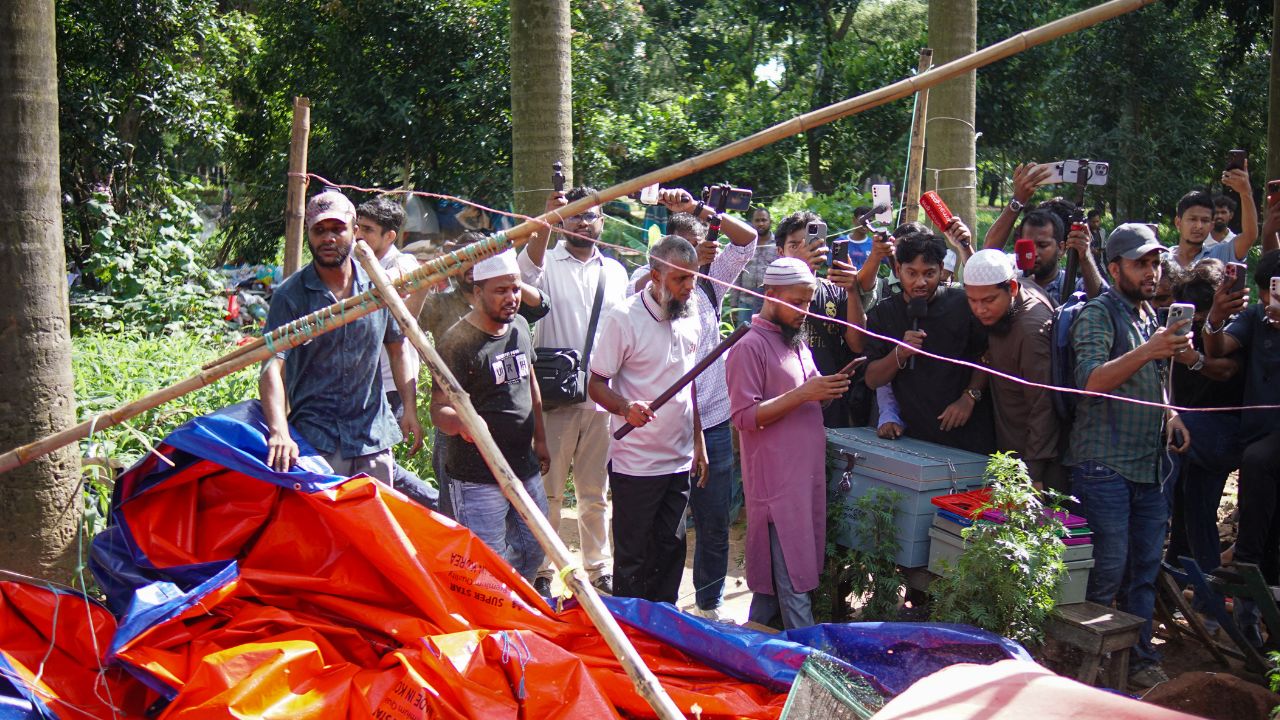



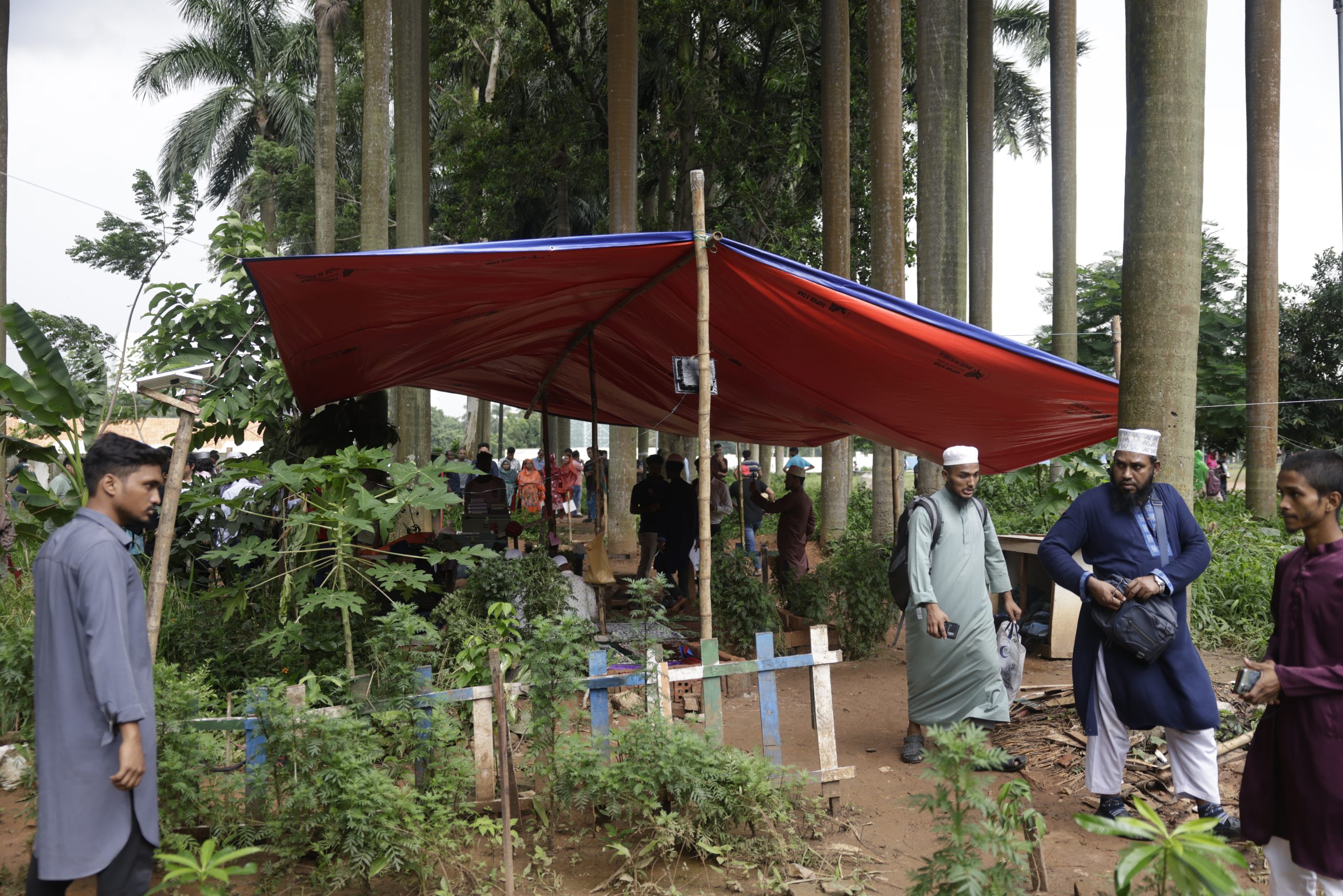
Authorities have demolished the alleged makeshift “akhra” (encampment) built by Rajib Shah under a tarpaulin inside Suhrawardy Udyan in the capital.
Around 3:30pm on Sunday, a mobile court, jointly conducted by Shahbagh Police Station and the Public Works Department, demolished the temporary structure, which Shah had described as a “place for prayer”.
Following more than a week of developments surrounding the issue, the government has finally intervened to stop attempts to build a mosque inside Suhrawardy Udyan. The alleged prayer site was removed during the mobile court’s eviction drive.
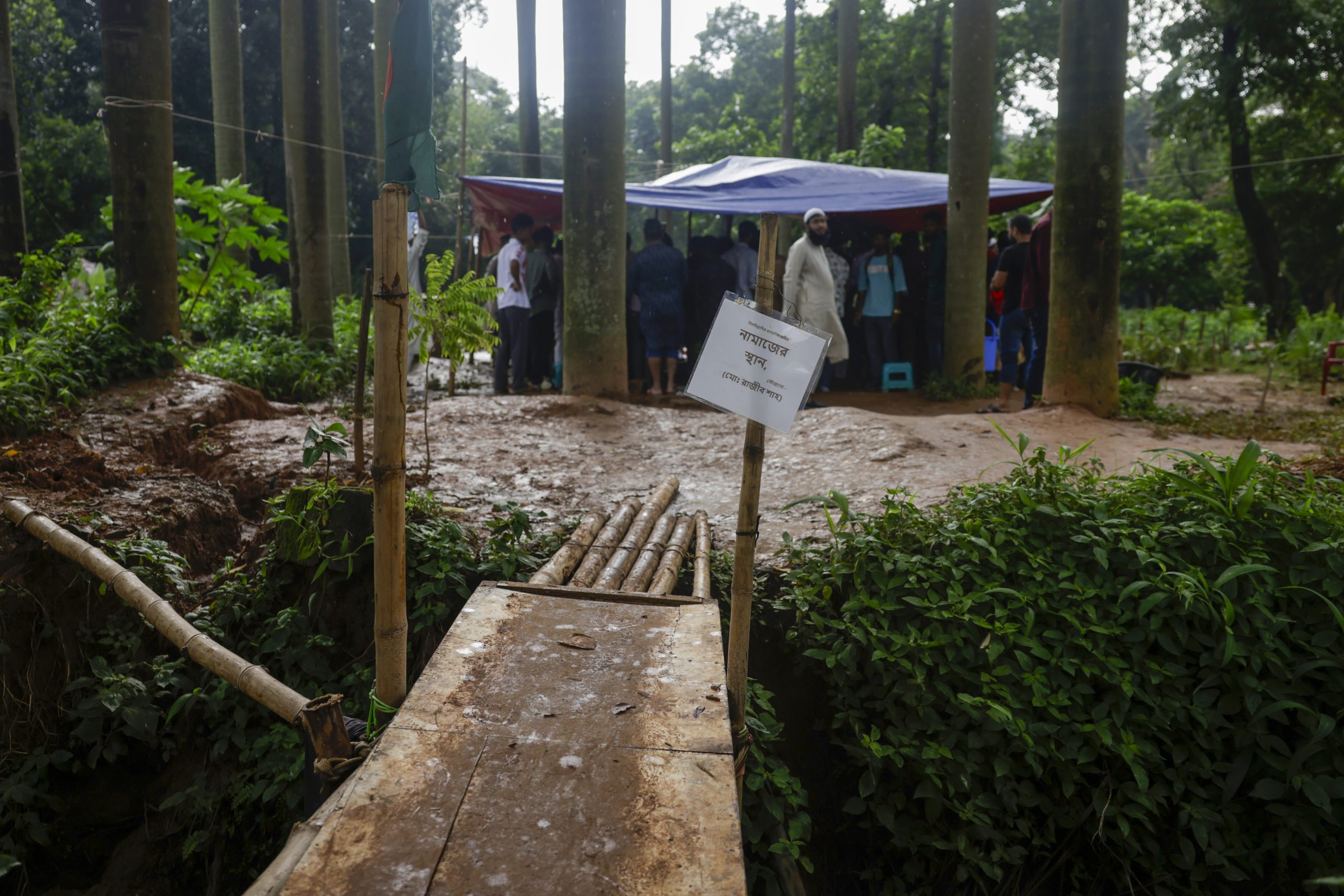
A sudden, aggressive bid to build a mosque inside Suhrawardy Udyan, the Dhaka park deeply intertwined with the history of Bangladesh’s Liberation War, has triggered a fierce debate on use of religion, heritage, and public land.
The move is all the more baffling given that the park is already surrounded by several large, established mosques, leaving no shortage of space for local worshippers.
On the surface, the drive is spearheaded by a seemingly unstable man. Behind the scenes. However, people who are regulars at the park allege that shadowy figures are pulling the strings. Critics suspect a deliberate campaign, a vested interest group using the man to exploit religious sentiment and erase key symbols of the 1971 war.
The move comes at a delicate time, with both the Swadhinata Stambha and its museum still awaiting repairs after being vandalised in the August 2024 mass uprising.

Even Islamic scholars have dismissed the legal and religious grounds for the project. Mohammad Imaul Huq Sarkar (Titu), an assistant professor of Islamic Studies at the University of Dhaka, told TIMES of Bangladesh that building a mosque in this manner is forbidden.
“No individual can arbitrarily build a mosque on government property,” he explained. “Anyone wishing to build a place of worship must buy private land and secure official planning permission.”
The troubled man
At the centre of the storm is Rajib Shah, a drifter who has long lived inside the park. His erratic behaviour and reported drug use have led many who frequent the area to question his mental stability.
Rajib initially made headlines by illegally farming a patch of land inside the park, shouting slogans in support of the late former prime minister Khaleda Zia. He later set up a makeshift hut on that space, expanding it into a living space and branching out into tree-planting drives and unauthorised construction.
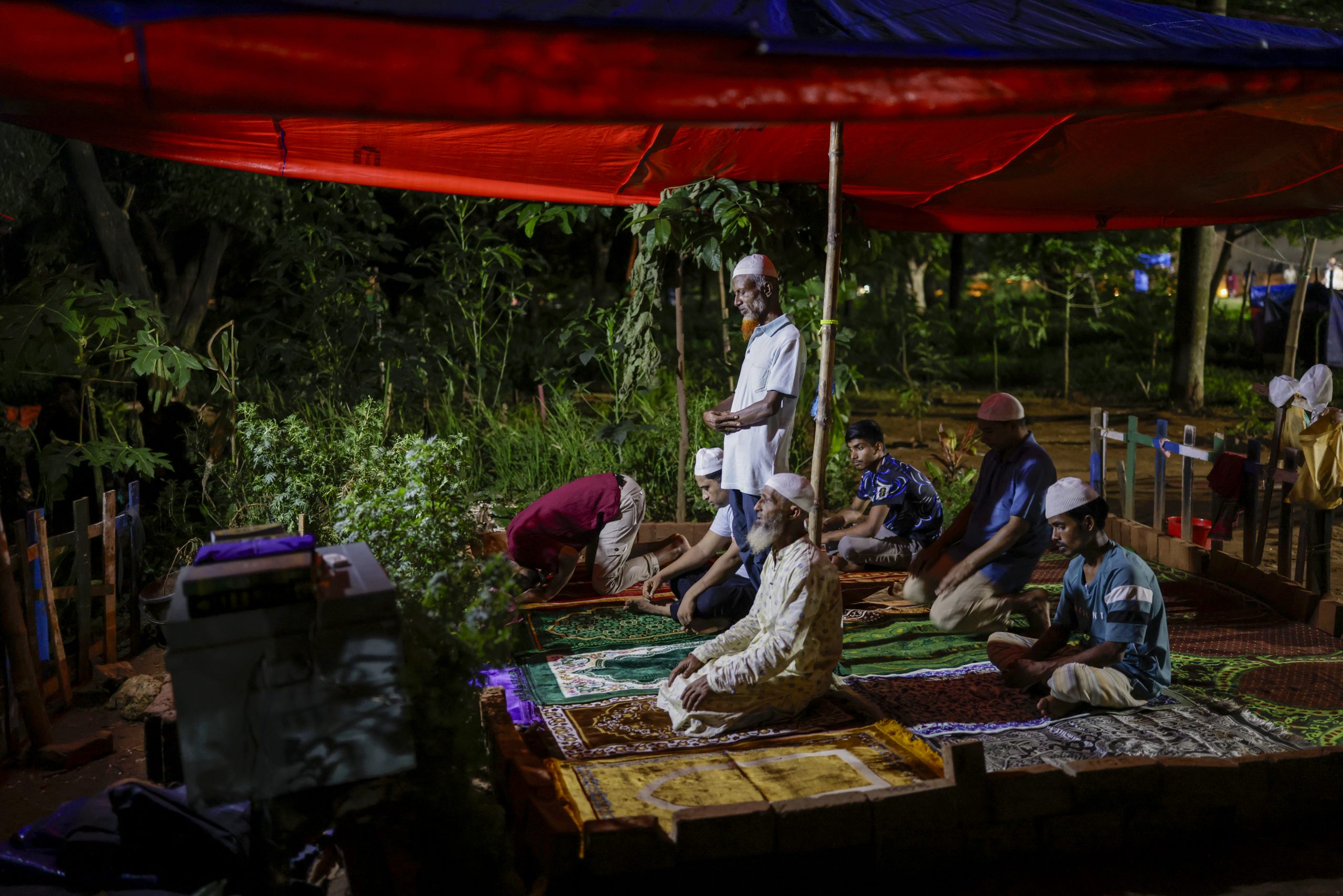
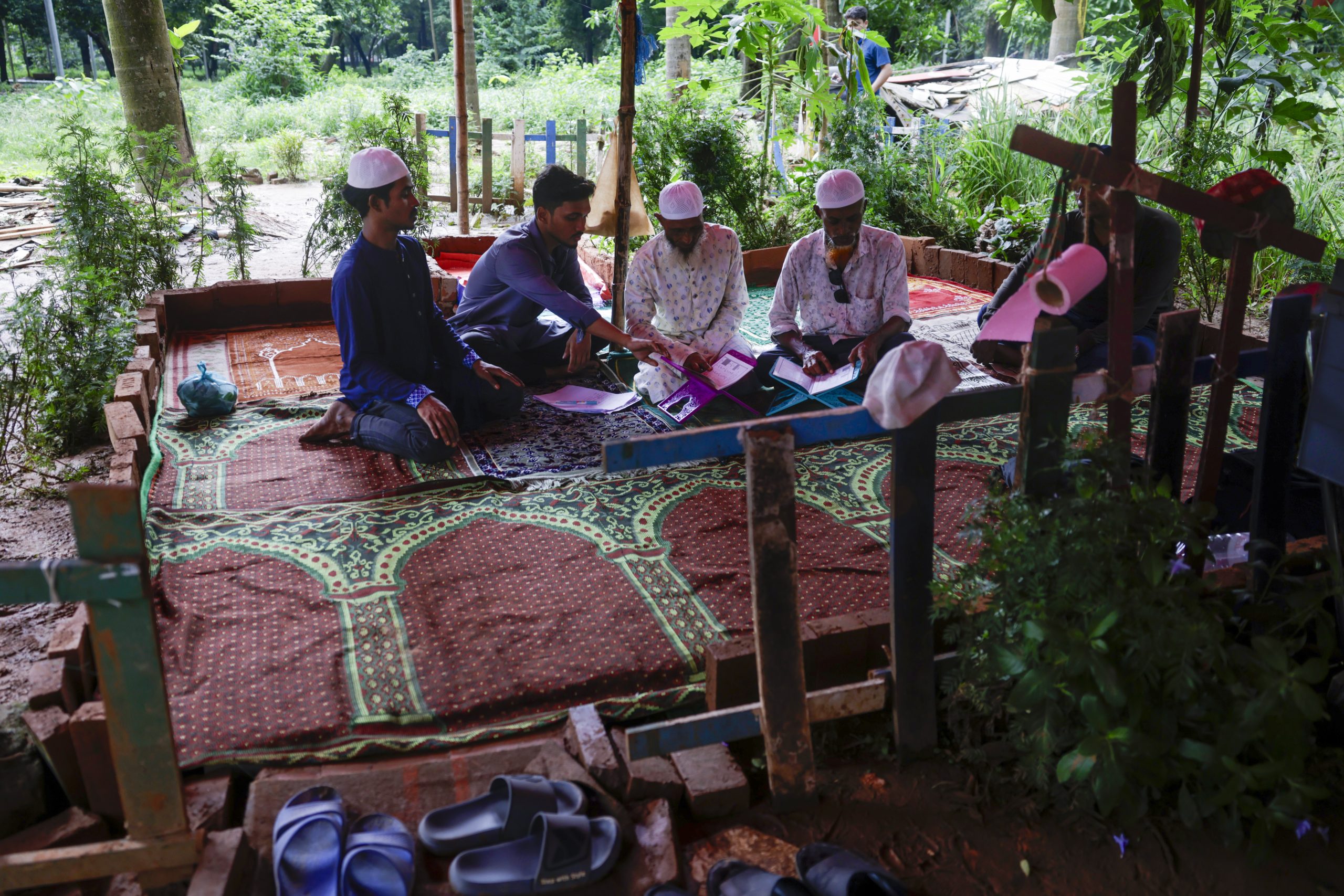
Recently, Rajib upped the ante. He ringed his crop patch with bricks, organised public prayers, and declared that a permanent mosque would be built on the site.



Almost overnight, a crew of supporters materialised, whipping up religious fervour on social media with near-hourly updates.
When the Public Works Department brought in materials to construct a theatre stage in the park, Rajib and his followers poached the bricks to wall off their makeshift prayer zone.
Social media feuds and staged prayers
When Public Works Department officials stepped in and ordered the illegal structures demolished, the group doubled down. Desperate for publicity, they brought in Facebook content creators and began hosting daily prayers at the site.
Rajib’s story changes every time a camera is pointed at him. In one online clip, he declared, “Insh’Allah, there will be a mosque here. We will lay down our lives and embrace martyrdom. A mosque will be built. No mother’s son can stop Allah’s sacred work!”
Moments later, he staged a dramatic exit in a huff, only for his handlers to drag him back to perform communal prayers. Together, the group issued a direct plea to Prime Minister Tarique Rahman to hand over the parkland.
Explaining his sudden religious mission, Rajib claimed worshippers at the park during the Bangla New Year celebrations had asked him for a place to pray. “So, I gave up the patch I was using,” he said. “That’s when I realised just how many ‘brothers in faith’ gather here.”
Exploiting sentiment for political clout
Opponents argue the mosque effort has nothing to do with faith and everything to do with ideological warfare, deliberately setting religious zeal against national culture and history.
Enamul Hasan Anoy, a political science student at the University of Dhaka, pointed out the absurdity of the site choice, “There are several mosques within a five-to-seven-minute walk: At the university, Shahbagh, and the
Institution of Engineers, and near Doel Chattar. Building another one here is purely a stunt to pit cultural heritage against religious practice.”
Sajjad Hossain, a student at Dhaka College who regularly visits the park, agreed. “No one can just hijack government land like this,” he said.
“Rajib Shah has been chasing viral clout with controversial stunts for years. Now he’s dropping the prime minister’s name to push his agenda. If the authorities don’t nip this in the bud, it will destroy the historic character of a vital Liberation War landmark.”
Sheikh Tasnim Afroz Emy, former vice-president of the Shamsunnahar Hall Students’ Union, believes the entire operation has been orchestrated. “It’s a staged provocation,” she told TIMES.
“To hijack a historic national site by weaponising religion is deeply concerning. The moment anyone opposes the move; they get branded as anti-Islamic.”
Tensions escalating
Asked about the move, Sarbamitra Chakma, the Islami Chhatra Shibir-backed executive member of the Dhaka University Central Students’ Union who rose to prominence through his drives against so-called “unsocial elements” in Suhrawardy Udyan, said he had been unable to follow the developments because of his ongoing examinations but would look into the matter.
Meanwhile, Mehedi Hasan, international affairs secretary of the Jatiyatabadi Chhatra Dal’s DU unit, laid the blame on opportunists.
“A political group that emerged in the wake of the 5 August regime change is backing this,” he said. “There is zero logic to it. If any faction tries to push this forward, progressive student groups will shut it down.”
Law enforcement has finally stepped in. Officer-in-Charge of Shahbagh Police Station Md Moniruzzaman said, “We have investigated the site and formally alerted the Public Works Department. It is now down to them to clear the encroachment.”