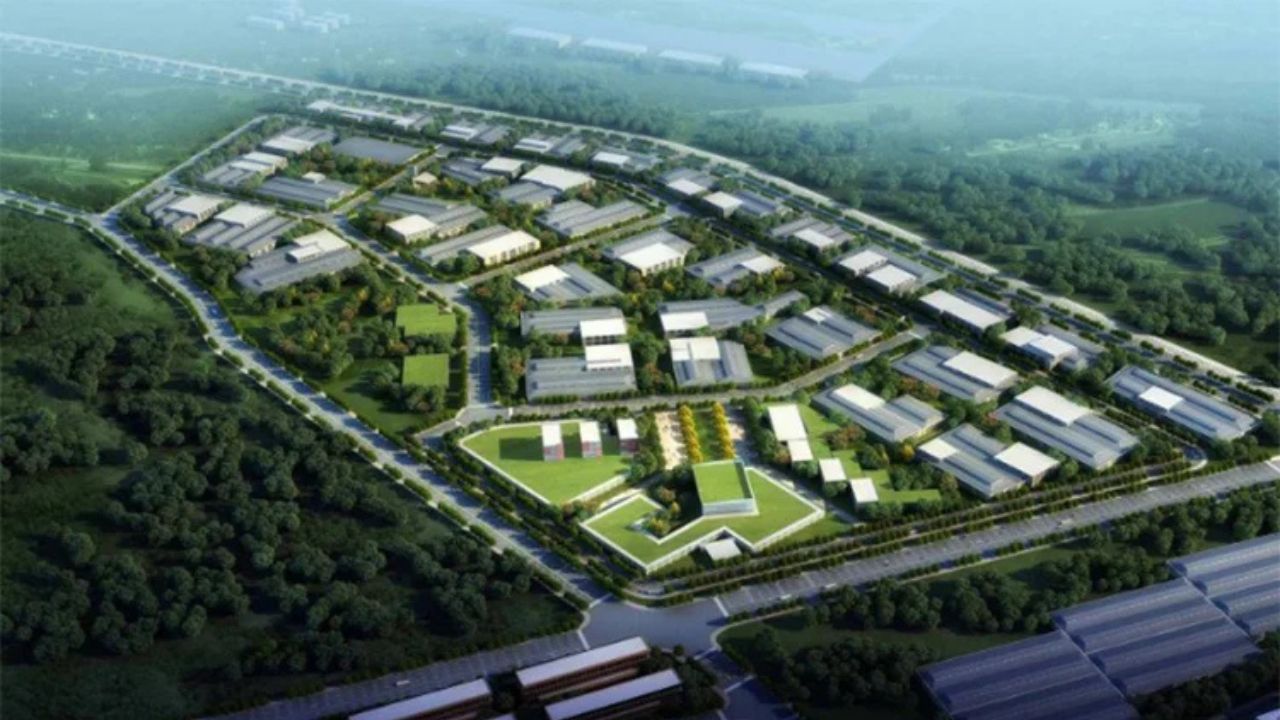



After more than a decade of delays and repeated bureaucratic hurdles, the long-awaited Chinese Economic and Industrial Zone (CEIZ) in Anwara, Chattogram, is finally moving into the implementation stage, with its official groundbreaking ceremony scheduled for Monday.
More than 30 Chinese companies have already made formal commitments to invest around $500 million in the government-to-government (G2G) industrial zone, which is being developed on approximately 800 acres of land.
Officials and business leaders believe the project will become one of Bangladesh’s largest foreign direct investment (FDI) destinations, generating more than 100,000 direct and indirect jobs and transforming Chattogram into a major industrial and logistics hub in South Asia.
Finance Minister Amir Khosru Mahmud Chowdhury will inaugurate the project as chief guest. Home Minister Salahuddin Ahmed, Chinese Ambassador to Bangladesh Yao Wen and Bangladesh Economic Zones Authority (BEZA) Executive Chairman Ashiq Chowdhury are expected to attend as special guests.
Landmark for Bangladesh-China economic cooperation
Located on the southern bank of the Karnaphuli River near Chattogram city, the economic zone is expected to attract investment across a wide range of manufacturing sectors, including garments, electronics, engineering products, plastics, leather goods and other export-oriented industries.
Chittagong Chamber of Commerce and Industry (CCCI) President Mohammed Amirul Haque described the project as a historic milestone for the region.

“This is a transformative project for Chattogram’s economy,” he said. “Its proximity to the seaport and airport gives it enormous strategic value. Nearly two-thirds of the expected investment will come from China, and Chinese investors are known for their speed in establishing manufacturing operations.”
Long journey from agreement to construction
The project’s journey began in 2014, when Bangladesh and China signed the first Memorandum of Understanding (MoU) to establish the economic zone. Land acquisition was completed in 2016, but implementation remained stalled for years because of delays in appointing a developer, arranging financing and resolving administrative issues.
Although China Harbour Engineering Company (CHEC) was initially under consideration, the Chinese government later nominated China Road and Bridge Corporation (CRBC) as the project developer in 2022.




The project gained renewed momentum following Prime Minister Tarique Rahman’s recent visit to China. Subsequently, BEZA and CRBC signed the formal developer agreement on 25 June, paving the way for construction to begin.
According to BEZA, the economic zone is scheduled for full completion by December 2031. However, authorities expect nearly 60 per cent of the industrial plots to be ready for factory construction within the first three years.
Business leaders see huge potential
Business leaders believe the project comes at an opportune time, as rising production costs in China are encouraging manufacturers to diversify their operations to other countries.
Former Chittagong Chamber director Mahfuzul Haque Shah said Bangladesh has a significant opportunity to attract investment beyond the traditional garment sector.
“Chinese manufacturers are actively searching for alternative production bases. Bangladesh should capitalise on this by promoting sectors such as electronics, semiconductors, leather products and plastics,” he said.
However, he cautioned that investment would depend on addressing long-standing structural challenges.
He also welcomed the government’s recent initiative to bring four investment promotion agencies under a single umbrella through BIDA, stressing that effective implementation would be crucial.
BGMEA Director and Asian Group Deputy Managing Director Sakeef Ahmed Salam said the economic zone could establish Chattogram as a regional logistics hub, provided supporting infrastructure keeps pace with industrial expansion.
He emphasised the need for an uninterrupted energy supply, improved transport connectivity, enhanced port capacity and large-scale technical training to develop a skilled workforce.
Chairman of BSRM Alihussain Akberali told Times of Bangladesh, this is very good news for our country. It will create employment and will add to the country’s growth. Let’s hope they get all support from Govt.
Supporting infrastructure worth Tk4,189 crore
To facilitate smooth operations inside the industrial zone, the government has approved a Tk4,189 crore supporting infrastructure project.
Under the plan, the Chinese government will provide Tk2,467 crore in concessional financing, while the Bangladesh government will fund the remainder.
The infrastructure package includes a 1,235-metre connecting road to a multipurpose jetty, a 330-metre bridge, four-lane internal roads, a 25-million-litre Central Effluent Treatment Plant (CETP), a 20,000-deadweight-tonne multipurpose jetty, gas and power transmission facilities, and a 12-kilometre boundary wall.