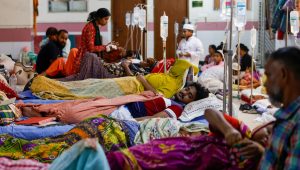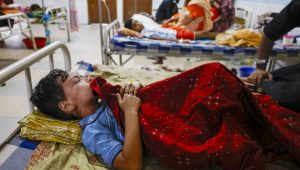



When Suman Mallik developed a high fever in the last week of August, he thought it was a routine illness. Within days, his condition worsened. Tests confirmed dengue, and his family rushed him to a government hospital—only to find no available bed.
The printing factory employee was eventually admitted to a private clinic. As his condition deteriorated, doctors shifted him to the Intensive Care Unit (ICU). After several days of treatment, he was discharged but remains weak and has been advised to rest for a month.
Suman’s experience reflects a growing crisis in Khulna, where rising dengue cases are overwhelming hospitals and leaving many patients struggling to access timely treatment.
Master’s student Noman Ahmed faced a similar ordeal. He developed a fever on 23 August. His family took him to a private hospital, but no bed was available. He was admitted nearly five hours later after another patient was discharged.
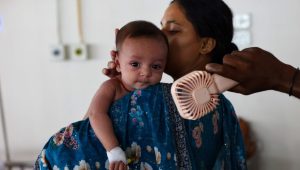
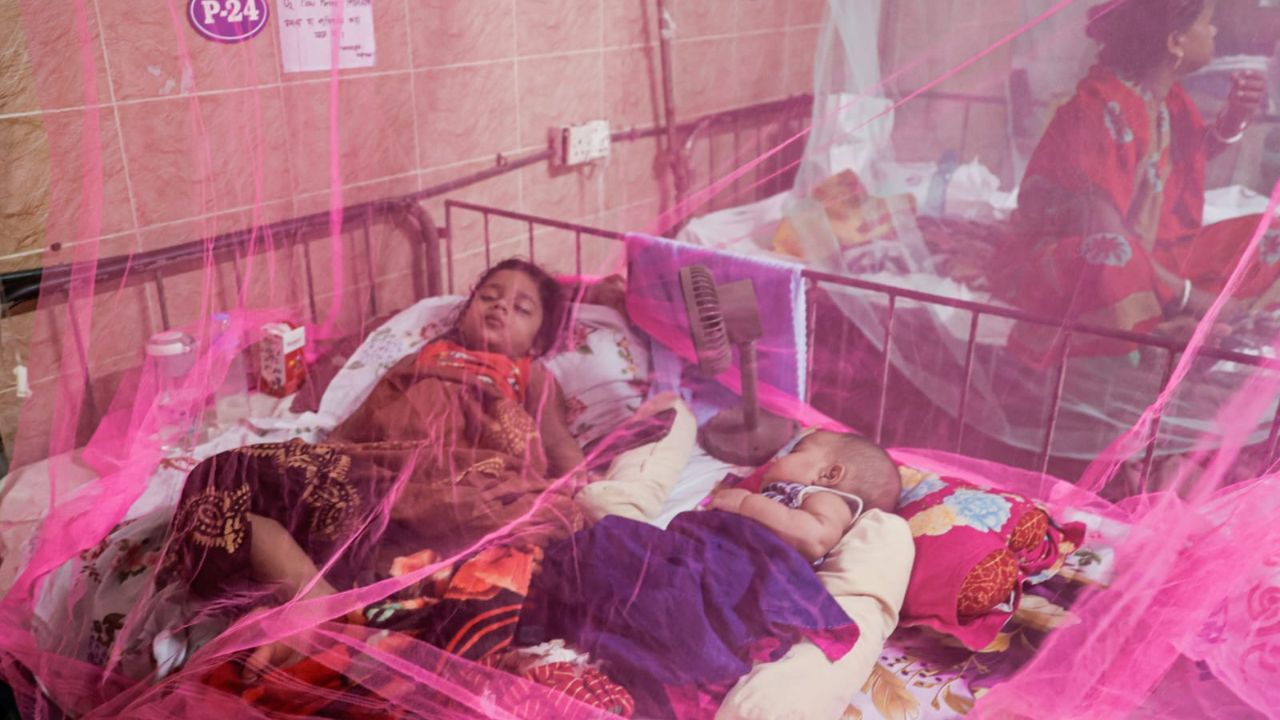
Hundreds of dengue patients across Khulna city are now facing similar challenges. With hospitals under pressure and home-based treatment carrying risks, anxiety is rising among residents, particularly families with children.
“Dengue has taken a serious turn,” Md Babul Howlader, member secretary of Khulna Civil Society, told TIMES. “The government should immediately declare Khulna a high-risk area and ensure necessary support. Hospital capacity should be expanded, temporary treatment facilities arranged, and additional manpower brought in if required.”

According to the Directorate General of Health Services (DGHS), dengue has spread across Khulna division. Once largely confined to major cities such as Dhaka and Chattogram, the disease has now reached upazilas and rural areas.
The outbreak has intensified sharply in recent months. Khulna division recorded 2,071 cases between January and July, while August alone saw 3,774 cases. The death toll rose from eight at the beginning of August to 20 within a month.
Khulna district recorded the highest number of cases in the division. The district reported 422 cases in the first seven months of the year, but the number surged to 1,601 in August alone. Patients from neighbouring districts are also travelling to Khulna city for treatment, increasing pressure on Khulna Medical College Hospital.



Khulna City Corporation has identified wards 17, 18, 22, 23, 24, 25, 27, 28, 29, and 30 as dengue red zones. Earlier, wards 22, 28, 29, and 30 were identified as the most vulnerable areas.
Health experts fear the situation could worsen further in September and October unless urgent measures are taken.
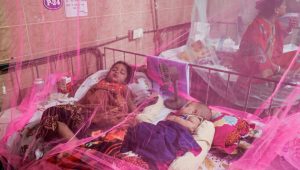
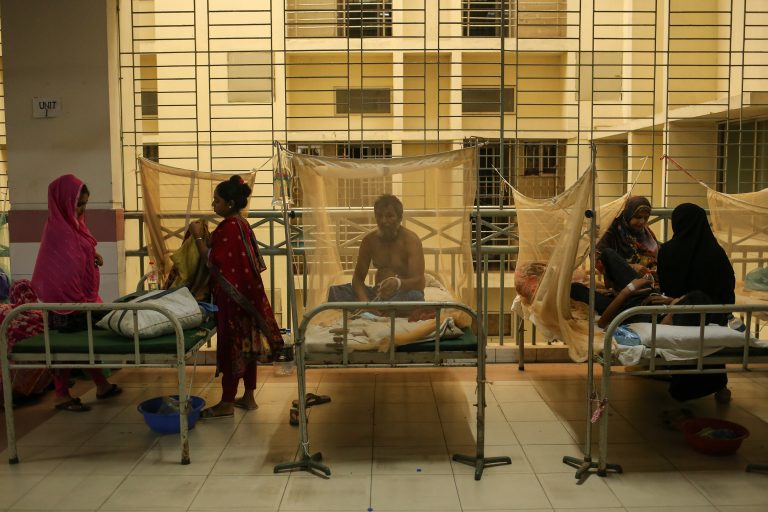
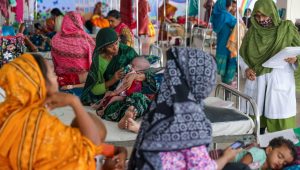
Hospitals are struggling with a severe bed shortage as dengue cases surge.
According to the latest health department report, 247 new dengue patients were admitted across Khulna division in the past 24 hours, including 200 in government hospitals and 47 in private facilities.
Dr Hossain Ali of Khulna Medical College said more than 2,000 patients are currently receiving treatment, with many dengue patients placed in different wards due to limited separate facilities.
Khulna Deputy Civil Surgeon Md Shawkat Ali said patient pressure is rising as cases from upazilas are being referred to city hospitals.
The surge has also increased demand for platelets. Asad Sheikh of Khulna Blood Bank said they receive requests from 40 to 50 dengue patients daily, while a shortage of healthy donors has made blood collection difficult.
He said Apheresis technology can provide 35,000 to 40,000 platelets from a single donor, but the facility is currently available only at City Medical Hospital after service disruption at Khulna Medical College due to a shortage of required bags.
Meanwhile, blood donation requests have increased across Khulna-based Facebook groups.
Professor Kabirul Bashar, an entomologist at Jahangirnagar University, said the high density of Aedes mosquitoes, presence of dengue patients, and favourable breeding conditions have combined to fuel the outbreak in Khulna.
Professor Ahsan Habib of Khulna University said climate change, changing rainfall patterns, longer rainy seasons, and waterlogging have contributed to the rise in cases. He added that genome sequencing is needed to check for possible virus mutations.
Khulna City Corporation administrator Nazrul Islam Manju said mosquito control requires public participation alongside spraying and fogging. He urged residents to prevent water stagnation in homes, rooftops, and balconies.
The city corporation has been conducting mobile court drives, fogging operations, and larval control campaigns since early August. Chief Health Officer Sharif Shammiul Islam said regular inspections remain challenging as 10,000–20,000 of the city’s 80,000 houses have rooftop gardens or areas difficult to monitor.