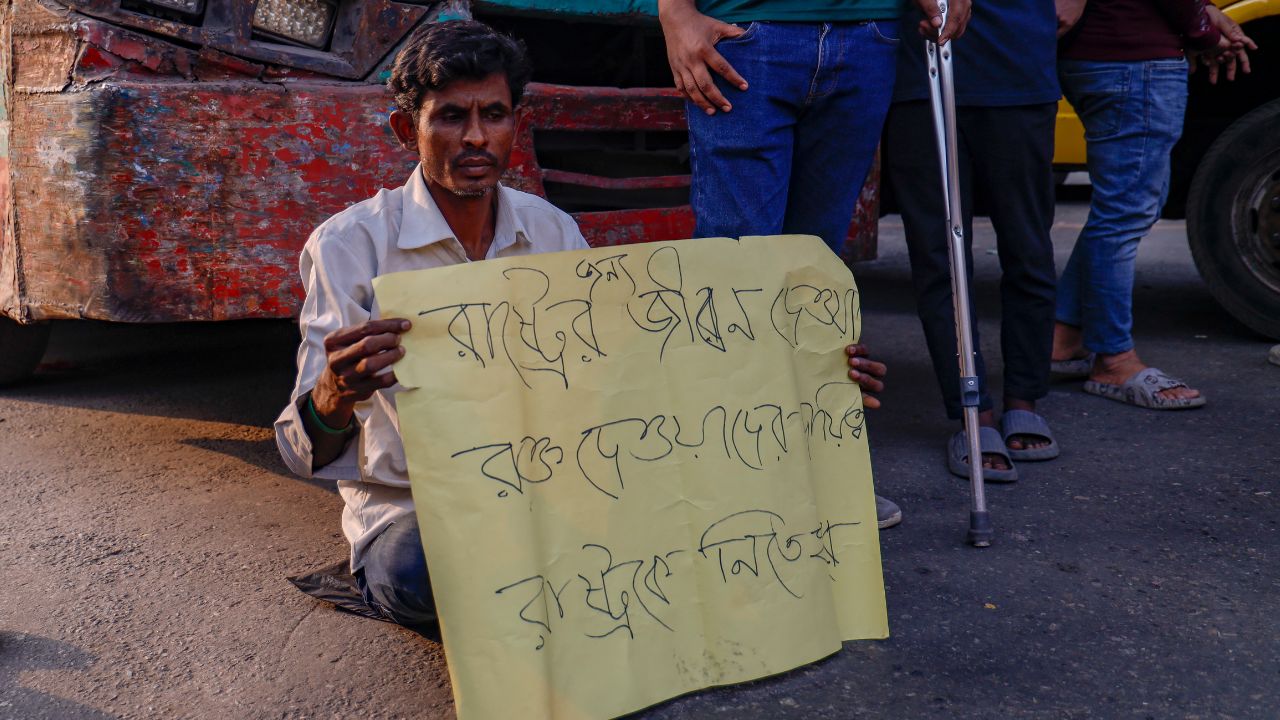



Seven-year-old Basit Khan Musa laughs and plays, and every time he does, it burns Mustafizur Rahman the most. A cry rises from deep inside his chest.
On 19 July 2024, when Musa was just five, he had gone down to the ground floor of their building in the Meradia Hat area of Rampura in the capital with his grandmother, Maya Islam, to buy ice cream. Then came the horrifying moment.
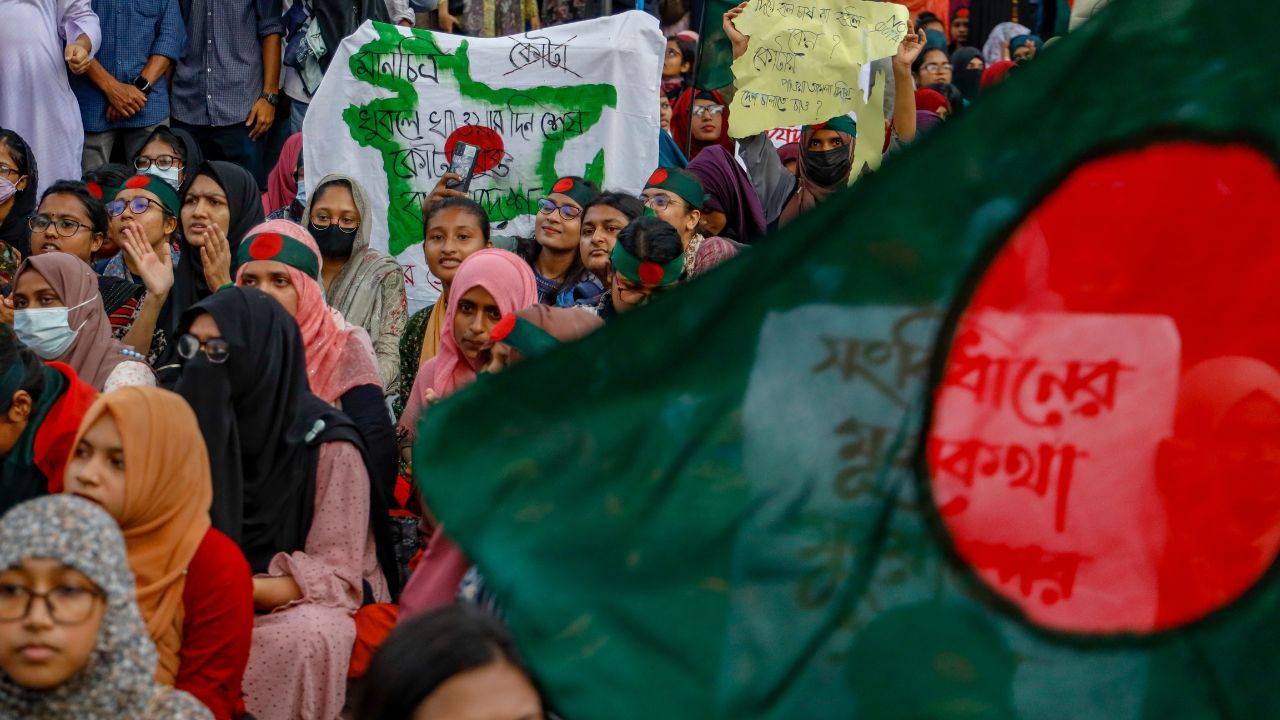
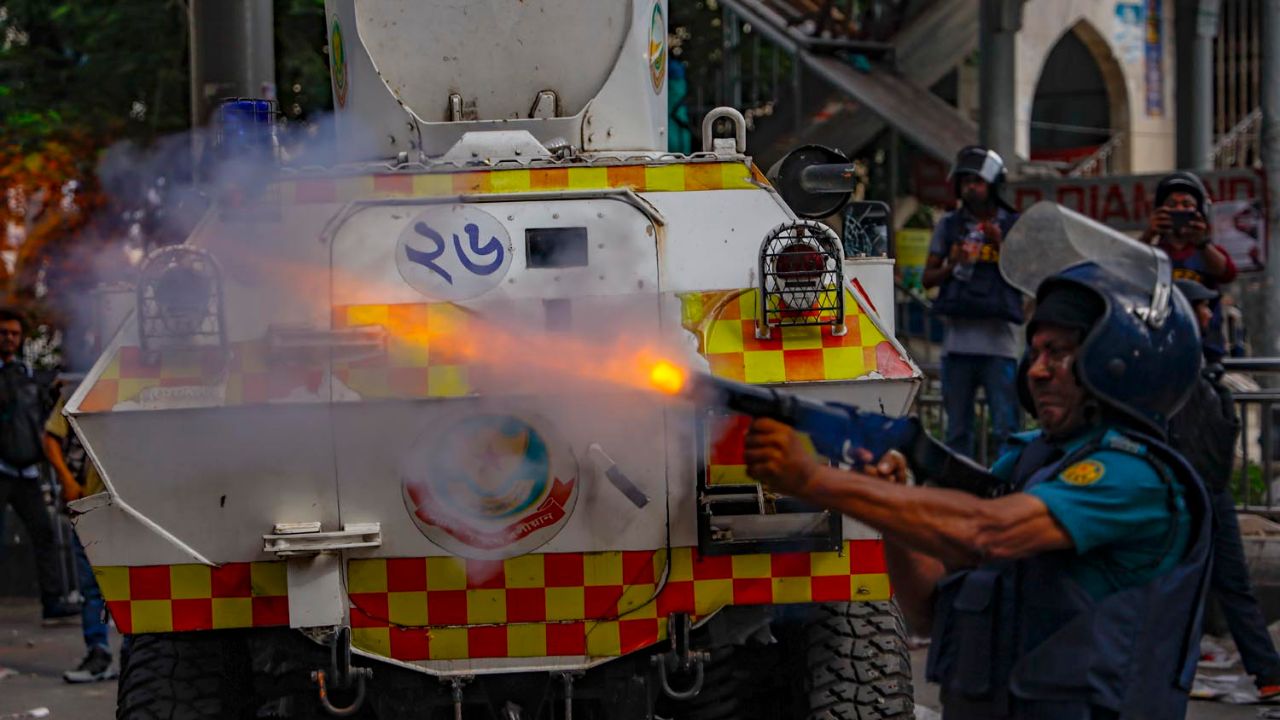
At that time, protests were underway under the banner of the anti-discrimination student movement. Clashes between protesters and police were breaking out all over. Musa and his grandmother were caught in the crossfire.
A single bullet struck both of them. It hit Musa’s forehead, passed through one side of his head, and lodged in his grandmother’s abdomen. His grandmother died the next day. Musa survived, but his life has become painfully difficult.
He cannot walk without help, nor can he even sit up on his own. Every morning after waking up, he is propped up in bed. In the afternoon, he is moved to the sofa. Those are the only two places where his days are spent.
His right hand, right leg, and even the right side of his face are paralysed. He can only drink juice through his mouth. Everything else goes in through a tube inserted into his nose.
Yet Musa still laughs, still plays. And watching his child’s smile, Mustafizur Rahman finds himself breaking down time and again.
Silence after treatment
Musa was first taken to Dhaka Medical College Hospital, then to the Combined Military Hospital. Later, in critical condition, the government sent him to the National University Hospital in Singapore. There, he underwent more than 20 surgeries on his head, neck, and abdomen.

Doctors there confirmed that a fragment of the bullet was still lodged in his right side and could not be removed.
After five-and-a-half months of treatment, Musa returned home on 3 April 2025. He was supposed to return to Singapore in December 2025. But he never made it back.
Mustafizur Rahman repeatedly contacted the government. There was no response. Later, after the news was published in the media, the Ministry of Health reached out and informed them that Musa could return to Singapore.
But his family’s worries are far from over.
His father Mustafizur said, “His medicine has run out. No one can say how long he will remain well without it. If the government cannot provide treatment, let them say so. We will take to the streets again. We have lost his mother. If anything happens to my son now, I will have no reason to live.”

The wounded thousands
According to official figures, 14,370 people were injured in the July uprising. A large portion of them remain trapped in bureaucratic tangles over treatment, follow-up care, rehabilitation, mental health services, and employment.
The interim government repeatedly promised to stand by the wounded. It spoke of overseas treatment, financial assistance, welfare trusts, and rehabilitation. Two years on, the question remains: How much of that promise has actually been fulfilled?
Shahid, a communications officer at the July Smriti Foundation, alleges that, in granting permission for overseas treatment, influence and connections have mattered more than actual need. As a result, some whose treatment was possible within the country have gone abroad, while those who truly needed it have been left out.
Mithun Islam of Mirpur has faced a similar reality. On 26 July, he was shot in the right eye, causing permanent damage. In the beginning, he paid for his own treatment. Later, he received a one-time government grant, but it was not enough to cover the costs.
Mithun said, “Four of the five bullets have been removed. I still can’t see well with my right eye. One bullet remains lodged inside my head.”
Initially, after being included in the gazette, he was placed in Category “C”. Later, on a medical team’s recommendation, he was moved to Category “B”.
When asked about mental health care, he said he had received none. According to him, initiatives exist on paper but have not been implemented.
Before being injured, Mithun had a private sector job. He lost it. He says no organisation now wants to hire him because he cannot handle pressure the way he used to.
He told TIMES, “We achieved a lot, but we ourselves are destroying it through infighting. Only the government fell. Nothing else has changed.”
He also alleged that many government hospitals are now treating the wounded with neglect. For routine check-ups or paperwork, he says, he is sent from one room to another and harassed.
The anger of the wounded has not remained confined to personal grievances. Since the July uprising, they have taken to the streets at least three times.
On 13 and 14 November 2024, and again on 28 January and 2 February 2025, the wounded protested on the streets. The government gave assurances. But the question remains: How much of those promises have been kept?
When asked whether follow-up care for the wounded is being carried out regularly, Mohammad Asaduzzaman, director of the July Uprising Directorate, did not respond. Instead, he said, “I’m busy. I’ll call you when I’m free.”
Despite multiple subsequent attempts to reach him, he did not respond.
Assistant secretaries Mosammat Sultana Akter and Md Billal Hossain of the same directorate refused to speak when asked.
The plight of the wounded has also been highlighted in an international journal. A recent peer-reviewed study published in Cureus, titled “Mental Health Consequences of the July Uprising in Bangladesh: A Study on Depression and Post-Traumatic Stress Disorder Among Victims of Violence and Persecution”, paints an alarming picture of that reality.
The study found that 64.1 per cent of the young people injured in the July Uprising suffer from post-traumatic stress disorder (PTSD), and 82.5 per cent suffer from depression.
The research compared this with survivors of the Rwandan genocide. It found that the rate of depression among the July injured is approximately 1.8 times higher than that of Rwandan genocide survivors. The PTSD rate is also about one-and-a-half times higher.
According to the researchers, a combination of factors – surviving life-threatening attacks, permanent physical disability, the strain of long-term treatment, witnessing the deaths of comrades, and being psychologically unprepared for such violence – has had a deep impact on the wounded.
But beyond the statistics of the study, there is another harsh reality.
As Mithun Islam puts it, “Not even 10 out of a hundred receive mental health care.”