Imagine waking up in the morning, picking up your phone, and immediately seeing headlines such as: “The nation is in crisis” or “You cannot know the truth unless you watch this video!” Within minutes, you become anxious, angry, or emotionally charged. At the same time, someone else encounters opposite information and becomes equally convinced that they are standing on the side of truth. This is perhaps the most dangerous aspect of modern information warfare: people often fail to realise whether they are consuming news or living inside a reality carefully manufactured by invisible forces.
When we think of war today, we usually imagine missiles, drones, or border conflicts. Yet another quieter and far more profound war unfolds around us every day – on mobile screens, within newsfeeds, inside video algorithms, and even deep within our personal beliefs. The weapons in this war are not bullets, but information; and its target is not territory, but the human mind.
Countries of the Global South – such as Bangladesh, India, Pakistan, many African nations, and societies across Latin America – are experiencing particularly complex forms of this information war. Technological access has expanded rapidly in these regions, yet media literacy and cultures of critical information analysis have not developed at the same pace. As a result, information no longer remains merely news; it becomes a tool for political polarisation, religious tension, ethnic division, and the restructuring of state power. Throughout history, war has never been limited to military confrontation alone; it has also involved attempts to dominate human consciousness. Colonial powers-maintained authority over colonised populations by promoting concepts such as ‘civilisation’, ‘development’, and ‘security’. Power has always produced its own narratives and attempted to establish those narratives as truth. Modern communication theory places significant emphasis on precisely this dynamic.

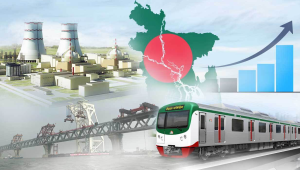
In Bangladesh, the reality of information warfare is even more complex because digital expansion is occurring at extraordinary speeds. As of 2025, the country has approximately 77.7 million internet users and nearly 60 million social media users, according to DataReportal’s Global Digital Insights. This means that the political opinions, social outlooks, and cultural consciousness of a vast population are increasingly being shaped through algorithm-driven platforms. In this context, Facebook, YouTube, and TikTok are no longer simply communication tools; they have evolved into a ‘digital public sphere,’ where the state, political parties, corporate interests, and ordinary citizens compete to establish their narratives. According to Jürgen Habermas’s concept of the public sphere, democratic societies require spaces for rational and open exchange of ideas. Yet Bangladesh’s digital environment is often dominated by emotion, rumour, and polarisation. Information, therefore, has become not only a medium of expression but also a weapon of social influence.
The depth of this crisis becomes evident in the recent spread of misinformation. According to the fact-checking organisation Rumour Scanner, Bangladesh recorded 837 instances of false or misleading information during the first three months of 2025 alone – a 21 percent increase from the previous quarter. At the same time, a UNICEF survey found that two-thirds of Bangladeshi youth identified ‘excessive fake news and misinformation’ on social media as a major source of mental stress. This phenomenon resonates strongly with the Cultivation Theory of mass communication, which argues that long-term exposure to media shapes people’s perceptions of reality. When individuals are repeatedly exposed to divisive or fear-inducing content, they begin to perceive that digital reality as actual social reality. Consequently, information warfare is no longer merely about political influence; it also undermines social trust, tolerance, and democratic culture itself.



Walter Lippmann once argued that people do not experience reality directly; instead, they perceive a ‘reality constructed through pictures in their minds.’ In today’s digital age, this idea has become more alarming than ever. Much of what we see is selected by algorithms. Which news stories appear before us, which videos go viral, and which events are framed as ‘national crises’ are increasingly determined by technology-driven platforms. This is where the Agenda-Setting Theory becomes especially relevant. According to Maxwell McCombs and Donald Shaw, the media do not tell people what to think; rather, they tell people what to think about. In Bangladesh, we often witness how a single issue dominates television, YouTube, and Facebook for days, eventually becoming the center of national consciousness. Meanwhile, equally important social or economic crises disappear into obscurity. The visibility of information itself thus becomes a form of power.
Digital platforms have made this power even more personal and subtle. In the past, information flowed mainly in one direction – from the state or large media institutions to the public. Today, every user is simultaneously a consumer and a producer of information. Yet this participation does not necessarily ensure freedom. Platform algorithms continuously analyse our behaviour, preferences, fears, anger, and interests in order to present content, most likely to keep us engaged with the screen. Perhaps the most dangerous consequence is the gradual erosion of trust itself. When people are constantly exposed to contradictory narratives, manipulated information, and endless propaganda, they lose the ability to trust anything fully. Truth becomes blurred, and suspicion becomes part of everyday social reality.
The first form of resistance may begin with the act of questioning. Before believing or sharing any piece of information, one must pause and ask: Where did this come from? Who is saying it? Why are they saying it? What interests are operating behind it? This critical perspective forms the foundation of media literacy. In the language of mass communication, this is known as audience activity – the idea that viewers and readers are no longer passive recipients but active participants in the construction of meaning. Conscious citizenship today, therefore, extends beyond voting; it also includes the capacity to verify information critically.
At the same time, individuals must become aware of their own ‘confirmation bias.’ Human beings naturally seek information that reinforces existing beliefs. Yet democratic societies survive through the coexistence of differing perspectives. For this reason, even when uncomfortable, it is essential to read, hear, and understand opposing viewpoints. Digital restraint is equally important. The endless flow of information exhausts the human mind. Constant engagement with every controversy or viral content ultimately makes people more emotionally reactive. Sometimes, distancing oneself from information becomes a form of intellectual resistance.
As a result, two completely opposing narratives about the same event can simultaneously establish themselves as truth. Perhaps this is the greatest tragedy of the digital age: people gradually stop living within news itself and begin living inside algorithmically constructed narratives. The question then moves beyond the accuracy of information and becomes something far deeper: Are we genuinely seeing reality, or are we inhabiting a manufactured world where our emotions are manipulated before truth ever reaches us?
The writer is an Associate Professor, Department of Communication and Journalism, University of Chittagong. Email: [email protected]