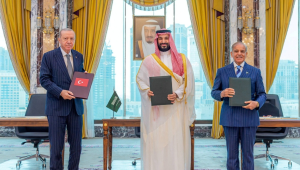
“Destroying Iran is only the beginning – the real objective of Israel is much larger.”
This striking observation by Middle East analyst David Hirst has ignited widespread debate across the Arab world.
The politics of the Middle East once again appear to be approaching a dangerous crossroads. Israel’s recent military moves targeting Iran are not being viewed by many analysts as merely another episode of regional confrontation. Rather, they are increasingly interpreted as part of a broader geopolitical design. According to Hirst, editor-in-chief of Middle East Eye, dismantling Iran may only represent the first step in a far more ambitious strategic vision – an argument that has stirred intense discussion throughout the region.
During his political campaigns, the U.S. president Donald Trump repeatedly pledged to bring an end to America’s ‘endless wars.’ Yet critics argue that the policies pursued under his leadership have contributed to escalating tensions in the Middle East. Analyses published by international outlets suggest that the strategic coordination between Washington and Tel Aviv may now extend beyond curbing Iran’s nuclear programme, aiming instead to reshape the broader regional balance of power.
According to international media reports, only hours before the first missile struck Tehran early on Saturday morning (28 February), Iranian officials had presented an unprecedented proposal during diplomatic discussions in Geneva and Oman. The initiative reportedly offered to reduce stockpiles of highly enriched uranium under international monitoring. Yet the attack occurred while those talks were still underway. For many observers, the sequence of events has raised suspicions that diplomacy may have served as a temporary cover for a planned military operation.
Soon after the strikes, Israeli Prime Minister Benjamin Netanyahu addressed the Iranian public directly, urging citizens to stand up against their own government. Similar rhetoric was echoed in statements emerging from Washington.

Many analysts believe such messaging suggests that the ultimate objective of the confrontation may extend beyond Iran’s nuclear programme. Instead, it could be aimed at paving the way for political transformation – or even regime change – within Iran itself.
For years, Israel has regarded Iran as its most formidable regional rival. Netanyahu has consistently advocated a hard-line approach toward Tehran in international forums and has repeatedly warned that military action might become unavoidable. Recent developments, observers say, appear to reflect the implementation of that long-standing strategy.
Another controversial idea has resurfaced in discussions surrounding the current conflict – the concept of a so-called ‘Greater Israel.’ According to reports in several media outlets, some right-wing Israeli politicians, along with U.S. political figure Mike Huckabee, have invoked visions of a geopolitical sphere stretching from the Nile to the Euphrates.



Even Israeli opposition leader Yair Lapid has spoken in favour of the aspiration for a ‘larger and stronger Jewish state.’ While such ideas are not part of official Israeli policy, their public articulation has nevertheless generated deep anxiety across the region.
Another significant dimension of Middle Eastern geopolitics involves the prospect of new international alignments. Some analysts suggest that Netanyahu has been exploring the concept of a multi-state strategic framework; sometimes described as a ‘hexagon of states.’
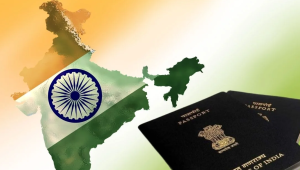
Within this emerging configuration, the government of Indian Prime Minister Narendra Modi is increasingly seen as an important strategic partner. In recent years, India has expanded its cooperation with Israel in areas ranging from defense technology to economic exchange.
Researchers argue that the partnership is not confined to military ties alone; it also encompasses collaboration in technology, trade, and labour markets, indicating a broader geopolitical convergence.
Several Gulf states, including Saudi Arabia, Qatar, and Oman, had reportedly urged restraint in the months leading up to the crisis. Diplomatic sources suggest that these governments cautioned Washington against pursuing direct military confrontation with Iran. Critics now argue that such warnings were largely disregarded.
Meanwhile, Tehran appears to have concluded that its previous restraint was interpreted by its adversaries as weakness. As a result, Iran may adopt a far more assertive posture moving forward. According to international affairs analyst Trita Parsi, Tehran could attempt to make the conflict so costly that it imposes significant economic and political pressure on the United States and its allies.
Some observers believe that the consequences of this confrontation could extend well beyond the fate of a single nation. In their view, the conflict may ultimately reshape the geopolitical map of the Middle East itself. For that reason, commentators have drawn comparisons with the Sykes–Picot Agreement – the colonial-era arrangement that redrew regional borders after the First World War.
History has repeatedly demonstrated that while initiating wars in the Middle East may be relatively easy, bringing them to a close is extraordinarily difficult. Should the present confrontation expand or endure, its consequences would not remain confined to Iran or Israel. The ripple effects could extend across global energy markets, the international economy, and the broader architecture of global security.
The central issue remains unresolved. This conflict may represent more than a routine cycle of military retaliation; it could signal the emergence of a new geopolitical order in the Middle East.
Whatever the final outcome, one conclusion already appears unavoidable – the consequences of this war are likely to reverberate through international politics for many years to come.
The writer is an Author, Journalist and Language Instructor. He can be reached at [email protected]