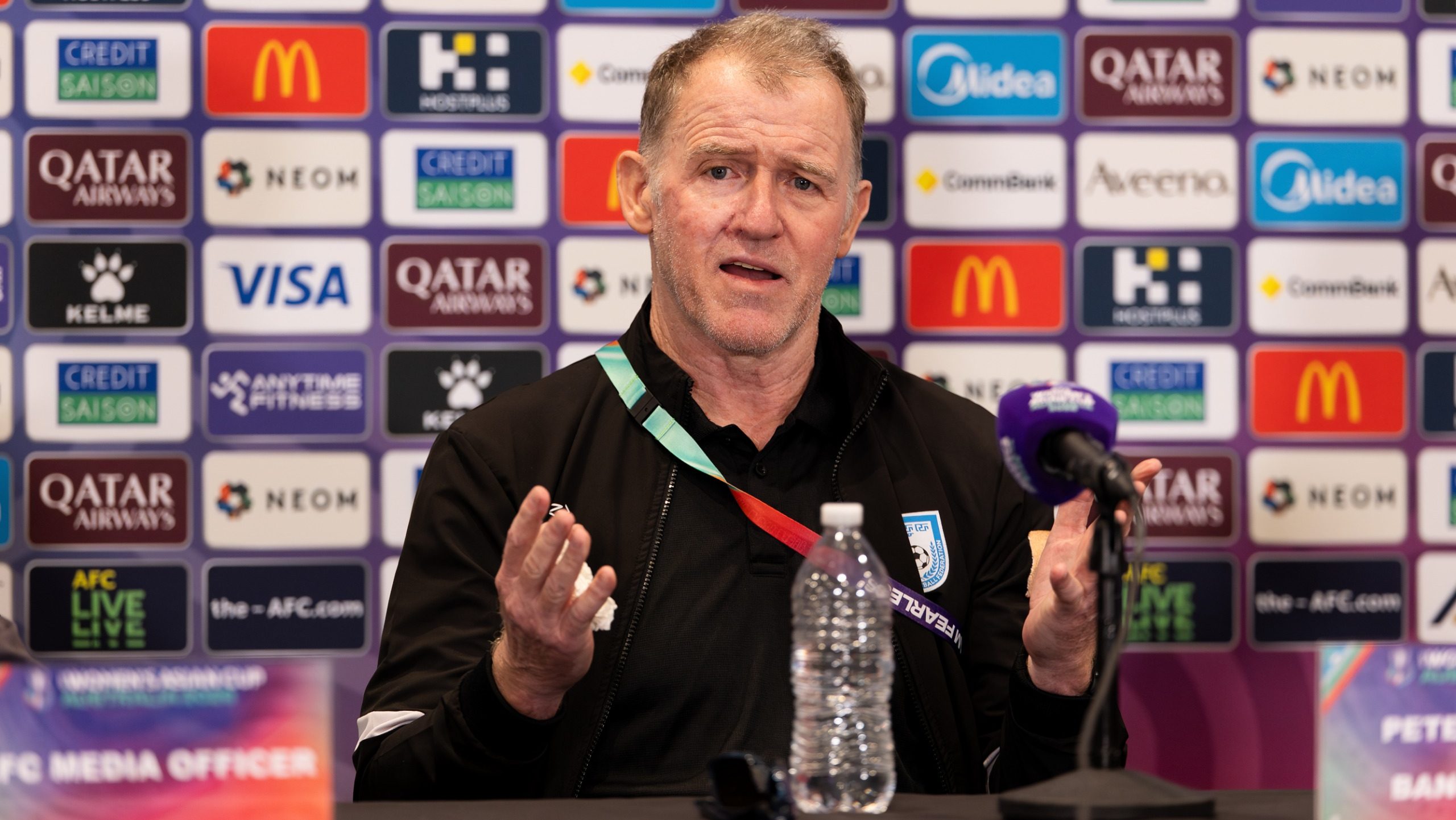

Bangladesh gaffer Peter Butler marched into the Perth press room on Sunday and framed Monday’s AFC Women’s Asian Cup clash with Uzbekistan as a “milestone” moment. His side kick off at 3pm Bangladesh time, bottom of Group B, chasing a victory that could crack open a path to the quarter-finals, and possibly the World Cup.
The arithmetic looks brutal. Bangladesh sit fourth with zero points from two matches; Uzbekistan sit third on the same tally but sneak ahead on goal difference.
One win flips the table and drags Bangladesh straight into the race for the best third-place spots. The top two third-placed teams across the groups grab quarter-final tickets, which suddenly turns Monday’s match into far more than a routine group fixture.

The stakes stretch even further. The Asian Cup sends six teams straight to the Women’s World Cup, while the next two sides earn a play-off lifeline.
Butler refused to dress the moment in cautious language. He demanded bravery. “We must be brave, we must be fearless,” the coach said, brushing aside the rankings gap. Uzbekistan hold FIFA rank 49; Bangladesh sit down at 112. Butler waved the statistic away and reduced football to its simplest formula, “11 versus 11”.




That line sounded deliberate. Butler knows his squad carries youth and inexperience, yet he keeps hammering belief. “I believe in this team,” he insisted, pointing toward the group’s turbulent journey. Bangladesh climbed past Myanmar in qualifying to reach this stage, a result that convinced the gaffer his players can scrap with stronger opposition.
He even hinted at the tactical rhythm awaiting in Perth. Butler expects “a cat-and-mouse game”, which sounds less like chaos and more like a cautious chess match across midfield.
Uzbekistan bring structure and physical bite. Butler admitted that openly. “They have a very clear style of play,” he said, before immediately highlighting the possible weakness. Bangladesh, he argued, can trouble them through “technical ability” and sharper ball retention.
That claim reveals the likely blueprint. Bangladesh will try to keep possession, slow the tempo, and drag Uzbekistan out of shape rather than trade long-ball punches.
The coach already studied Uzbekistan’s qualifying campaign closely. Nepal held them to a draw (in qualifier), a detail Butler mentioned quickly, not as arrogance, but as evidence that cracks exist. “Nepal played very well,” he noted, quietly suggesting Uzbekistan do not dominate every match they enter.
Still, uncertainty hangs over Uzbekistan’s approach. Butler openly wonders whether they will defend deep or push high and press. That tactical choice could decide the entire evening. If Uzbekistan press, Bangladesh’s young midfield must escape tight spaces. If they sit back, Butler’s side must unlock a stubborn block.