Election Commissioner Abul Fazal Md Sanaullah on Wednesday said the upcoming election would serve as an effort to restore Bangladesh’s electoral process, likening it to putting a derailed train back on track.
He made the remarks while addressing the inauguration of a project by the 81-organisation platform Alliance for Fair Election and Democracy (AFED) at the NGO Affairs Bureau office in Agargaon, where he attended as the chief guest.
Referring to the country’s electoral system and reform initiatives, Sanaullah said the 2026 election would involve minimal repairs and necessary adjustments to revive a system that has lost momentum.
“If we can manage to restart it and give it some speed, that in itself will be a major success. From there, we must move forward with further improvements,” he said.

Placing the upcoming polls in historical perspective, the election commissioner identified three critical election periods—1991, 2008, and the forthcoming one—when significant legal and institutional reforms were introduced.
He noted that although reforms in 1991 were limited in scale, a legal framework was established for election officials, which later contributed to credible polls in 1996 and 2001 under caretaker governments.
He said further reforms were introduced in 2007, including political party registration, candidate eligibility requirements, and voting provisions for independent candidates. However, he observed that these measures were not adequately strengthened or refined in the following elections.
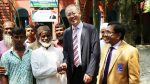



EC Sanaullah said the 2026 election has again witnessed substantial legal and regulatory reforms, crediting the Election Reform Commission for its role, while acknowledging that some gaps and shortcomings remain.
“These will need to be revisited after this election,” he said, adding that gradual improvements over the next few election cycles would be essential to ensure transparency and reduce controversy and enhance overall credibility.
Addressing the issue of election observers, he described the registration of observer organisations as a major challenge. He said many citizen observer groups were denied registration due to concerns over their performance in the last three disputed elections.
“More than 300 organisations applied, but due to various constraints we were able to register only 81,” he said, adding that he would have preferred a much larger number of observer groups in the field.
He expressed hope that the registered organisations would carry out their duties objectively, describing them as an essential component of a credible election process. “You are the Election Commission’s third eye,” he said, assuring them of full cooperation as long as they operate within established guidelines.
Sanaullah also emphasised the importance of inclusive participation, highlighting first-time voters, long-disengaged voters, women, persons with disabilities, ethnic and religious minorities, marginalised communities, and workers in remote areas as key focus groups.
He reiterated that the Election Commission would take all necessary steps to ensure the 12 February election is conducted in a free, fair, and acceptable manner.
The programme was attended by Democracy Watch Chairperson Talia Rahman, Khan Foundation Co-Chairperson Roksana Khandakar, representatives of government and non-government organisations, and officials from several foreign missions.
The event was attended by Democracy Watch Chairperson Taleya Rehman, Khan Foundation Co-Chairperson Rokhsana Khondker, representatives of government and non-government organisations, and officials from various foreign missions.