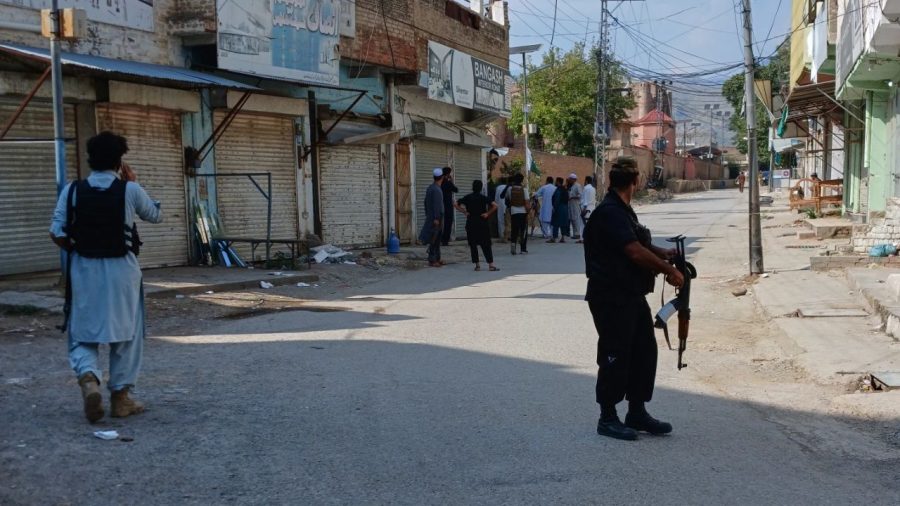

At least 27 people, including 15 police personnel, were killed and dozens more wounded on Friday after a vehicle-borne suicide bomber and armed militants launched a coordinated assault on a mosque inside the Kohat Police Lines compound in Khyber Pakhtunkhwa province.
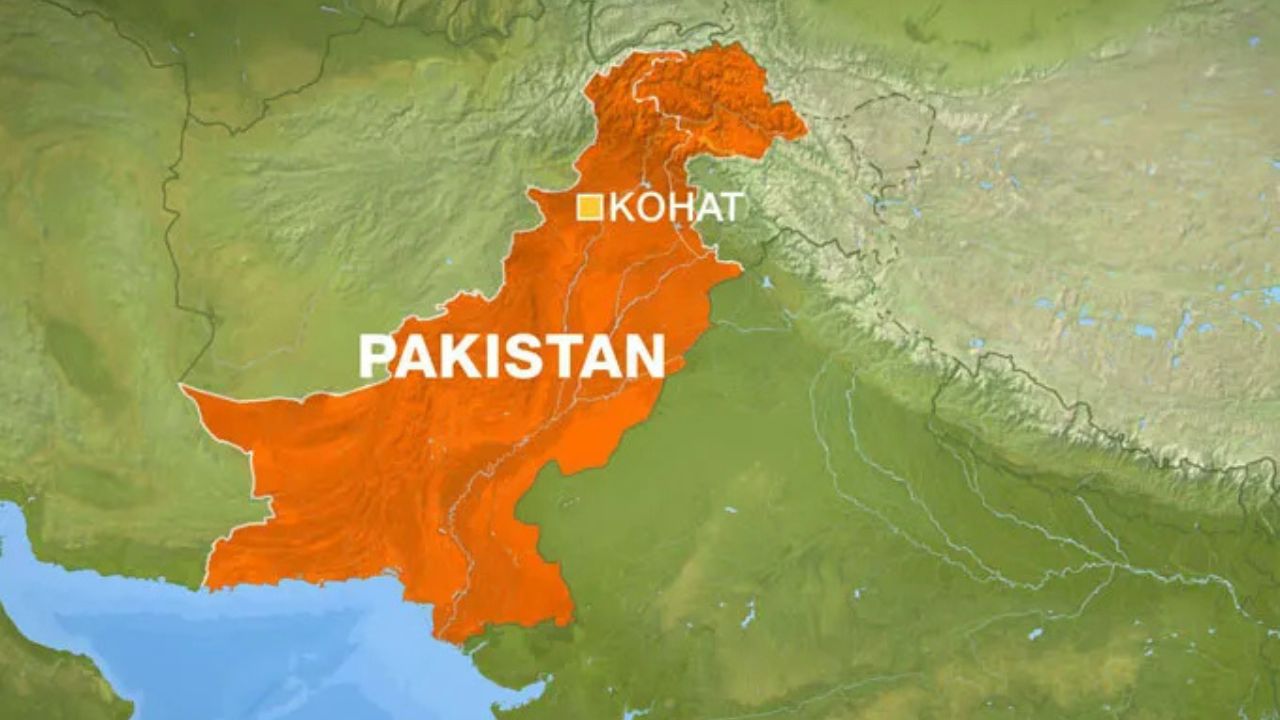
The suicide attack occurred near the Afghan border as worshippers gathered inside the facility for Friday prayers, reports Dawn and Al Jazeera.
According to senior police and health officials, an explosives-laden vehicle was rammed into the main boundary wall and entrance gate of the mosque inside the police headquarters.
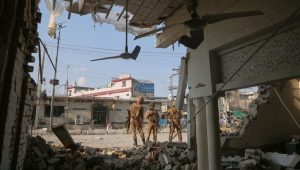
The powerful blast badly damaged the building’s structure, causing the outer wall of the facility to collapse and sending shockwaves across the surrounding area. Local residents reported hearing the sound of the explosion from a considerable distance away.
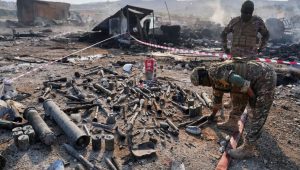
Visuals broadcast on television showed scenes of destruction, with local citizens gathering near the damaged building with a collapsed wall to dig through concrete rubble and assist the injured. Senior rescue official Bilal Faizi confirmed that the majority of those wounded in the explosion were worshippers.
Devastating casualties, medical emergency
Emergency medical services and local hospitals were immediately overwhelmed following the massive detonation. Medical officials provided harrowing details of the casualties brought to treatment facilities across the district.
Dr Tahir Shah said at least 15 bodies and more than 50 injured victims were transported to hospital in the immediate aftermath of the blast. Sources informed that at least 75 people sustained injuries.

In a separate confirmation, District Health Officer Dr Nasir Hassan Afridi noted that at least 21 people were martyred and more than 80 people were injured, with three victims remaining in critical condition.
Health authorities and district administration officials mobilised emergency medical teams, whilst rescue workers continued searching through the debris to assist victims.
Intense gunbattle, clearance operation
Following the initial vehicle-borne improvised explosive device (VBIED) detonation, a team of armed militants attempted to storm the police compound, triggering an intense exchange of fire with officers.
Khyber Pakhtunkhwa Inspector General of Police Zulfiqar Hameed confirmed that the suicide bomber initially struck the building’s gate, after which several attackers attempted to penetrate the compound.

According to Inspector General Hameed, a group of the armed attackers moved towards the Counter-Terrorism Department (CTD) building, where security personnel engaged and neutralised them.
Simultaneously, around three other militants attempted to advance towards the Special Branch facility within the same complex. Official reports confirmed that at least six of the attackers were killed during the fighting.
As the gunbattle unfolded, the Counter-Terrorism Department announced that the Additional IG of the CTD arrived at the scene to personally lead the operation.
The high-ranking officer entered the compromised site himself to take part in the operation and direct personnel during the ongoing firefight. Police officials stated that with at least one gunman remaining holed up inside the complex, security forces initiated a clearance operation to secure the facility.
Responsibility for the suicide assault was claimed by Ittehadul Mujahideen, meaning “Mujahideen alliance,” a faction of the banned Tehreek-i-Taliban Pakistan (TTP)—a group state authorities also designate as Fitna al Khawarij.
The faction is linked to Taliban commander Hafiz Gul Bahadur. The TTP operates as a distinct organisation while maintaining an alliance with the Taliban, which returned to power in neighbouring Afghanistan in 2021.
High-level condemnation, regional context
The attack drew swift and strong condemnation from Pakistan’s top political leadership and government institutions. Pakistani President Asif Ali Zardari denounced the incident, extending his condolences and wishing the injured a swift recovery.
Zardari declared that the complete elimination of foreign-sponsored terrorists remains essential for national security.
The country’s Prime Minister Shehbaz Sharif strongly condemned the bombing, sought a detailed report from concerned authorities, and directed officials to accelerate relief and rescue operations.
Meanwhile, the Ministry of Interior issued a statement denouncing the “cowardly actions” of the attackers, asserting that they could not weaken the nation’s firm resolve.
Khyber Pakhtunkhwa Chief Minister Sohail Afridi also strongly condemned the suicide attack and sought a detailed report, describing the targeting of innocent citizens as deeply regrettable and unacceptable.
In a video message, Chief Minister Afridi stated that the people of Khyber Pakhtunkhwa have sacrificed more than 80,000 lives in the fight against terrorism, emphasising that the province serves as Pakistan’s frontline in the war on terror and that national peace rests upon these sacrifices.
The strike on Kohat underscores wider security concerns across the region.
Located near the Afghan border, Kohat serves as the main transit city en route to the restive North Waziristan region, as well as Bannu and Dera Ismail Khan, areas that have experienced a surge in deadly attacks over recent months.
The facility has been targeted previously; in 2010, a remote-controlled bomb blast inside a police colony located directly behind the Kohat Police Lines killed 20 people – mostly relatives of policemen – and injured more than 90 others.
The incident further highlights diplomatic tensions, as Islamabad accuses the Afghan Taliban of permitting the TTP and other armed groups to orchestrate attacks from Afghan territory. Officials in Kabul continue to deny the accusations.