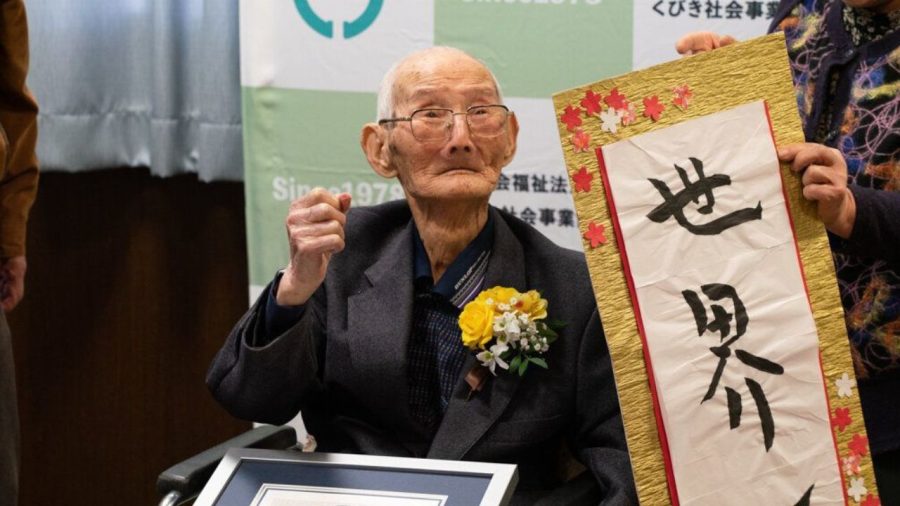

Japan now has more than 100,000 residents aged 100 or above, setting a new milestone in longevity even as the country grapples with a deepening demographic crisis.
According to the Ministry of Health, Labour and Welfare of Japan, the number of centenarians reached 107,677 this year—up 7,914 from 2025 and marking the 56th consecutive annual increase. Nearly 88 percent are women, reports Al Jazeera.
Health Minister of Japan Kenichiro Ueno said he was “very pleased that many people are living long, healthy and active lives,” attributing the trend to advances in medical technology, healthier lifestyles, and balanced diets.
Japan’s elderly population continues to expand while births remain at historic lows, leaving a shrinking workforce to shoulder rising pension, healthcare, and social‑care costs.
How fast is Japan ageing?
Japan has one of the oldest populations in the world, with nearly three in ten citizens now aged 65 or older—a share projected to reach 40 percent by 2070. Government figures show that last year more than 800,000 people were aged 95 or above, while only 700,000 babies were born.

The population is also declining rapidly. Preliminary census data reveal that 45 of Japan’s 47 prefectures recorded lower populations in 2025 compared with five years earlier, with only Tokyo and Okinawa showing growth.
Japan’s population peaked at about 128 million in 2008. The National Institute of Population and Social Security Research projects it will fall to 87 million by 2070—a drop of roughly 30 percent.
Why does Japan have so many centenarians?
Researchers point to a mix of diet, lifestyle, and healthcare. The traditional Japanese diet emphasizes fish, vegetables, and rice, with relatively low levels of saturated fat. Obesity rates are far lower than in many Western countries.
Daily routines also contribute, with widespread walking, cycling, and use of public transport—even among older people—alongside popular group exercise practices.




Japan’s universal health insurance system ensures broad access to medical care and medicines at comparatively low cost, especially when compared with countries such as the United States.
Why is longevity a challenge for Japan?
Although longer lifespans are a remarkable achievement, in Japan they coincide with one of the lowest birth rates in the world. The country’s total fertility rate dropped to a record low of 1.14 in 2025, far below the replacement level of about 2.1 needed to sustain population size without immigration.
As the population ages, a growing number of pensioners—many requiring extensive medical care and social support—must be sustained by a shrinking pool of working‑age taxpayers. Over time, this imbalance becomes a serious economic burden.
Japan has attempted to reverse the trend with child allowances, subsidized childcare, parental leave schemes, and other incentives to encourage couples to have children. None has succeeded in halting the long‑term decline. Social scientists point out that fewer Japanese are marrying, or they marry later when childbearing becomes less likely. Younger adults also face insecure employment, stagnant wages, and long working hours, making family life harder to pursue.
Women’s rising participation in the workforce has not been matched by equal sharing of childcare and household responsibilities, leaving many struggling to balance careers with parenthood.
Prime Minister of Japan Sanae Takaichi has identified population decline and falling fertility as critical national challenges, while officials have repeatedly warned that the trend threatens Japan’s economic and social foundations.
What does this mean for Japan’s economy?
A shrinking workforce means fewer people contributing income taxes and social‑security payments, even as spending on pensions, healthcare, and elderly care rises. This imbalance places mounting pressure on public finances and on younger workers who support the system.
Labour shortages are already affecting industries such as construction, agriculture, transport, healthcare, and social care. Rural areas face the sharpest difficulties, as younger residents migrate to cities, leaving ageing communities with fewer workers and declining public services.
Immigration could help ease these shortages, and Japan’s foreign population has grown in recent years. Still, foreign nationals account for only about 3 percent of the population, and proposals to admit significantly more migrants remain politically contentious.
Are other countries ageing as well?
The World Health Organization describes rising life expectancy as one of humanity’s greatest global achievements. Advances in social and economic development, together with improvements in healthcare, have reduced mortality rates, particularly among older populations. As a result, most people today can expect to live into their 60s and beyond.
WHO figures show that global life expectancy climbed to 73.3 years in 2024—an increase of 8.4 years compared with 1995. The number of people aged 60 and above is projected to grow from 1.1 billion in 2023 to 1.4 billion by 2030.
The pace of ageing, however, is not uniform. United Nations’ World Population Prospects data indicate that Japan had the world’s highest median age at 49 in 2023. Italy followed at 47.5, Portugal at 46.2, Greece at 45.7, and Germany at 45.1.