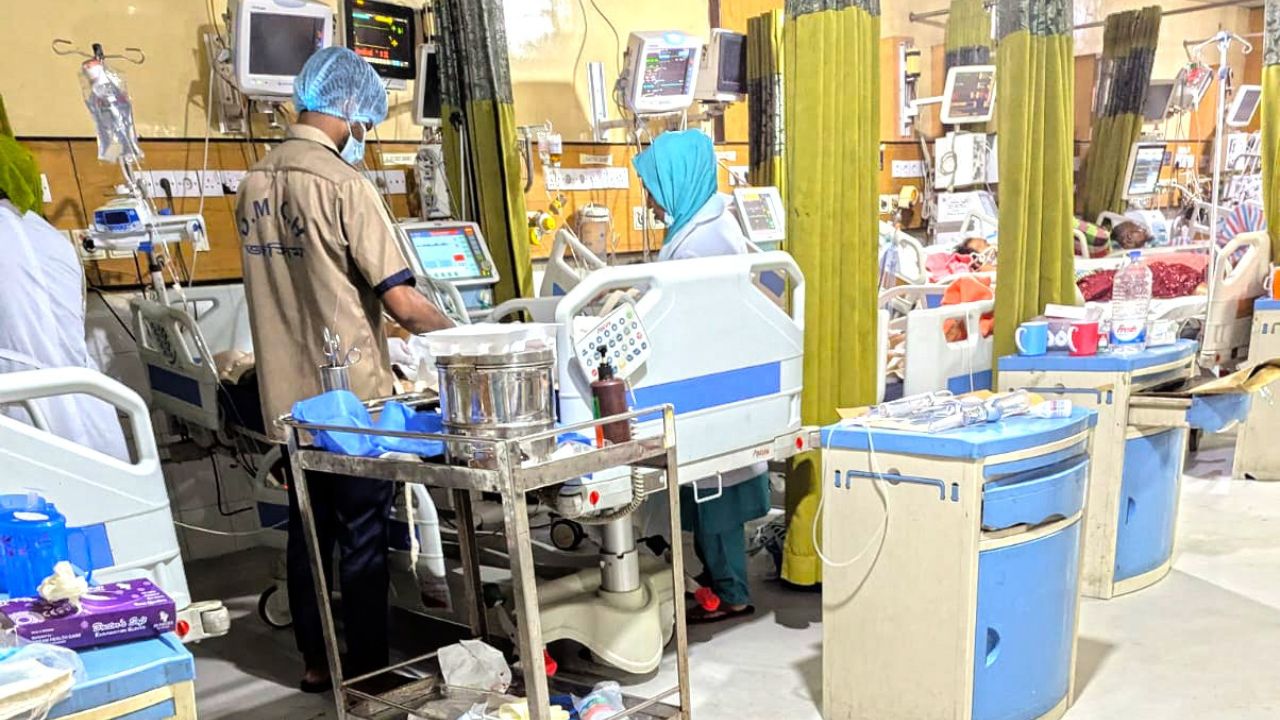



A study conducted by icddr,b has revealed that Candida auris, a hard-to-treat drug-resistant fungus, is spreading within intensive care units (ICUs) in Dhaka.
The findings indicate that this “superbug” is not confined to newborn units but is also affecting other critically ill patients, raising serious concerns about hospital-acquired infections.
While earlier research showed the fungus spreading in neonatal intensive care units (NICU), the new data suggest the problem is broader and impacts various ICU settings.
The study, published in the journal Microbiology Spectrum, was carried out in one public and one private tertiary-level hospital in Dhaka.

The research was conducted in collaboration with the Institute of Epidemiology, Disease Control and Research (IEDCR), with technical support from the United States Centers for Disease Control and Prevention (CDC).
A total of 372 ICU patients were included in the study between August 2021 and September 2022. Researchers analysed skin swabs and blood samples, using VITEK-2 to confirm suspected samples.
C auris can colonise the skin without symptoms, but it may enter the bloodstream to cause severe and life-threatening infections, especially in patients with weakened immune systems. It is considered a serious healthcare threat globally because almost all strains are resistant to common antifungal medicines.




In this study, approximately 7 percent of patients were found to be carrying the fungus during their stay. Significantly, more than one-third of these patients acquired the fungus while inside the ICU.
The infection rate was notably higher in the public hospital, where 13 percent of patients picked up the fungus, compared to 4 percent in the private hospital. These levels are considered high by international standards; studies in Canada and the United Arab Emirates have reported rates well below 0.5 percent.
Patients carrying C. auris were more likely to be severely ill, require longer ICU stays, and need invasive procedures such as mechanical ventilation and the use of central or urinary catheters.
Laboratory testing confirmed that all samples were resistant to fluconazole, and all but one were resistant to voriconazole. Some strains displayed resistance to multiple drugs, highlighting the growing difficulty in treating such infections.
“This study shows that Candida auris is not just a problem among critically ill neonates, but a wider threat in all intensive care settings,” said Dr Fahmida Chowdhury, lead of the AMR Research Unit of the Infectious Diseases Division at icddr,b and principal investigator of the project.
She noted clear signs of hospital spread and high levels of resistance, underlining the urgent need for strengthened infection prevention, improved surveillance, and better treatment guidance.
Genetic testing revealed that the strains belong to a South Asian type, suggesting the fungus is now established in the region.
Researchers have recommended strict hand hygiene, routine screening in high-risk units, and the regular use of chlorine-based disinfectants to clean hospital environments.
They also emphasised the importance of the careful use of antifungal medicines to preserve the effectiveness of remaining treatments. Further large-scale studies are required to understand the full extent of the problem across Bangladesh.