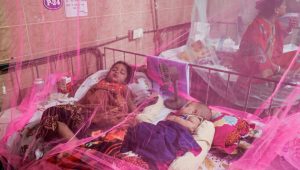
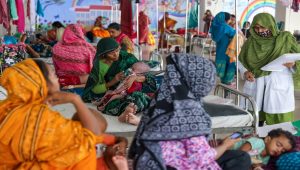
Two more people have died from dengue fever in the past 24 hours, while 157 new patients were hospitalised across the country, according to the Directorate General of Health Services (DGHS).
In a regular bulletin issued on Wednesday by the Health Emergency Operation Centre and Control Room, the DGHS said the new deaths were reported in Mymensingh division outside city corporation areas.
Of the newly hospitalised patients, 142 were admitted to government hospitals and 15 to private hospitals and clinics.
At present, 386 dengue patients are undergoing treatment in hospitals nationwide.

Of them, 88 are in Dhaka city and 298 are outside the capital. During the same 24-hour period, 119 patients recovered and were discharged.
Since 1 January, a total of 5,317 people have been hospitalised with dengue this year, while 4,919 have recovered. The total death toll has risen to 12.

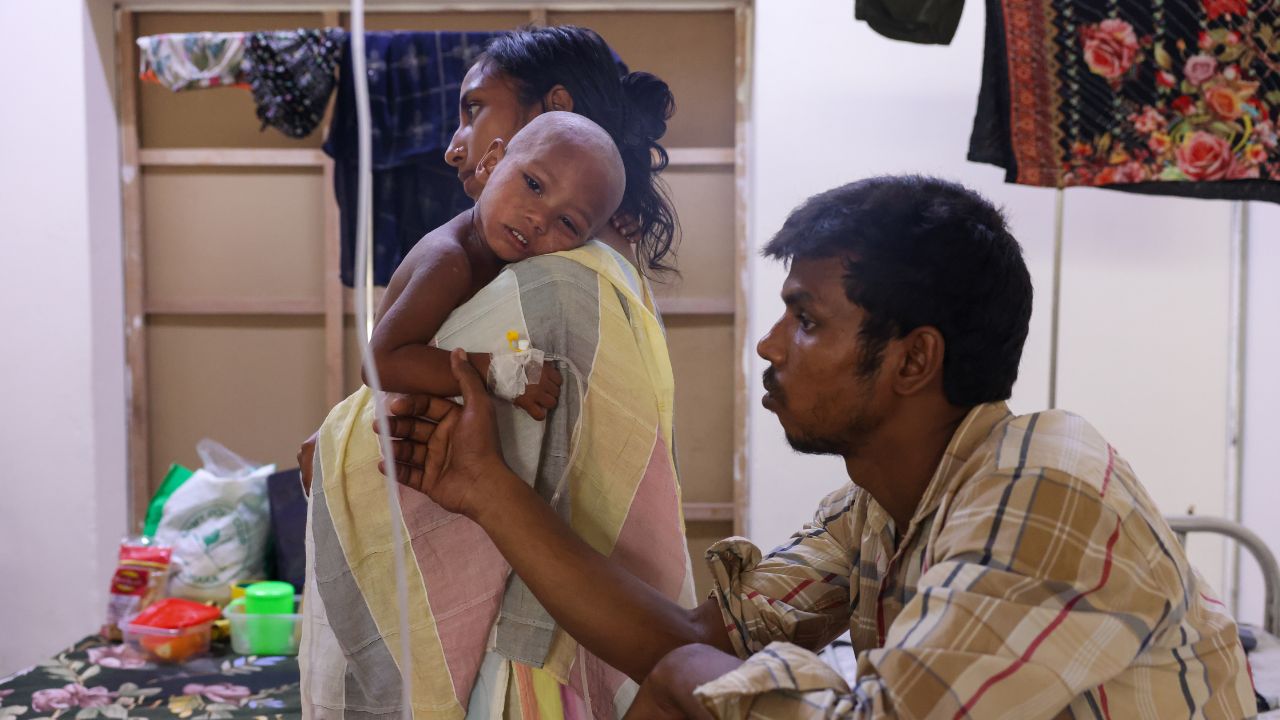


DGHS data shows that men account for a larger share of infections, with 3,303 cases (62.1 per cent) compared to 2,013 female patients (37.9 per cent).
Among the 12 deaths reported so far this year, seven were male and five female.
Monthly figures indicate a sharp rise in infections in June, with 2,120 cases and seven deaths recorded so far this month alone. Earlier, January recorded 1,081 cases and two deaths, February 409 cases and two deaths, March 353 cases, April 640 cases with no deaths, and May 714 cases with one fatality.
Division-wise statistics show Barishal recorded the highest number of cases at 1,440, followed by Chattogram with 1,019. In the capital, Dhaka South City Corporation reported 746 cases and Dhaka North City Corporation 440.
Outside city corporations, Dhaka division recorded 668 cases.
Other divisions reported 580 cases in Khulna, 191 in Mymensingh, 143 in Rajshahi, 60 in Rangpur and 30 in Sylhet.
In terms of fatalities, Dhaka South City Corporation recorded three deaths, while Mymensingh division and Dhaka North City Corporation reported two each.
One death each was recorded in Barishal, Chattogram, Khulna, Rajshahi and Dhaka division outside city corporation areas.
Age-wise data shows the highest number of infections among young people, particularly those aged 16–20 years (726 cases), followed by the 21–25 age group (680 cases).