
Brigadier General (retd) AKM Shamsul Islam, defence adviser to the prime minister, has emphasised the need to enhance cyber capabilities and provide fresh impetus to indigenous technology-based innovation to bolster national security.
During a visit to Military Institute of Science and Technology (MIST) at Mirpur Cantonment on Monday, the defence adviser highlighted the importance of developing skilled manpower and fostering effective coordination between educational institutions, government agencies, and the domestic technology sector.
Upon his arrival at MIST at 10am, he was received by the Commandant of the institute Major General Md Hakimuzzaman.
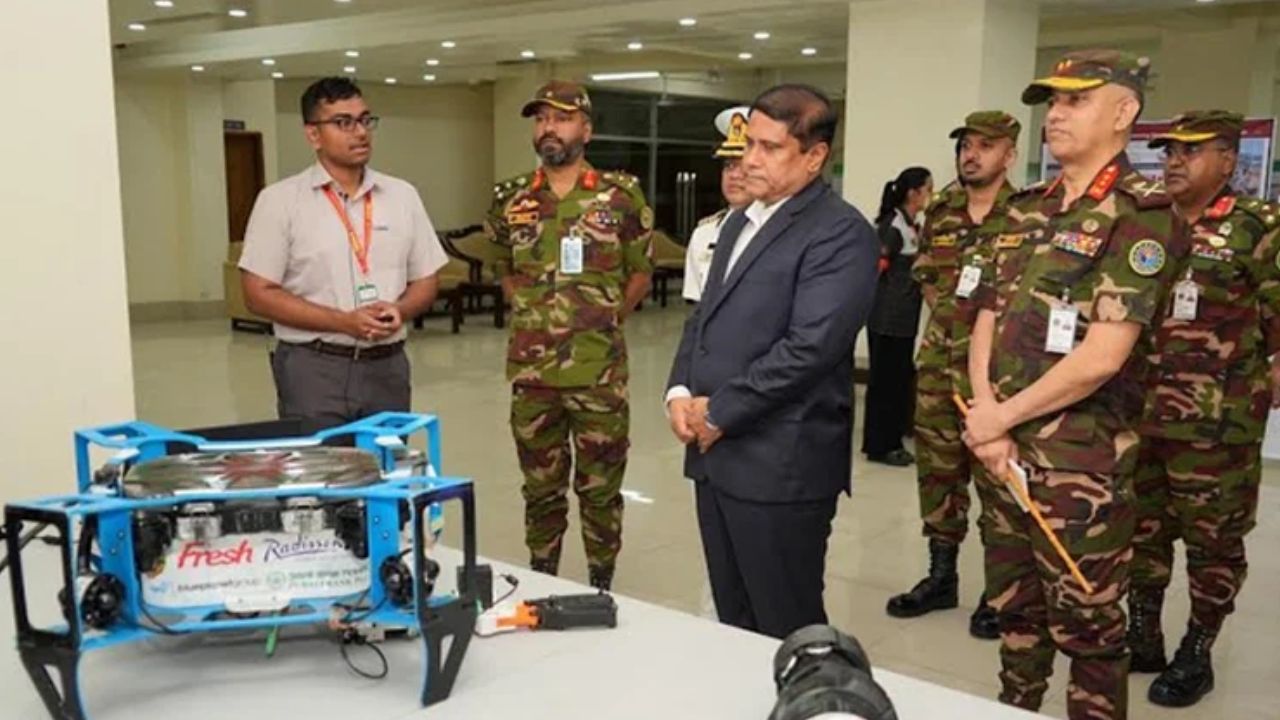
During the visit, Islam was briefed on MIST’s modern educational programmes, cyber security initiatives, research, patents, and technological innovation activities.

The defence adviser first visited MIST Cyber Range, where the head of Computer Science and Engineering Department briefed him on its capabilities, training programmes, research opportunities, and future.
The briefing underlined the Cyber Range’s role in tackling cyber risks, providing training in simulated real-world environments, and ensuring the security of the country’s critical information and digital infrastructure.



“In the contemporary world, a country’s security is not limited to its geographical borders; the protection of information, communication systems, and vital digital infrastructure is an inseparable part of national security,” Islam remarked.
He called for integrated initiatives in research and technological development to meet the challenges of a technology-driven future. He further urged for close cooperation between academia and the government to build a sustainable cyber security framework.
As part of the visit, Islam met with members of MATE ROV team, who briefed him on their innovative projects and technical capabilities. Notably, MIST MATE ROV team recently emerged as champions at MATE ROV International Underwater Robot Competition 2026, held in Newfoundland and Labrador, Canada, from 23 to 27 June.
The team secured the top position among 77 teams from 16 countries, demonstrating exceptional engineering skills and problem-solving abilities.
The defence adviser stressed that the success of research should not remain confined to reports or exhibitions. “Effective research must be transformed into patents, usable technologies, and domestic products,” he said, noting that such transitions would increase technological self-reliance, reduce foreign dependency, and create new employment opportunities.
He underscored the importance of providing young innovators with necessary research facilities, training, and institutional support.
Islam also called for expanding research activities to solve practical problems in sectors such as public welfare, disaster management, health, agriculture, and industry.