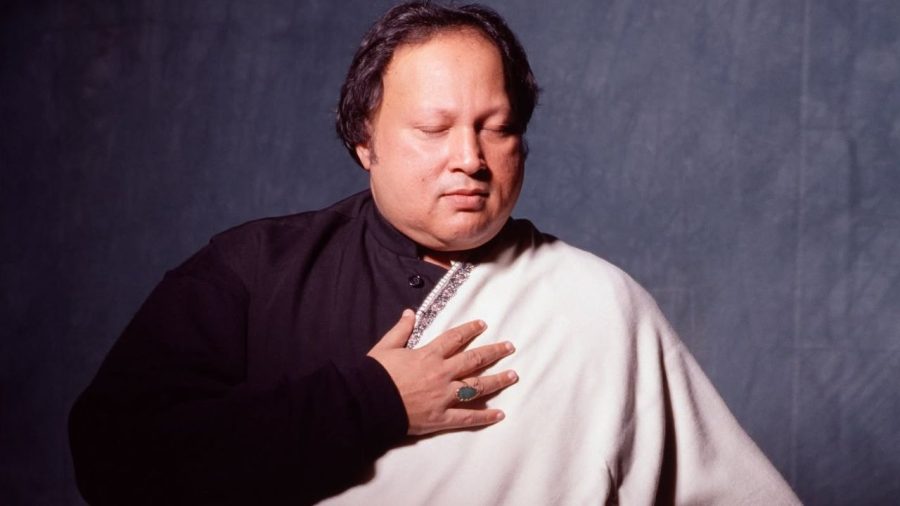

Decades after his death, legendary qawwali singer Ustad Nusrat Fateh Ali Khan continues to reach new generations through Bollywood, with filmmakers and musicians repeatedly revisiting his timeless qawwalis and ghazals.
Known as the “Shahenshah-e-Qawwali”, Nusrat transformed the traditional Sufi musical form into a global phenomenon. He took qawwali from intimate gatherings in Pakistan to major international stages and Western music festivals.
His remarkable vocal range and innovative musical approach influenced generations of artists. His compositions have also continued to appear in films through recreations, adaptations and samples, often adding emotional depth to important scenes.
One of the latest examples is Saanson Ki Mala, featured in Mirzapur: The Film. Nusrat’s original vocals were combined with new renditions by Madhur Sharma and Vaibhav Pani, giving the track a fresh energy.
The song appears during a mid-credit sequence involving Beena Tripathi, played by Rasika Dugal, and a chapter from her past.

The composition previously appeared in Bollywood films including Jeet (1996) and Koyla (1997), starring Madhuri Dixit and Shah Rukh Khan.
Another recent adaptation is Jaan Se Guzarte Hain from Aditya Dhar’s Dhurandhar 2. The song draws from Nusrat’s 1977 classic Dil Pe Zakhm Khaate Hai and was reimagined by Shashwat Sachdev, featuring vocals by Nusrat and Sachdev.
The qawwali complements the film’s themes of love, betrayal and emotional resilience, adding intensity to its dramatic narrative.



Nusrat’s influence on Bollywood stretches far beyond these recent releases.
One of his best-known compositions, Mere Rashke Qamar, composed and sung by Nusrat with lyrics by Fana Bulandshahri, remains a popular concert favourite. Tanishk Bagchi recreated the ghazal-qawwali for the 2017 film Baadshaho, with vocals by Rahat Fateh Ali Khan.
His romantic composition Ye Jo Halka Halka Suroor Hai has also been adapted several times. It inspired the 2016 single Halka Halka and was loosely incorporated into the 2018 film Fanney Khan.
Another notable example is Tere Bin Nahi Lagda, which was incorporated into Tere Bin for Ranveer Singh and Sara Ali Khan’s Simmba. Nusrat’s nephew Rahat Fateh Ali Khan re-recorded the song with Asees Kaur.
Similarly, Sanu Ek Pal Chain Na Aave was reimagined for the 2018 film Raid, with Rahat Fateh Ali Khan providing the vocals. Another Nusrat composition, Nit Khair Manga, also featured in the film in a softer acoustic arrangement.
Kinna Sohna Tenu Rab Ne Banaya, composed and performed by Nusrat, appeared in films including Aamir Khan and Karisma Kapoor’s Raja Hindustani (1996) and Marjaavaan (2019).
Mera Piya Ghar Aaya, written by eighth-century Punjabi Sufi poet Baba Bulleh Shah and popularised by Nusrat, was recreated for the 1995 film Yaarana. Anu Malik gave the song a commercial jazz treatment, while Kavita Krishnamurthy’s rendition helped turn it into an iconic dance number for Madhuri Dixit.
Across generations, Nusrat’s music has continued to find new life through modern arrangements, fresh vocals and film soundtracks.
His ability to combine spiritual depth, romance and powerful emotion has allowed his qawwalis and ghazals to transcend their era and connect with audiences decades later.
Nusrat Fateh Ali Khan died at the age of 48 after a sudden cardiac arrest linked to kidney and liver failure.
Yet his music continues to resonate with listeners and filmmakers, reminding new generations why his voice earned him the title “Shahenshah-e-Qawwali”.