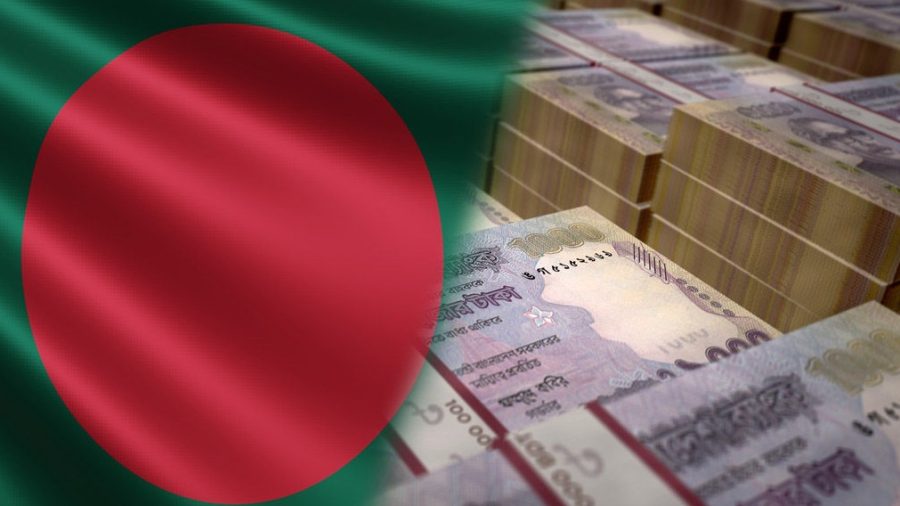



The government’s decision to form a new wage board for readymade garment (RMG) workers, following protests demanding a minimum monthly salary of Tk30,000, has brought an important question back into public discussion: how much does a person need to earn to live decently in Bangladesh?
The RMG sector deserves special attention. It employs around four million people and accounts for over 80% of Bangladesh’s export earnings. Its workers are central to the country’s economic success and have the right to demand wages that reflect the rising cost of living. However, although the sector has a wage review mechanism and workers can collectively voice their demands, millions of other workers lack institutional support and bargaining power to negotiate better livelihoods.
A 2025 estimate from the Global Living Wage Coalition puts Dhaka’s monthly living wage at Tk30,459 for an individual worker. The calculation assumes a family of four with 1.58 income earners and estimates that the household needs Tk48,022 a month for a basic decent standard of living. This is not a statutory wage recommendation but offers a useful benchmark for understanding the gap between the minimum wage and the living wage. The distinction matters because having a job does not necessarily mean earning enough to maintain a decent standard of living.
Consider the security guard working a 12-hour shift, the driver supporting a family, the domestic worker who depends on a single employer, or the household helper whose employment can end without notice. What determines their minimum wage? Who reviews their earnings as the cost of food, rent, transport, and healthcare rises? Who represents their interests when they cannot organise protests or bargain collectively?
According to the Bangladesh Bureau of Statistics’ Labour Force Survey 2024, approximately 5.8 crore people, or 84% of the employed population, work in informal employment. This is not a small segment that occasional welfare programmes can address. It represents the majority of our workforce. Yet our labour protection mechanisms and wage discussions still focus mainly on organised employment.

The challenge goes beyond determining an appropriate minimum wage. Workers also need protection when their income suddenly stops. What happens when someone loses a job, an employer closes a business, or illness prevents a person from working? For households near subsistence, even a few weeks without income can mean borrowing for food, falling behind on rent, interrupting children’s education, or postponing essential medical treatment.
Why should losing a job automatically mean losing the ability to meet basic needs?
Bangladesh has recognised the need to address this vulnerability. The National Social Security Strategy envisaged unemployment insurance as part of a broader social insurance system. In April 2026, the government published a roadmap for the National Social Insurance Scheme (NSIS), outlining a phased approach to protecting against employment injury, unemployment, maternity, and sickness. This is an important policy development. However, the roadmap acknowledges that existing protections remain fragmented and uneven. The challenge now is to translate the proposed framework into an operational system that reaches workers beyond conventional formal employment.




A March 2026 study by the Centre for Policy Dialogue identified the lack of a dedicated legal framework, institutional structures, and implementation mechanisms as major obstacles to introducing unemployment insurance. This suggests the issue is no longer simply recognising the need for protection; it is about developing the institutions and financing arrangements to deliver it.
An unemployment insurance system could initially cover formal-sector employees through contributions from employers and workers, with government support. Over time, the framework should extend to informal workers through flexible contribution arrangements and targeted public financing for those unable to contribute. The goal should not be to create permanent dependence on state assistance but to prevent temporary income disruptions from pushing working families into poverty.
Our experience of overseas employment offers another perspective. When Bangladeshis migrate to foreign countries, many initially take whatever jobs they can find. They work in restaurants, supermarkets, warehouses, delivery services, and other entry-level roles. They soon learn to calculate how many hours they need to work to cover accommodation, food, transport, and other expenses. They understand the relationship between working hours, earnings, and survival. They may endure difficult conditions, but they know their ability to sustain themselves depends on that calculation.
What happens when these workers return home? Why should the relationship between working hours and the cost of living be any less important in Bangladesh than elsewhere?
We do not need a uniform minimum wage across all occupations. Different sectors, skills, locations, and employment arrangements require tailored approaches. But we need a credible living-wage benchmark, periodic minimum-wage reviews, stronger enforcement of labour protections, and a mechanism to ensure informal workers are not excluded. We should also explore ways to provide domestic workers, drivers, security guards, and other vulnerable workers with access to basic income security, healthcare, and protection against sudden job loss.

Economic progress cannot be measured solely by GDP growth, export earnings, remittances, or employment levels. We must also ask whether full-time workers can afford a decent life, whether losing a job pushes a family into poverty, and whether those without collective bargaining power have meaningful protection.
The RMG wage debate should therefore prompt a much wider conversation about the value of work and workers’ dignity. A decent standard of living should not depend on an industry’s visibility, a trade union’s strength, or the ability to halt production. It should be a reasonable expectation for everyone who works.
After all, if working hard does not offer a reasonable chance of a decent life, how inclusive is our economic progress?
The views expressed in this article are solely those of the author
The writer is a CSR, Sustainability and Communication professional