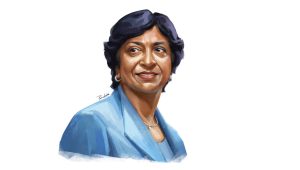
Dr Captain Sitara Begum remains one of the most remarkable yet understated heroes of Bangladesh’s Liberation War. One of only two women to receive the Bir Protik, the nation’s gallantry honour, her story is a rare blend of duty, defiance and compassion at a time when the country was breaking apart.
Born on September 5, 1946, in Kishoreganj, Sitara grew up in a home that believed deeply in education and service. Her father, Mohammad Israil, was a lawyer. Her siblings, too, would eventually step into Bangladesh’s turbulent political and military chapters, including her elder brother, freedom fighter Major ATM Haider. Sitara moved through Holy Cross College and Dhaka Medical College with quiet determination, earning her MBBS before commissioning as a lieutenant in the Pakistan Army Medical Corps in 1970.
By early 1971, she was posted at Comilla Cantonment with her brother. As the political tension thickened and the Non-Cooperation Movement swept across East Pakistan, the siblings sensed the danger closing in. Major Haider insisted that Sitara and their parents leave for India. With the help of Mukti Bahini members, the family undertook a perilous journey, walking for two weeks to reach Meghalaya.

But Sitara did not choose the safety of distance. Once across the border, she stepped directly into the war’s frontline, not with a rifle, but with medical skill and unbending resolve. She became the Commanding Officer of the Bangladesh Field Hospital under Sector 2, leading a 400-bed facility where wounded freedom fighters, Bengali civilians and Indian soldiers arrived in waves.
Medical supplies were scarce. Air raids were common. Death was never far. Yet those around her remember a steady, calm leader who refused to bend under pressure. Sitara organised surgeries through sleepless nights, managed scarce medicines with precision, and comforted fighters who knew they might not survive till morning. Under her leadership, the field hospital became a sanctuary, a place where the brutality of war stopped at the door and humanity began.




Her battlefield was defined by healing, but her courage was no less than those who fought with arms.
After independence, Sitara returned to Dhaka with hopes of rebuilding a normal life. But tragedy struck again on November 7, 1975, when her brother Major Haider was assassinated during the political upheaval that shook the country. The loss shattered the family. In search of safety and stability, she eventually moved to the United States, choosing a quieter life far from the country she had served with everything she had.
Today, Sitara Begum’s name may not appear in the loudest chapters of history, but her legacy endures in every account of resilience, in every field hospital that saves lives during crisis, and in every Bangladeshi woman who steps forward when her nation calls.
Her courage crossed borders. Her service crossed fear and her story still stands as a quiet, unbroken flame.