A last-minute series of informal meetings is under way to reach a consensus on introducing proportional representation (PR) in the Upper House and fixing the date of a referendum on the implementation of the July National Charter.
Several parties — including Jamaat-e-Islami and the National Citizen Party (NCP) — have taken positions directly opposing the BNP on these two key issues. Unless the BNP softens its stance, Jamaat, NCP, Islami Andolan Bangladesh and a few others are unlikely to sign the Charter, which may stall its implementation and raise uncertainty over the next national election.
The National Consensus Commission (NCC) has been engaging the BNP, Jamaat and NCP in last-ditch efforts to resolve the disputes. Commission sources said positive progress could emerge within the next couple of days.
In an attempt to facilitate compromise, the Charter’s signing ceremony has been deferred by two days to 17 October.
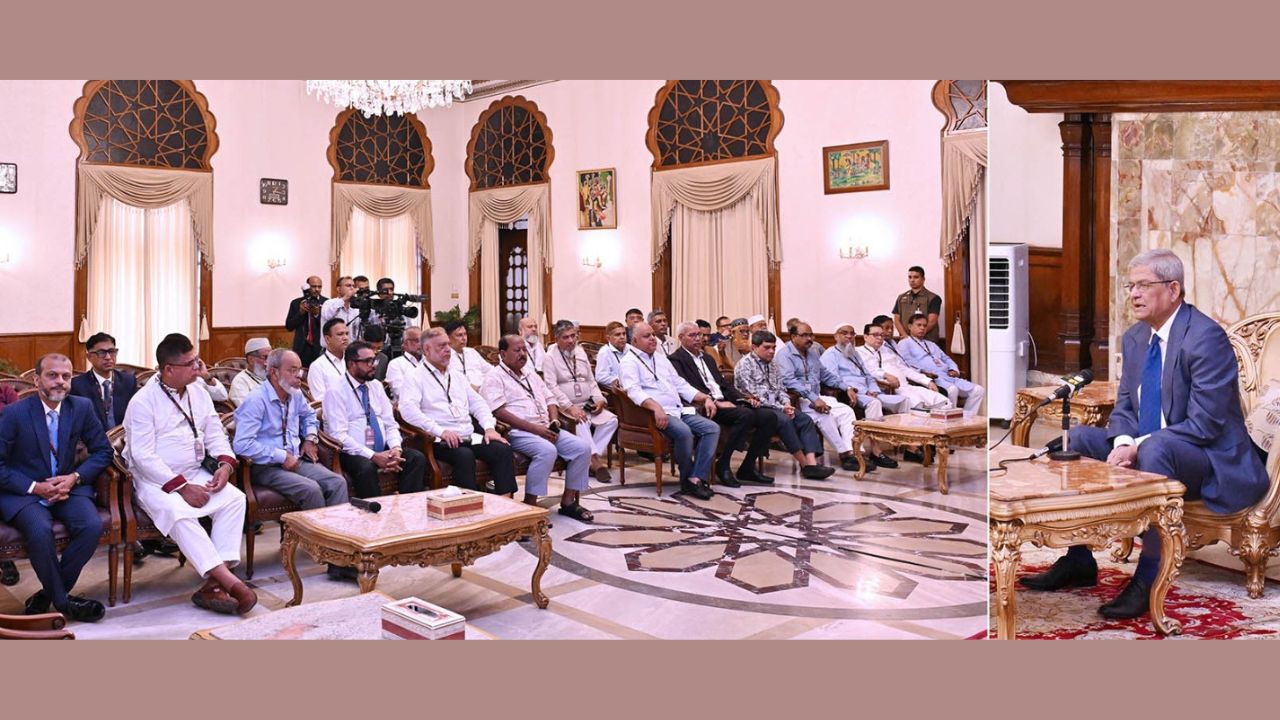
On Sunday afternoon, top NCC officials met BNP Standing Committee member Salahuddin Ahmed at the Commission’s office in the LD Hall of Parliament. They urged him to withdraw the BNP’s note of dissent on PR in the Upper House and to adopt a positive stance on holding a referendum before the national election. Salahuddin, however, remained firm on the party’s position.
A day earlier, the Commission held separate meetings with Jamaat Nayeb-e-Ameer Syed Abdullah Mohammad Taher and Assistant Secretary General Hamidur Rahman Azad, followed by another with NCP Convener Nahid Islam and Joint Convener Javed Rasin.

Leaders of both parties argued for holding the referendum before the election and reaffirmed their strong support for PR in the Upper House.
“If the Charter does not specify a clear mechanism for implementing core issues such as PR in the Upper House and a pre-election referendum, many parties will refuse to sign,” said NCP Joint Convener Sarowar Tushar. “The Commission is working with the parties on these issues, and we hope for a positive outcome within days.”



The interim government formed the NCC on 15 February. Since then, it has held 67 meetings and secured agreement among political parties on 84 reform proposals, which form the basis of the July National Charter.
Smaller parties, however, have expressed dissatisfaction over the BNP’s notes of dissent on several key points, including the introduction of PR in both houses and the legal framework for implementing the Charter.
In its last meeting on 8 October, the Commission reached consensus on giving legal backing to the Charter’s implementation through a referendum — though parties remain divided on when it should be held. The BNP insists it should coincide with the national election, while Jamaat, NCP and others want it held beforehand.
Meanwhile, seven parties, including Jamaat and Islami Andolon Bangladesh, have been pressing for a five-point demand, one of which is implementing PR in both houses. On Sunday, they submitted memoranda through district administrations to the Chief Adviser, reiterating their demands.
Several party sources said they might soften their stance on other issues if the BNP withdraws its dissent on PR in the Upper House.
After the two-day postponement, the signing ceremony of the July Charter is scheduled for Friday. The Commission will submit the final text and implementation process to the Chief Adviser at the event.
Sources confirmed that Jamaat, NCP and Islami Andolon Bangladesh, along with several others, are unlikely to sign unless PR in the Upper House and a pre-election referendum are ensured.
Ehsanul Mahbub Jubayer, Assistant Secretary General of Jamaat-e-Islami, said, “We expect to see a clear mechanism for implementing the Charter’s fundamental issues. If not, the parties may reconsider their position.”
“If, after all this effort, the Charter reflects only one party’s views, we will not sign it,” said Gazi Ataur Rahman, Senior Joint Secretary General of Islami Andolon.
Badiul Alam Majumdar, a member of the National Consensus Commission, said that democracy means diversity of opinions. He expressed hope that, in the end, all parties would come together in the interest of the country and its people. “We are actively working on this matter.”