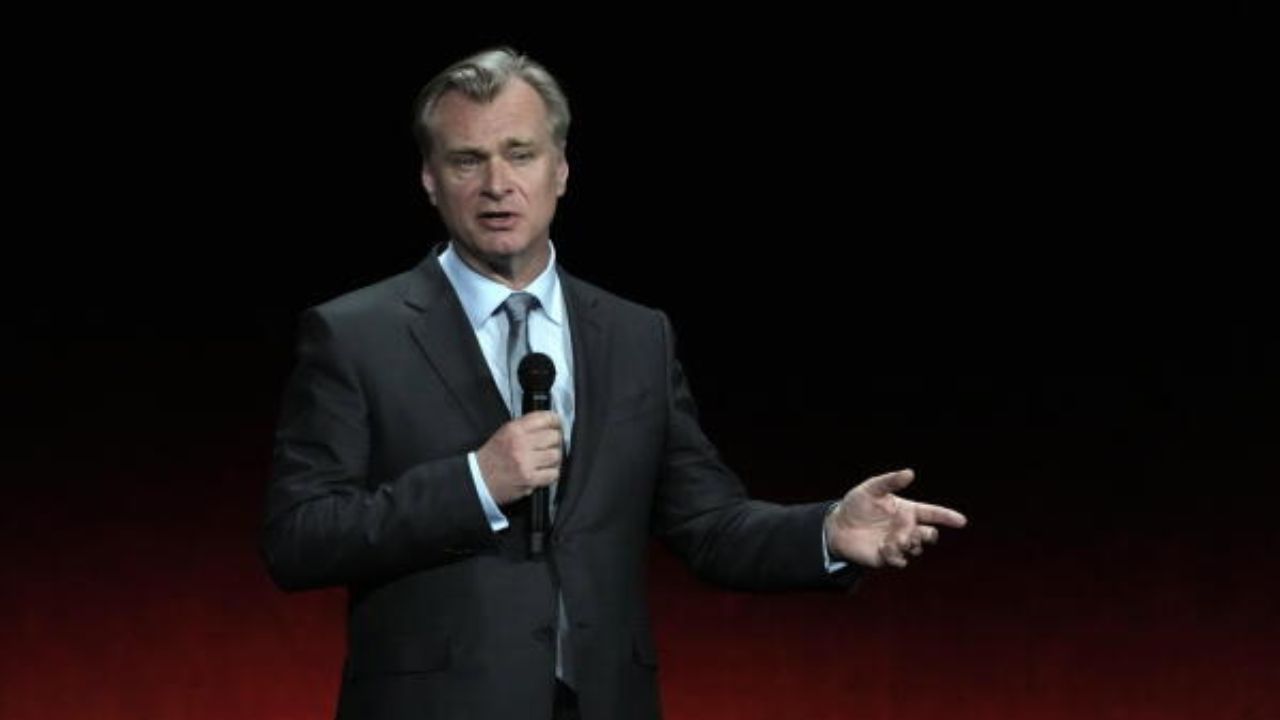



Acclaimed filmmaker Christopher Nolan has criticised what he sees as a growing misunderstanding of storytelling among amateur film critics, arguing that recognising a narrative technique does not make it ineffective, reports Deadline.
Speaking on the Beijing-based podcast hosted by Zhong Shu, the two-time Oscar winner said modern film criticism often dismisses storytelling devices simply because audiences can identify them.
“The criticism that’s often levelled at movies is, ‘The character has to be made sympathetic, so the character is manipulated in different ways,'” Nolan said.
“That’s a fundamental flaw of film criticism, or storytelling criticism. Because to be able to identify the mechanism does not invalidate the mechanism.”
Nolan argued that many amateur critics mistakenly believe a story loses its impact once its techniques become apparent.

“People have this idea that because I can understand why the story affects me the way it does, therefore it didn’t work. That’s not how storytelling works,” he said.
He explained that filmmakers deliberately shape characters and narratives by considering how audiences engage with them.




“When we create a heroic figure, we have to be mindful of the energy the audience brings to the story and the interaction between our intention and the way the audience receives it. The fact that the mechanism is identifiable doesn’t invalidate it.”
Using his latest blockbuster, The Odyssey, as an example, Nolan described cinematic storytelling as a shared language that has evolved through more than a century of Hollywood filmmaking.
“You’re looking at a lingua franca of storytelling created by Hollywood over the last hundred years that is effectively universal,” he said.
“It’s a very accessible modern language of storytelling with its own rules and conventions. You can break or bend those conventions, but you have to understand them.”
Nolan clarified that his criticism was directed primarily at amateur reviewers rather than professional critics.
“I’m thinking more of amateur criticism, because they feel they’ve identified the mechanism, so they think it invalidates it,” he said.
“That can be true in some cases, and film language evolves because of that. But filmmakers build on the audience’s understanding of that common language.”
Nolan’s latest film, The Odyssey, has enjoyed both commercial and critical success, earning nearly $1 billion worldwide while receiving a 94% critics’ score and 97% audience score on Rotten Tomatoes.
The epic stars Matt Damon as Odysseus, alongside Anne Hathaway, Tom Holland, Zendaya, Robert Pattinson, Charlize Theron, Lupita Nyong’o, Jon Bernthal, Elliot Page, John Leguizamo, Mia Goth and several others.
Based on Homer’s classic epic, the film follows Odysseus’ perilous decade-long journey home after the Trojan War.