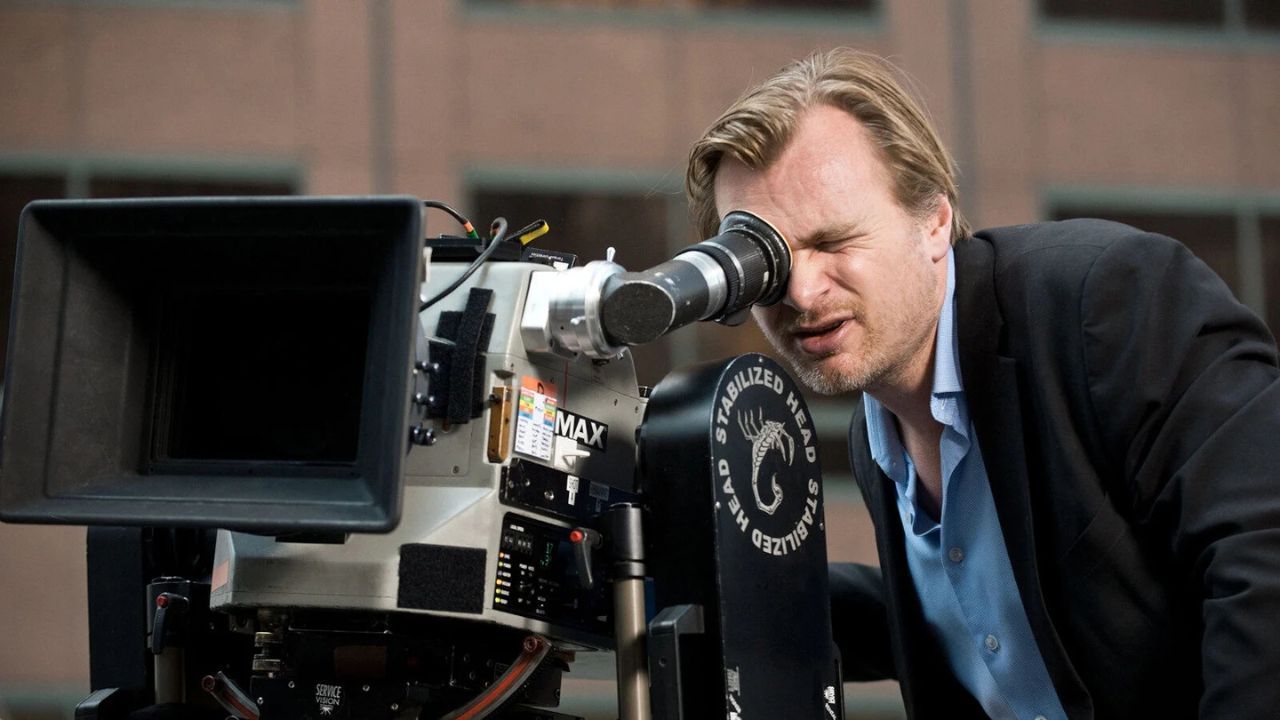

Long before directing global blockbusters such as The Odyssey, Oppenheimer and The Dark Knight trilogy, Christopher Nolan introduced his filmmaking style with the 1998 feature Following. Made for just $6,000, the low-budget thriller has continued to earn praise as an early showcase of the director’s storytelling talent.
Nolan wrote, directed and produced the 70-minute neo-noir film, which he shot in black and white on 16mm film. The story follows a struggling writer who secretly follows strangers through London in search of inspiration. His obsession gradually pulls him into a world of crime, deception, robbery and murder.
The production relied on a small cast, natural lighting and real London locations, many filmed without official permission. Because the cast and crew balanced other jobs, they managed to shoot only about 15 minutes of footage each week over four months. Nolan once described it as “probably the cheapest feature ever made.”

Despite its modest budget, Following introduced many of the themes and techniques that later became trademarks of Nolan’s filmmaking. The film opens with an unexplained mystery, immediately raising questions before offering answers, an approach that later appeared in films such as Memento and Insomnia.




Themes of surveillance and privacy also reappear in later works, including The Dark Knight and Inception. The black-and-white cinematography, initially a practical decision driven by budget limitations, later became a deliberate storytelling device in Memento and Oppenheimer.
The film also contains an early connection to Nolan’s later work through its characters. Jeremy Theobald’s lead role is credited simply as “The Young Man”, similar to John David Washington’s unnamed “The Protagonist” in Tenet. Another key character, Cobb, would later lend his name to Leonardo DiCaprio’s lead character in Inception.
While Following cost only a tiny fraction of the reported $250 million budget for The Odyssey, the film already displays the storytelling style that would define Nolan’s career. Though it lacks the large-scale spectacle of his later productions, it demonstrates his ability to build tension and complex narratives with limited resources.
For many viewers, Following remains proof that Nolan’s reputation as a filmmaker began long before he became one of Hollywood’s biggest names.