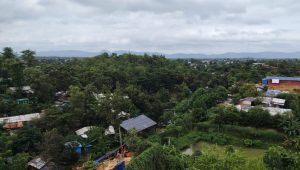
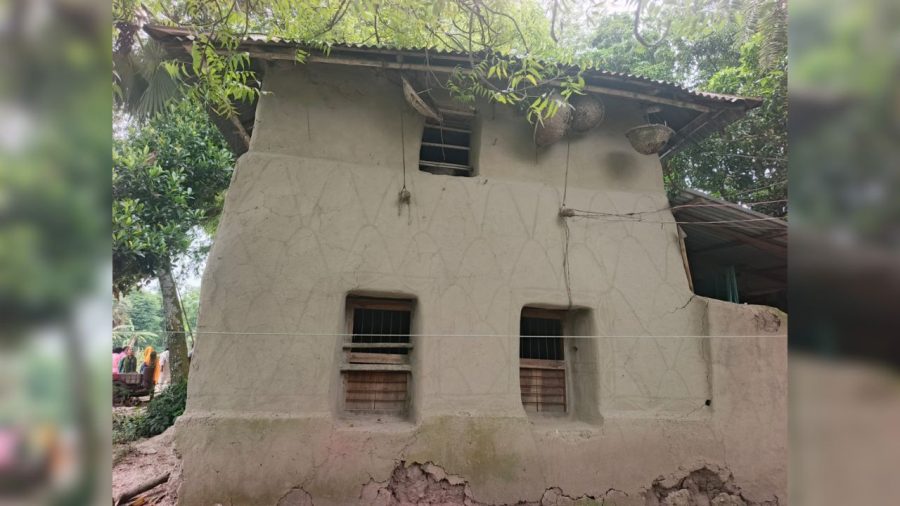

Once a familiar symbol of rural Bengal, traditional mud houses in Sirajganj’s Tarash and Raiganj upazilas are slowly disappearing as brick and cement structures replace the centuries-old architecture.
Known for keeping homes cool during summer and warm in winter, mud houses were once common across villages. But rising incomes, changing lifestyles, modern construction trends and natural disasters have pushed the traditional homes to the brink of extinction.
In parts of the Chalan Beel region, some mud houses can still be seen, particularly in Tarash and Raiganj. Locals said villages that once had hundreds of such houses now have mostly brick-built or semi-pucca structures.
Residents of Deora village in Tarash said around 80 per cent of households still have some form of mud structure. A significant number of old mud houses also remain in Arangail village under Deshigram Union.
Elderly residents said mud houses were traditionally built in areas where red or clay soil was available. The soil was mixed with water to make clay, which was then used to build walls two to three feet thick.

Each layer of the wall was dried under the sun for five to six days before the next layer was added. The walls were gradually raised up to 12–15 feet, after which roofs made of tin, straw or thatch were installed. Building a house usually took two to three months.
To strengthen the walls, residents applied rice husk paste inside and lime or tar outside. With regular maintenance, many houses survived for decades and even a century unless damaged by major floods or earthquakes.
Locals said Kartik was considered the ideal month for building mud houses because lower rainfall allowed the walls to dry and harden properly.
Jafar of Arangail village said both poor and wealthy families once lived in mud houses, with some affluent families even building two-storey mud homes.




“People no longer want to build mud houses as their financial condition has improved. Many old houses are also being demolished to make way for concrete buildings,” he said.
Abdul Aziz of Lauta village said mud houses provided natural comfort in all seasons.
“When we were young, almost every house in the village had a mud structure. Now people consider them outdated, but these houses are connected with our roots and heritage,” he said.
Jharna Khatun, another resident of Lauta, said the traditional homes were once surrounded by trees and reflected the beauty of rural life.
“People now prefer brick and cement houses. As a result, a part of our village heritage is disappearing,” she said.
Deshigram Union Ward 4 member Monoronjon Singh said many families still live in ancestral mud houses after regular repairs, but new construction of such houses has almost stopped.
Former reserved ward member of Arangail village Bilkis Khatun claimed that more than 1,200 mud houses still exist in Arangail alone, while around 10,000 to 12,000 remain across different villages of the union.
Halem Sheikh of Mouhar village in Raiganj said he built his mud house around 60 years ago at a cost of about Tk6,000. He estimated that building a similar house today would cost more than Tk50,000–60,000.
Tarash Upazila has 254 villages under eight unions and one municipality, with a population of more than 211,000. Once common among both wealthy and poor families, mud houses were an integral part of the area’s rural culture and architecture.
Tarash Upazila Executive Officer Nusrat Jahan said some mud houses still exist in the area, but their numbers have declined as people are replacing them with modern structures.
“People are improving their houses according to their changing lifestyles. Many still preserve ancestral mud houses through repairs, but these traditional homes are gradually disappearing,” she said.
Locals said mud houses are more than just shelters — they represent rural Bengal’s lifestyle, craftsmanship and environmental adaptation. They urged preservation of remaining examples of the traditional architecture for future generations.